
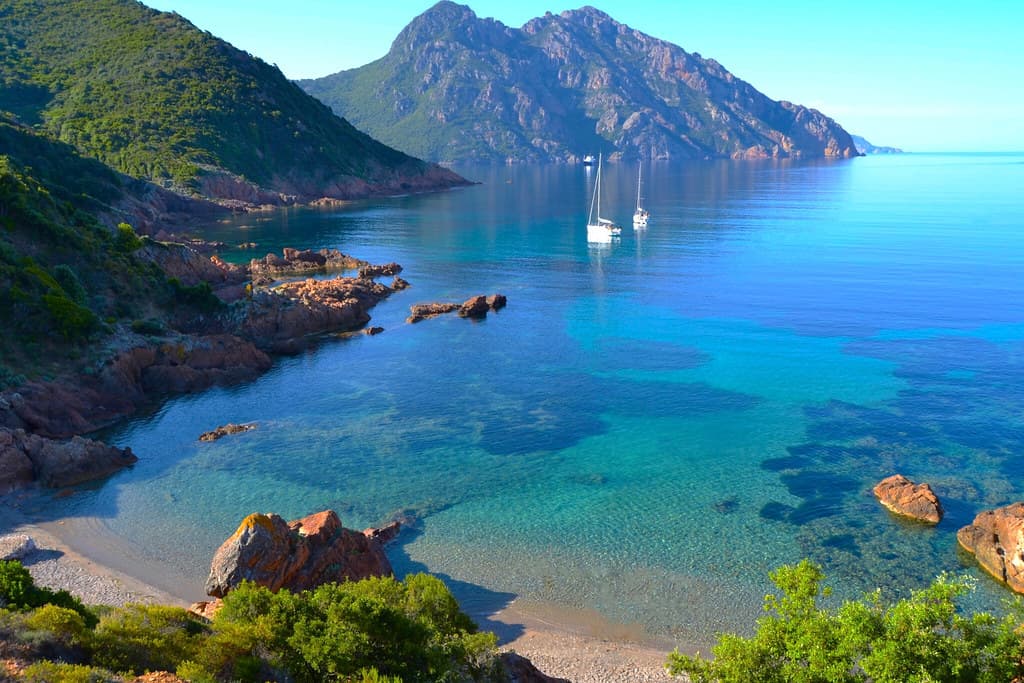
The pebbles are palm-sized and wave-tumbled, ranging from dove grey to rust-streaked white. They shift underfoot with a distinctive clatter, and lying on them requires strategy—a thick towel or sleeping pad, body weight distributed carefully. But the water is immediate and deep; three steps and you're swimming. Clarity runs thirty feet or more on calm days, the rocky bottom a maze of crevices where octopus hunt and grouper hover in the blue distance.
“Girolata remains one of France's last roadless villages, making this beach arrival a genuine threshold crossing into isolation.”
 Credit: Flickr
Plage de Girolata — photo by Vincent Catillon
Girolata's scale is almost implausible: maybe forty permanent residents, a Genoese tower on the headland, buildings pressed against the hillside in shades of ochre and pink. The beach serves as the village's front yard, main thoroughfare, and social center. Morning brings the fishermen untangling nets, noon delivers the tour boats in procession, evening returns quiet as day-trippers depart. You'll share the stones with hikers who've walked the coastal trail from Galéria or Galeria—sunburned, salt-crusted, grateful for the swimming.
The restrictions of access shape everything. Provisions arrive by boat; ice melts fast; menus depend on what the fishing yielded. But the isolation that complicates logistics also creates a pocket outside normal time. No cars means no traffic sounds, just wave-rattle on pebbles, conversation from restaurant terraces, the occasional bleat from goats on the hillside. At dusk, as the last tour boat motors away, the beach becomes entirely yours and the dozen others staying overnight—a privilege measured in silence and unobstructed stars.


