
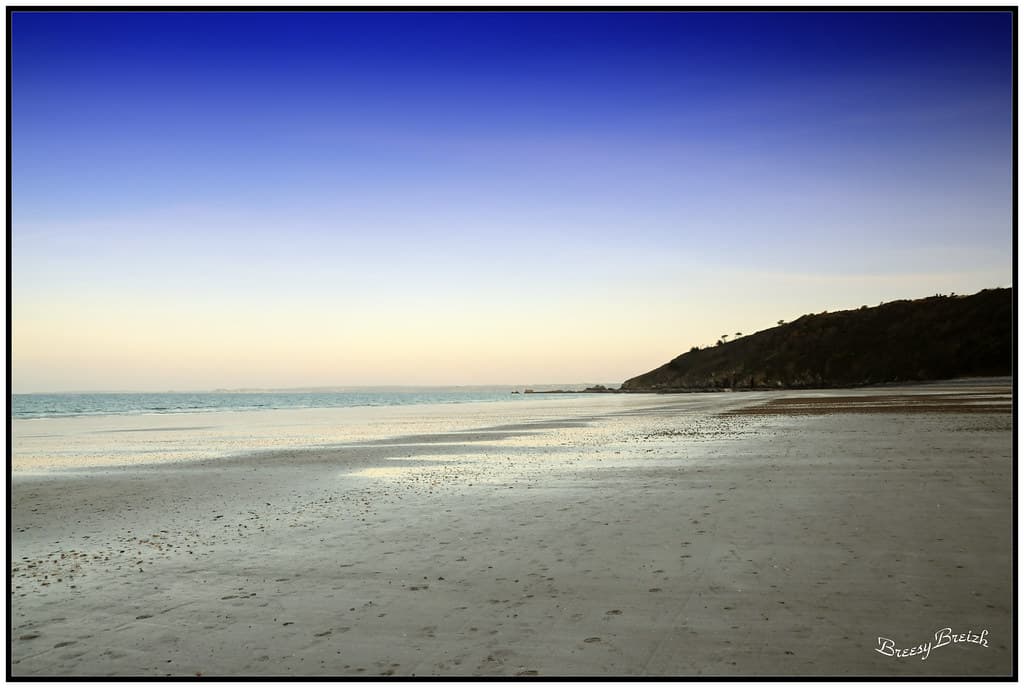
The beach stretches eastward in a gentle arc, bordered by a grassy embankment dotted with wildflowers and the occasional wooden picnic table. When the tide retreats—and it retreats dramatically here—you'll trace its path across ribbed sand that mirrors the sky, past shallow pools warming in the afternoon sun. Gulls patrol the waterline while oystercatchers probe for cockles, their orange beaks bright against the beige expanse.
“The Bay of Saint-Brieuc's most extensive sandy shore, where extreme tidal range creates a constantly shape-shifting landscape twice daily.”
 Credit: Flickr
Plage des Rosaires
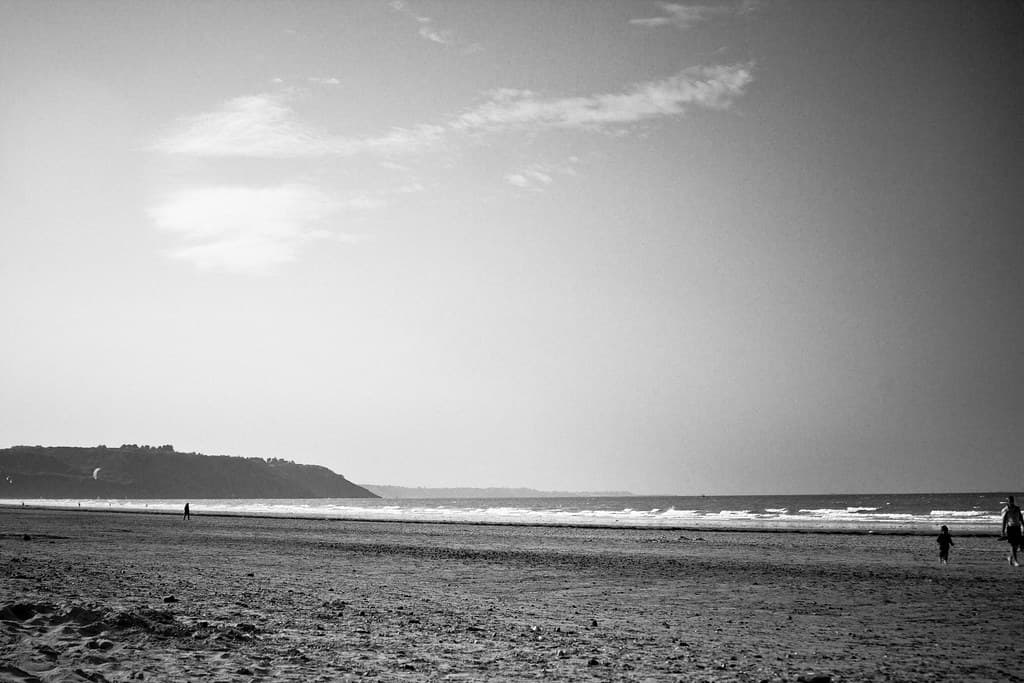
Families colonize the upper beach near the car park, planting striped windbreaks and unfurling blankets while children construct moated castles. The water, when it finally arrives, comes in gently—no crashing surf, just a patient lap that makes this one of the safest swimming spots along the Côtes-d'Armor. You'll notice the locals checking tide tables on their phones; high tide transforms the beach entirely, bringing water to within metres of the grassy verge.
As evening approaches, the quality of light shifts. The bay's wide horizon turns amber, then rose, reflecting in the film of water left on packed sand. Dog walkers appear, released from the daytime ban, and the occasional windsurfer skims past offshore. You'll understand why generations of Saint-Brieuc families have claimed their patch of Plage des Rosaires each summer—it's dependable, spacious, and shaped by tides that never let you take the same beach twice.


