
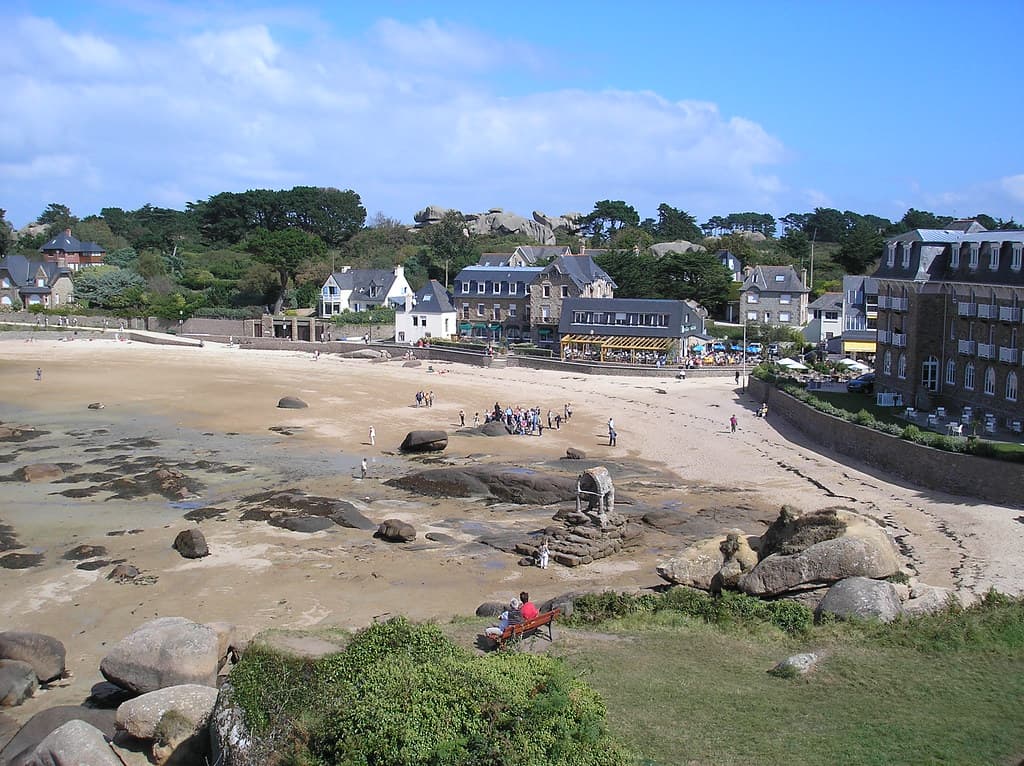
The pink granite announces itself long before you reach the sand. Rose-tinted boulders, some the size of garden sheds, others big as cottages, crowd the headland and tumble down to the tide line. Iron oxide stains the feldspar and quartz, leaving striations that run from pale peach to deep terracotta depending on the slant of afternoon light. You walk barefoot across firm sand, dodging tide pools trapped between rocks, each one a miniature aquarium of emerald weed and darting shrimp.
“The only beach where thousand-ton granite boulders, stained flamingo-pink by minerals, frame a medieval pilgrimage chapel still in use.”
 Credit: Flickr
BZH07 820 110907 22PLOUMANAC'H Plage de St-Guirec
The 11th-century oratory of Saint-Guirec perches on a granite outcrop at the southern end—a tiny stone chapel that pilgrims have visited for a millennium. At low tide you can walk out to it, threading between boulders smoothed by centuries of Atlantic swells. Families claim patches of sand near the sailing club, where dinghies bob on mooring lines and the water stays shallow for fifty meters out. The beach faces northeast, sheltered from the prevailing westerlies, so even on blustery days the cove stays calm.
When the tide retreats, the rocks reveal their full architecture: arches, overhangs, caves worn smooth by salt and storm. Locals know to arrive at sunset in autumn, when the low sun ignites the granite and the tourists have thinned. You'll share the beach with dog-walkers and a few dedicated swimmers braving the 15-degree water, the kind of Bretons who wouldn't dream of wetsuits even in November.


