

Launay sits quiet at the edge of Ploubazlanec, a working harbor village that sends fishermen to sea and ferry passengers to the Île de Bréhat each morning. The beach curves gently between outcrops of Breton granite—pink and gray stone smoothed by centuries of Atlantic gales—and when the tide retreats, rockpools appear like scattered mirrors, each one holding anemones, periwinkles, and the occasional blenny darting between fronds of bladder wrack.
“You watch ferries depart for Bréhat from a sand-and-stone beach that feels entirely removed from the tourist queue a kilometer away.”
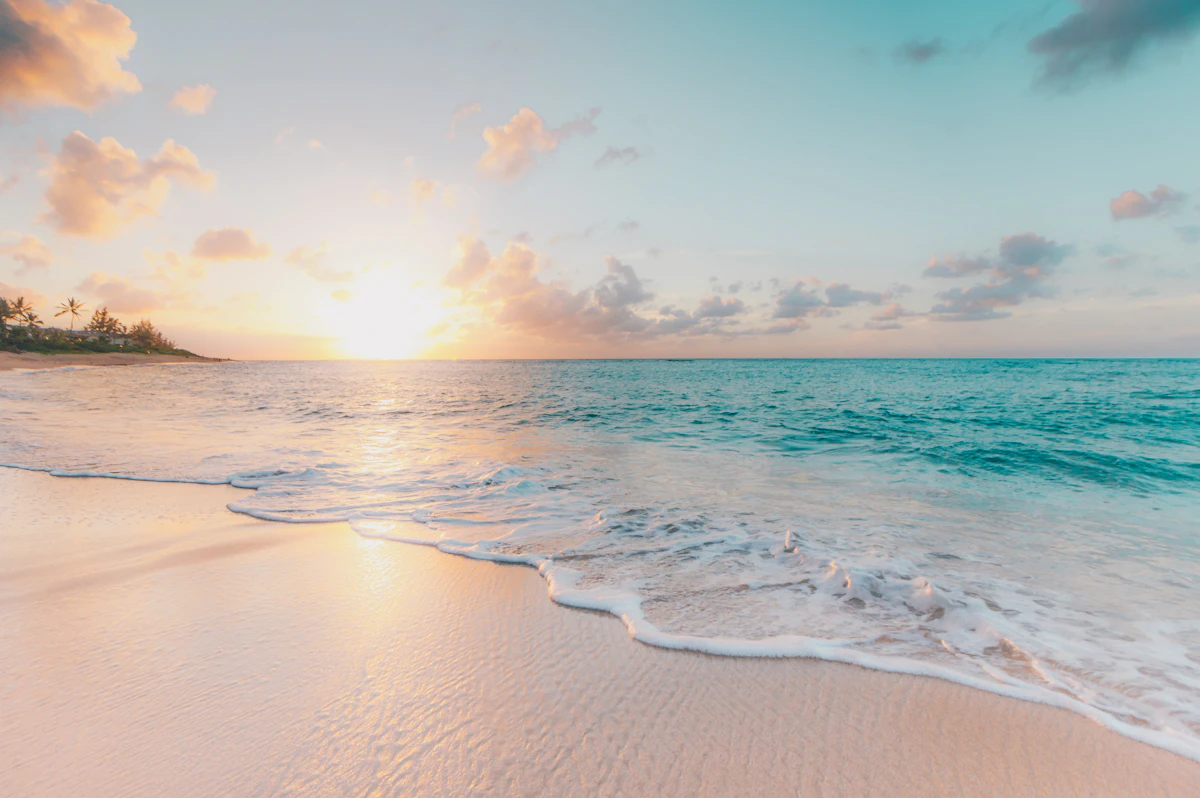 Credit: Unsplash
Aerial view of turquoise tropical bay
You'll share the sand with dog-walkers and families who know the ferry schedule by heart, their voices carried off by the onshore wind. Gulls wheel overhead, and across the sound the archipelago rises green and forested, close enough that you can pick out individual pines on Bréhat's northern cliffs. The water here runs cold year-round—this is the English Channel, after all—but it's clean, and on calm days the shallows take on shades of jade and slate.
As afternoon softens into evening, the departing ferries from Pointe de l'Arcouest trace white lines across the bay. The sun drops behind the mainland hills, spilling apricot and lavender across the sky, and the rocks at Launay's western edge become the best seats in Ploubazlanec. Bring a jacket: even in summer, the Breton coast keeps its cool reserve, wind tugging at your collar as the light fades and the island slips into shadow.


