
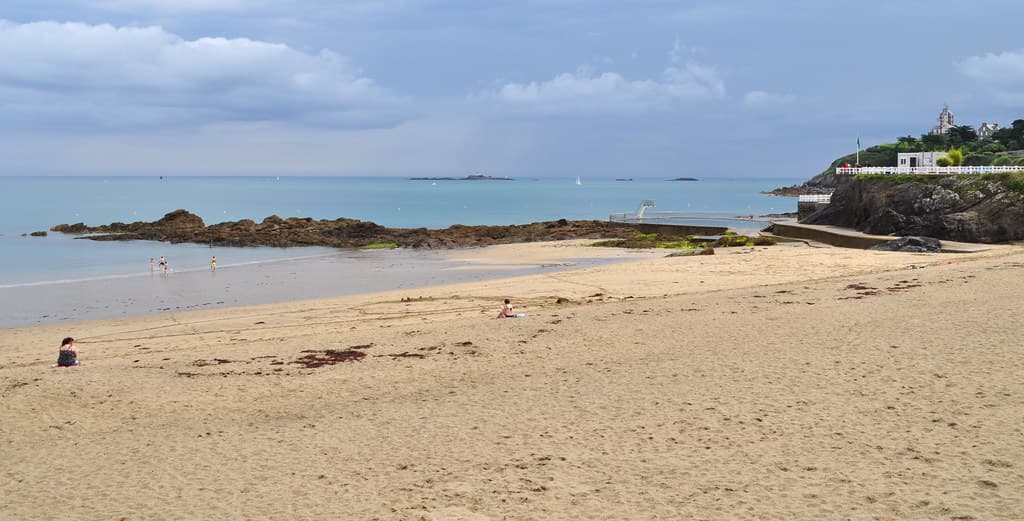
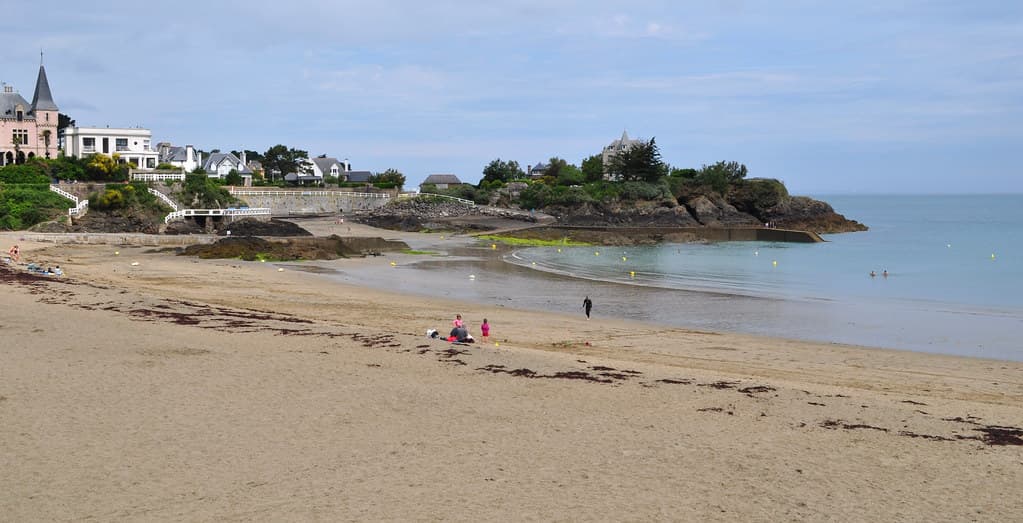
Plage du Casino stretches nearly a kilometer along Saint-Quay-Portrieux's sheltered bay, its fine blonde sand punctuated by granite outcrops that emerge like sculpture gardens at low water. The beach takes its name from the cream-and-terracotta Belle Époque building presiding over the northern end—once a gaming hall, now offices—whose balconies still catch the best light at golden hour. You'll find families camped beneath striped windbreaks, children netting shrimp in the retreating shallows, and retirees pacing the concrete seawall promenade that connects five smaller coves into one seamless strand.
“This is the only beach in eastern Brittany where Belle Époque architecture, a working fishing port, and a family-friendly tidal bay converge in a single walkable crescent.”
 Credit: Flickr
Plage du Casino, Saint-Quay-Portrieux, Pays de Goëlo, Côtes d'Armor, Bretagne.
The tidal range here is theatrical: spring tides can pull back fifteen meters vertically, exposing mussel-covered boulders and sandy flats that stretch toward the harbor. By mid-afternoon in summer, you'll share the waterline with windsurfers launching from the Plage du Châtelet annex to the south and stand-up paddleboarders navigating the channel markers. The town presses close—bakeries, crêperies, and the daily market sit one block inland—but the beach never feels claustrophobic, its eastward curve opening views toward the Sept-Îles archipelago on clear mornings.
Sunset pulls the entire town to the sand. Joggers trace the waterline, dog-walkers claim the northern rocks, and couples settle on the stone benches above the casino, watching the sky turn apricot over the Goëlo cliffs. The beach empties slowly, reluctantly, as the tide begins its return.


