
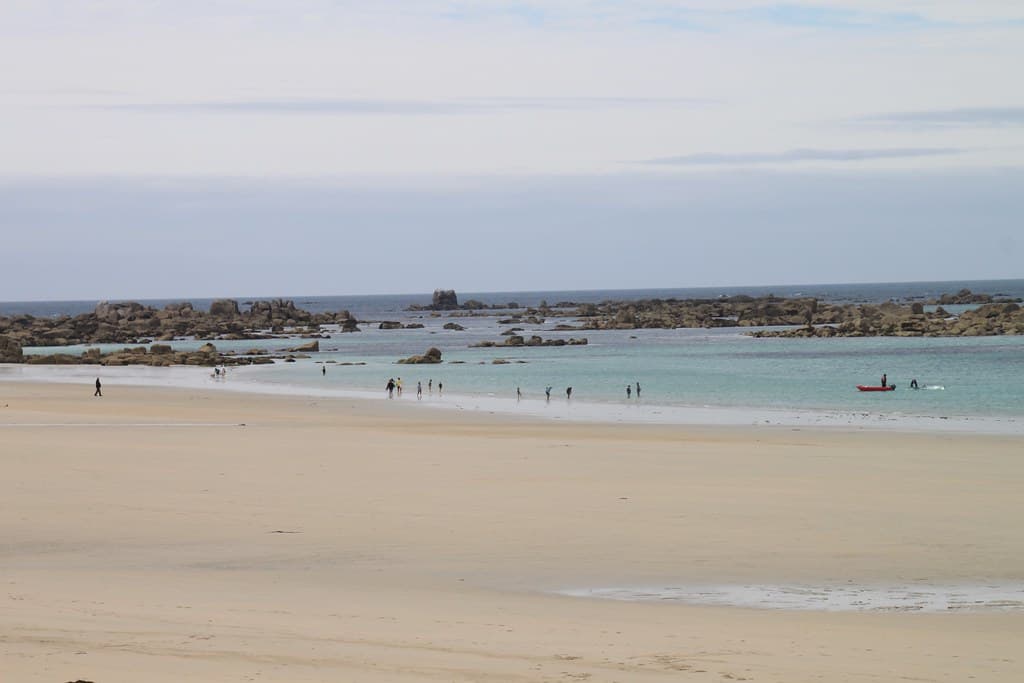
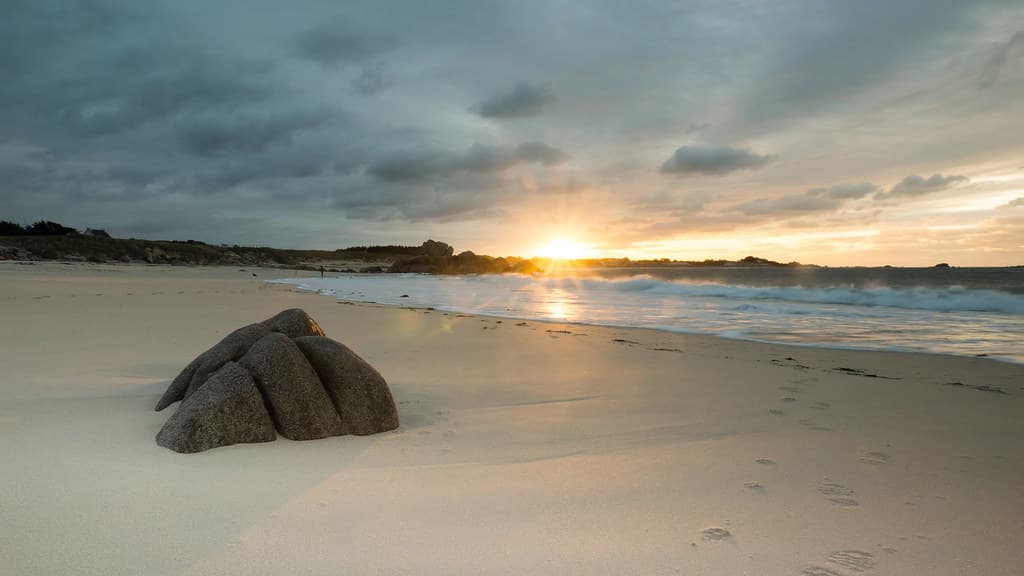
The sand at Plage des Amiets doesn't behave like ordinary beach sediment. It compresses beneath your toes with a dry whisper, then releases in clouds when the onshore wind picks up. At low tide, the waterline retreats hundreds of meters, exposing ridged flats where children crouch over temporary lagoons, nets in hand, hunting for crabs that scuttle between black schist outcrops. The clarity here isn't metaphorical—you'll see individual grains of shell and mica glinting in the shallows, and when the sun drops toward the Léon horizon, the wet sand becomes a mirror reflecting apricot and violet.
“The exceptionally fine quartz sand produces an audible squeak when dry, a phenomenon rare even along Brittany's celebrated coastline.”
 Credit: Flickr
cleder plage des amiets
This stretch of North Finistère coastline has earned its flagship status not through marketing but through simple geology: millennia of wave action grinding Breton granite into luminous grit. Lifeguards patrol the central zone in summer, and a small parking area empties directly onto the sand, making it accessible for strollers and beach wagons. Yet walk twenty minutes north or south and you'll find solitude among the dune hollows, where marram grass hisses and gulls wheel overhead.
The beach works in every season. January gales send spume flying across the flats; August brings warm shallow pools perfect for tentative swimmers. Pack a windbreak year-round—the Atlantic doesn't pause—and time your visit with the tide tables posted at the access path. The difference between high and low water here reshapes the entire landscape.


