
The ocean exhales against Kérou's shore in long, deliberate sets. You watch from the dune line as a wetsuited figure drops into a shoulder-high right-hander, carving across jade-green water that turns white at the lip. Behind you, the path from the car park winds through gorse and blackthorn, and the scent of wild thyme rises in the afternoon warmth. This is South Cornouaille at its most elemental—granite boulders blackened by centuries of tide, sand the color of wheat, and a horizon that stretches unbroken toward the Atlantic.
“One of the few Breton beaches where advanced surfers and toddler-toting families claim their territory without conflict, divided naturally by the headland's sheltering arm.”
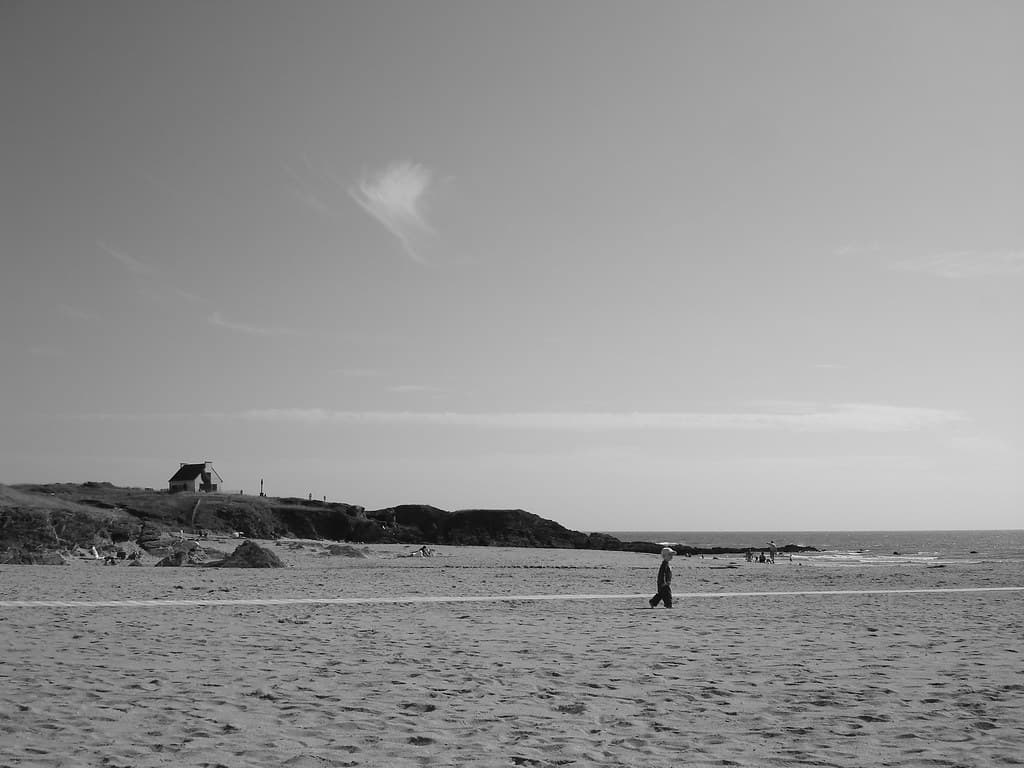 Credit: Flickr
Plage du Kerou, Le Pouldu (France)
Kérou earns its reputation as a dual-purpose strand. The western half sees consistent swell wrapping around Pointe du Kérou, creating waves that range from mellow rollers on summer mornings to barreling autumn tubes. The eastern stretch, sheltered by the headland's bulk, becomes a kingdom of sandcastles and beach towels when the sun breaks through Brittany's cloud cover. Low tide reveals tide pools where periwinkles cling to rock and blennies dart between fronds of bladderwrack.
You linger as the light softens, the sun sinking toward Île de Groix somewhere beyond the headland. The lifeguard station casts a long shadow. Gulls wheel and cry. A group of surfers paddles in, salt-stiffened hair catching the golden hour glow, and you realize why this beach holds its place in the regional consciousness—it offers neither solitude nor undiscovered charm, but rather the honest pleasure of good waves meeting good sand in a landscape that has earned every superlative without needing to announce them.


