

The locals call it simply Kernous—no need for ceremony when a beach has served the same handful of neighborhoods since before the sardine canneries closed. You reach it down a sloped lane past granite-and-stucco cottages, their shutters painted that particular Breton blue that fades beautifully under salt air. The strand itself runs barely three hundred meters, hemmed by dark rock outcrops slick with bladderwrack, and the sand is coarser than the tourist strands to the south—flecked with shell fragments and the occasional crab carapace.
“One of the few Breton town beaches still shaped by local rhythms rather than tourist seasons, unchanged since the postwar canning era.”
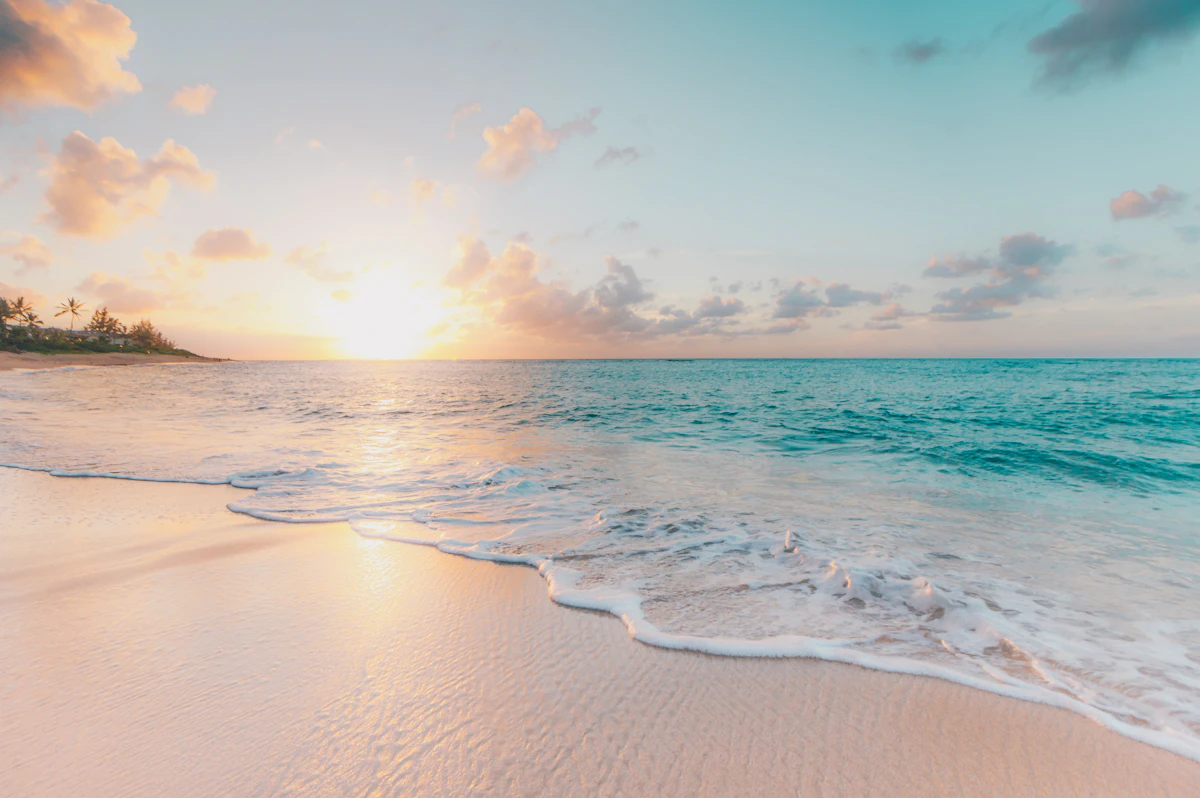 Credit: Unsplash
Aerial view of turquoise tropical bay
What keeps you here isn't size or amenities but the rhythm. Mornings bring dog walkers and the occasional open-water swimmer braving fifty-eight-degree swells. By afternoon, toddlers in striped maillots dig moats while their parents unfold canvas chairs and crack bottles of cidre bouché. The beach empties fast after four, except on clear evenings when couples arrive with baguette sandwiches to watch the sun drop behind the Glénan archipelago, staining the wet sand copper and rose.
There's a single seasonal kiosk selling kouign-amann and espresso, a small parking lot that fills on Sundays, and no pretense whatsoever. Kernous doesn't try to compete with the resort beaches. It simply exists, reliable as the twice-daily tide, a place where Concarneau exhales.


