
Kersiguenou sits on the gentler, south-facing flank of the Crozon Peninsula, a pocket of calm in a landscape famous for its wild Atlantic drama. The beach unfolds in a shallow arc, its sand mixed with crushed shells that crunch underfoot, bordered by low granite outcrops that shelter the cove from prevailing westerlies. At low tide, the waterline retreats to reveal tide pools stippled with periwinkles and small crabs; at high tide, the sea laps close to the dune grass, turning the beach into a narrow ribbon.
“Its southern exposure offers rare warmth and shelter on a peninsula otherwise defined by raw Atlantic force.”
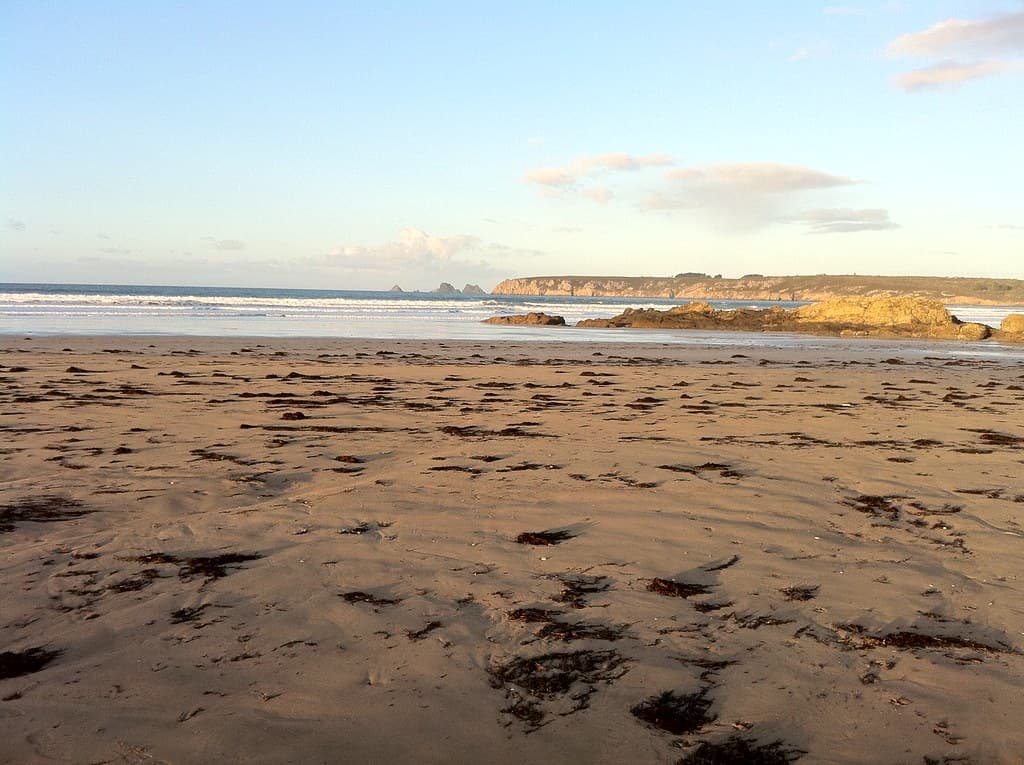 Credit: Flickr
Plage de Kersiguenou
The southern orientation matters here. While the peninsula's northern beaches catch the full brunt of ocean swells, Kersiguenou looks across the sheltered waters of the Brest roadstead, where sailboats tack between buoys and the distant silhouette of Brest's harbour cranes stitches the horizon. The light arrives differently too—softer, warmer, lingering longer into evening. Parents wade in with toddlers; older children hunt for hermit crabs in the rocks. No one rushes.
Come for sunset and you'll understand why locals return again and again. The sky bleeds through shades of tangerine and plum, reflecting off wet sand and turning the scattered boulders into dark sculptures. The air smells of salt and kelp. Gulls wheel overhead. It's not the wildest beach on the peninsula, but it's one you'll remember with unexpected tenderness.


