
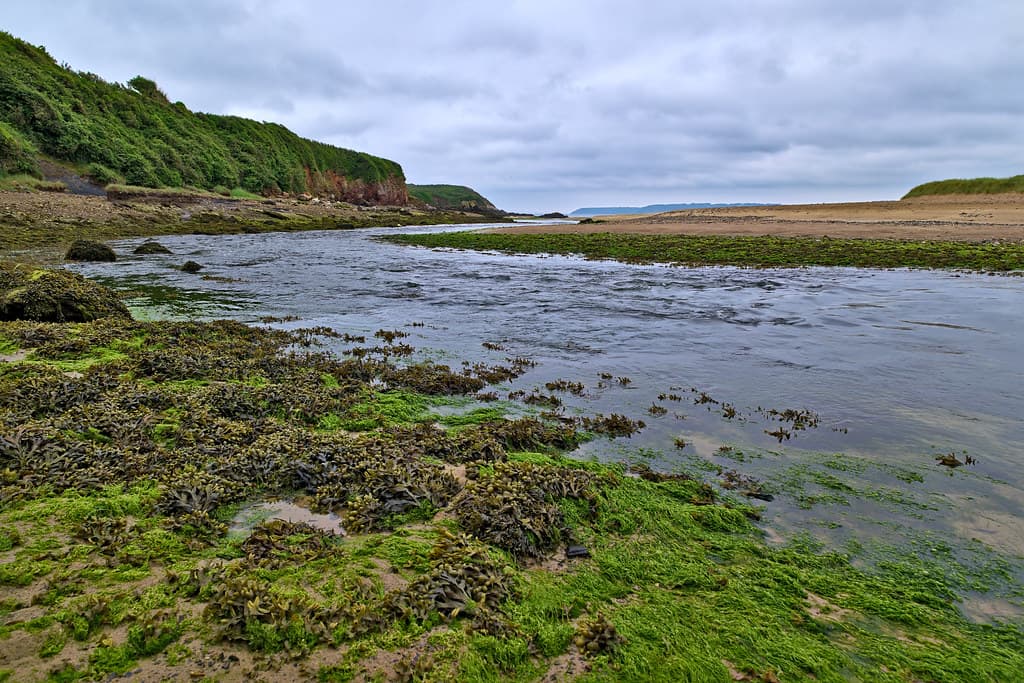
The walk from Crozon's town center takes you through a scatter of whitewashed cottages and past hedgerows thick with gorse, then suddenly the beach opens wide—a ribbon of fine sand that shifts from gold to pewter depending on the clouds racing overhead. The Aber estuary meets the sea here, and when the tide pulls back, you can trace the stream's path through ridges of wet sand that mirror the sky. Gulls wheel above the tideline, their cries cutting through the steady percussion of waves against rock.
“One of the rare Crozon beaches sheltered enough for families yet wild enough to feel the full force of Atlantic weather systems.”
 Credit: Flickr
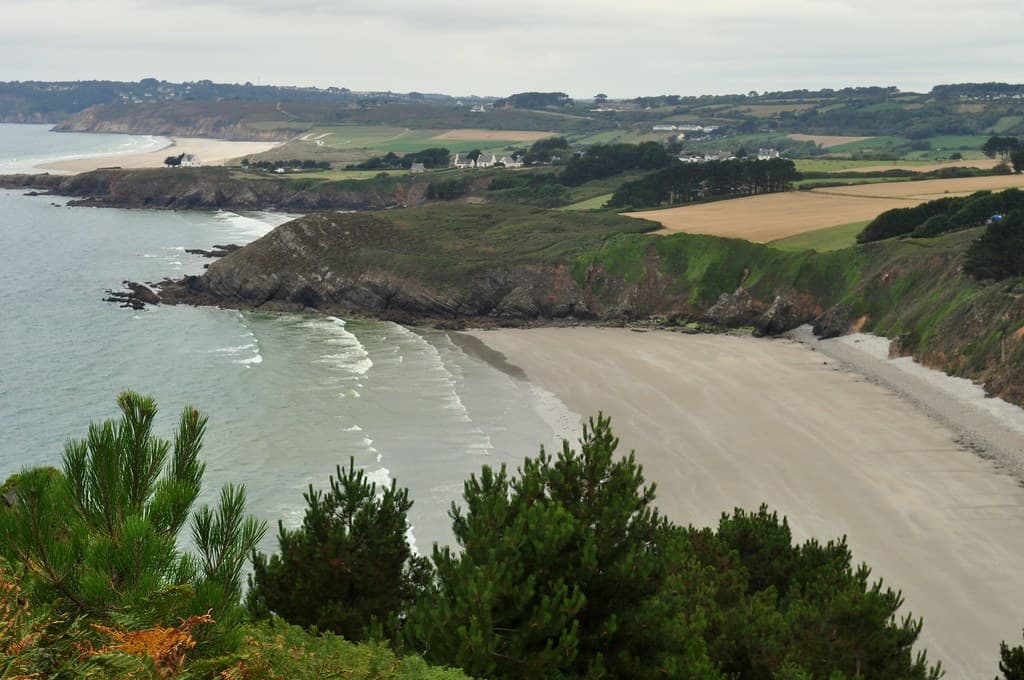
Les plages depuis la pointe de Tréboul
Morgat's harbor sits just a fifteen-minute stroll north, close enough that you'll catch the diesel scent of trawlers mixing with salt air. The beach itself curves gently, sheltered on its southern flank by cliffs carpeted in Scots pine and maritime scrub. At low tide, the strand doubles in width, revealing tide pools where anemones retract at the brush of your finger and shore crabs scuttle beneath bladder wrack.
Sunset here is theater: the light pours copper and rose across the Brest Roads, silhouetting the Pointe de Pen-Hir to the west. You'll find local families settling in with thermoses and folding chairs, their routine as predictable as the tide tables. The beach stays open to the elements year-round—winter gales sculpt the dunes into new geometries, while summer barely warms the water past sixteen degrees, a shock that never gets old.


