
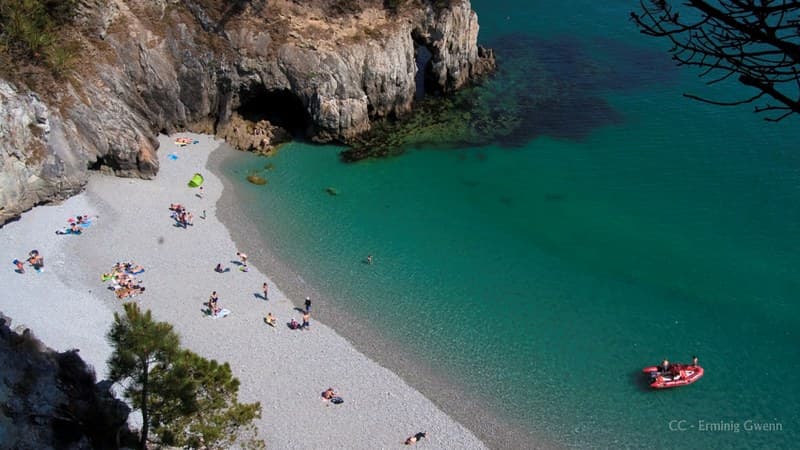
The beach unfolds in two distinct moods. To your left, a working harbor where trawlers unload their morning catch onto wet stone quays; to your right, a sweep of fine sand that curves toward the Pointe de Morgat, its Belle Époque casino now a sailing school. Between them, you'll find deck chairs angled toward the Tas de Pois sea stacks rising like broken teeth from the water two hundred meters offshore.
“The only Crozon beach that balances wild Atlantic geology with the gentle infrastructure families need, anchored by sea caves you can kayak into at high tide.”
 Credit: Flickr
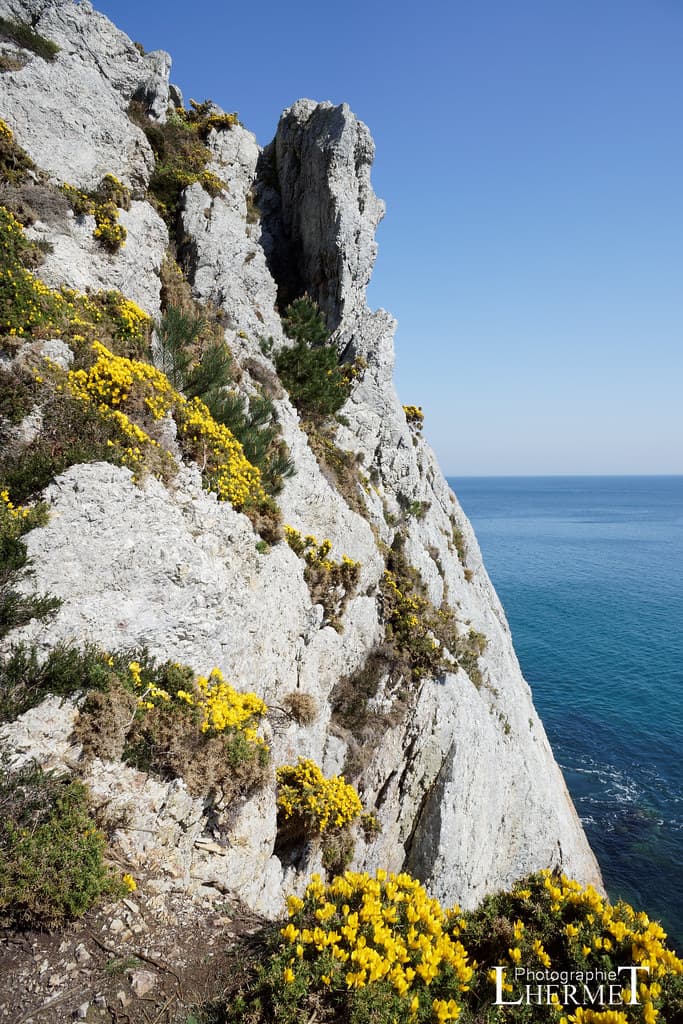
20170409-S028 Plage de l'ile vierge Morgat 4820
Morgat earned its reputation as the peninsula's essential strand not through isolation but through accessibility married to drama. The same geological forces that carved Brittany's famous sea grottoes—Grotte de l'Autel, Grotte Sainte-Marine—also shaped this protected bay, where the Atlantic loses its fury against granite headlands. You can wade out fifty meters and still touch bottom, then turn around to see the Crozon hills rising green and wild behind the town's modest waterfront.
Low tide reveals tide pools stippled with periwinkles and hermit crabs, while evening light turns the cliffs the color of apricots. The promenade fills with couples sharing galettes from the crêperie, children chasing gulls, locals walking terriers. It's Brittany distilled: pragmatic, beautiful, utterly unpretentious.


