
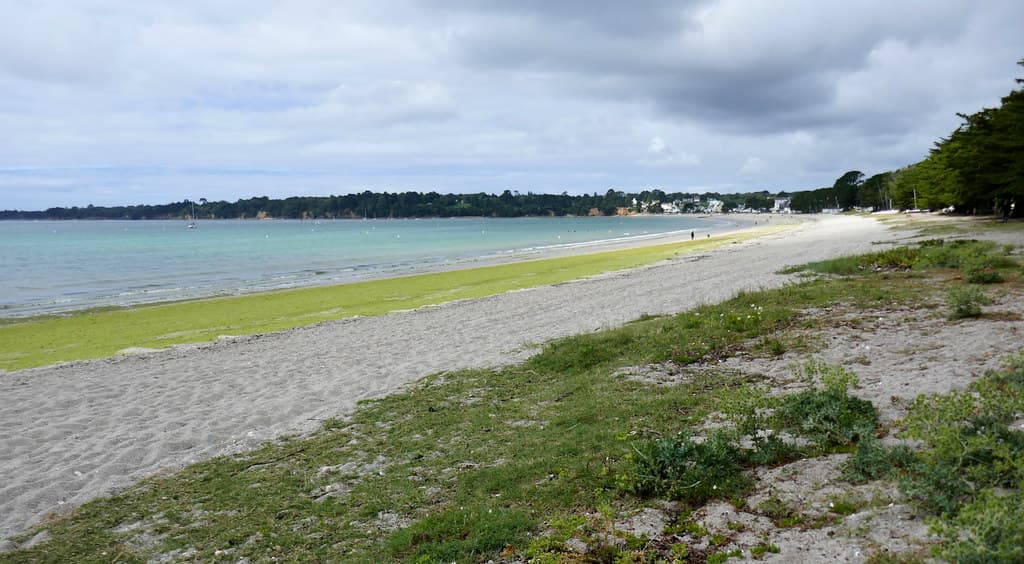
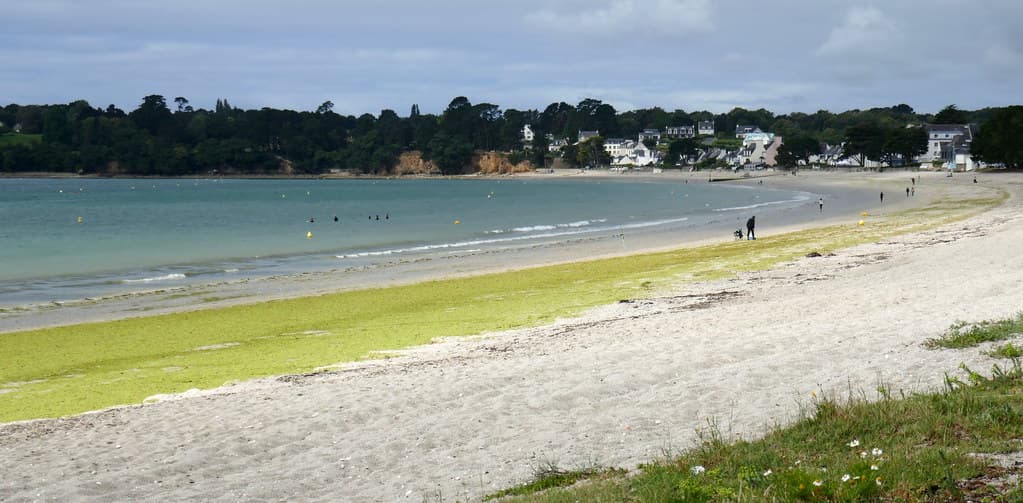
You'll find Plage du Cap Coz where the Baie de la Forêt opens wide, a long sweep of fine sand that catches light differently depending on the hour. At low tide, the beach stretches so far seaward that families set up camp halfway to the waterline, spreading blankets on sand still ribbed from the morning's retreat. The eastern end curves toward a small marina where white sails tilt against the pines; the western flank ends in a wooded point that blocks the wind and frames the Glénan islands floating on the horizon like a mirage.
“Its extraordinary tidal range creates a shape-shifting beach that doubles in size twice daily, revealing warm lagoons and sandbanks that vanish by evening.”
 Credit: Flickr
Plage du cap Coz, Fouesnant, Cornouaille, Finistère, Bretagne, France.
The water here is deceptively shallow—you can walk out until your knees ache before the sea reaches your waist. In summer, that shallowness turns the bay into a giant tidal bath, warmer than you expect from Brittany, calm enough that toddlers splash without fear and paddleboarders glide over submerged sandbanks. Locals arrive early to claim the shade beneath the pines, spreading checked blankets and uncorking Muscadet while the tourists are still hunting for parking along the coastal road.
As the afternoon softens, the beach empties toward the western tip, where the rocks offer footholds and the best vantage for sunset. The light turns everything amber—the sailboats, the wet sand, the faces of couples who've walked the length of the strand just to watch the sun drop behind Concarneau. You'll leave with salt on your lips and pine resin on your fingers, the particular perfume of the Breton coast.


