
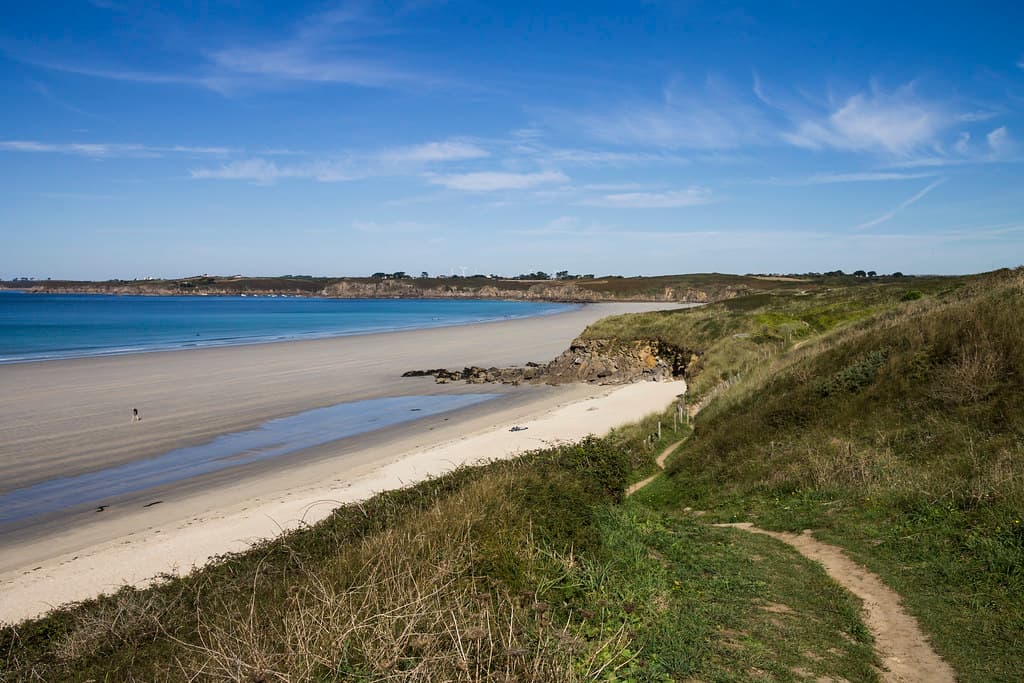
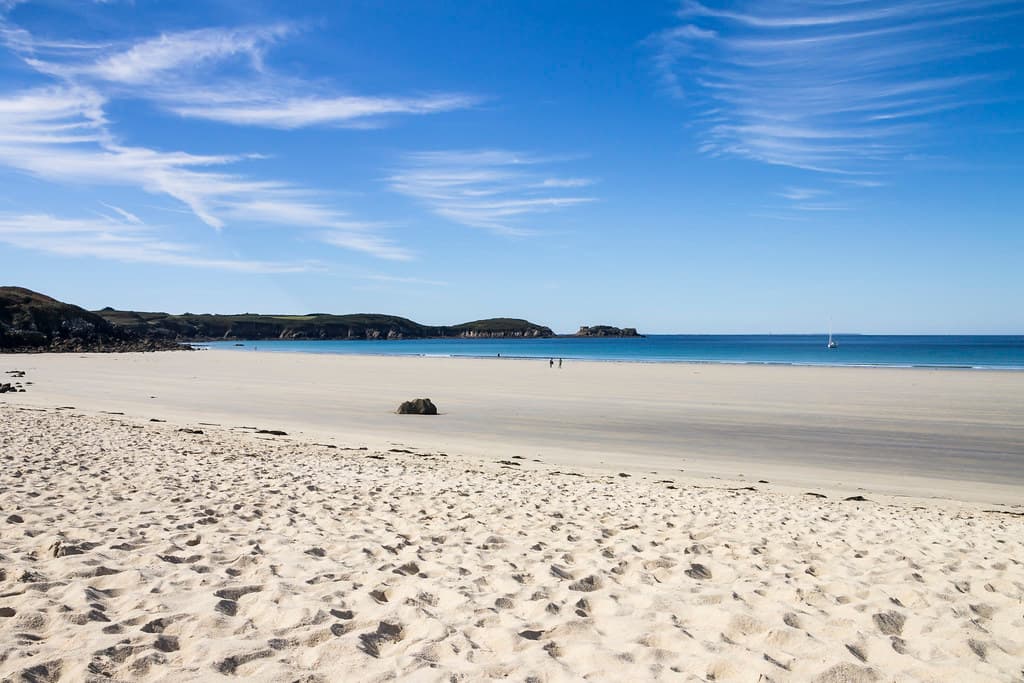
The white sand—fine-grained, almost flour-soft beneath your feet—gives Plage des Blancs Sablons its name and its unexpected Mediterranean feel, though the brisk westerly wind and the kelp-scented air remind you this is Brittany's wildest edge. At low tide, the beach stretches nearly a kilometre, revealing tide pools studded with mussels and anemones. The dunes behind you rustle with marram grass, anchoring the sand against Atlantic gales that have shaped this coastline for millennia.
“The only white-sand beach on this granite-dominated coast, offering Mediterranean softness with Atlantic drama.”
 Credit: Flickr
Plage des Blancs-Sablons
Surfers dot the northern section year-round, paddling out where the Pointe de Kermorvan's granite shoulder creates a dependable break. Families stake out the calmer southern stretch, where the slope is gentle and lifeguards patrol in summer. Dog walkers appear at dawn and dusk, their retrievers bounding through the shallows, and on clear days the silhouette of Ouessant island hovers on the horizon like a grey whale.
As afternoon softens into evening, you understand why locals drive from Brest just for the sunset here. The sky ignites—coral, then amber, then violet—and the lighthouse on Kermorvan blinks to life. Cars idle in the beach car park, their occupants unwilling to leave until the last thread of light dissolves into the Atlantic. This is the beach that defines the Léon coast: beautiful, accessible, untamed enough to remind you the ocean always wins.


