
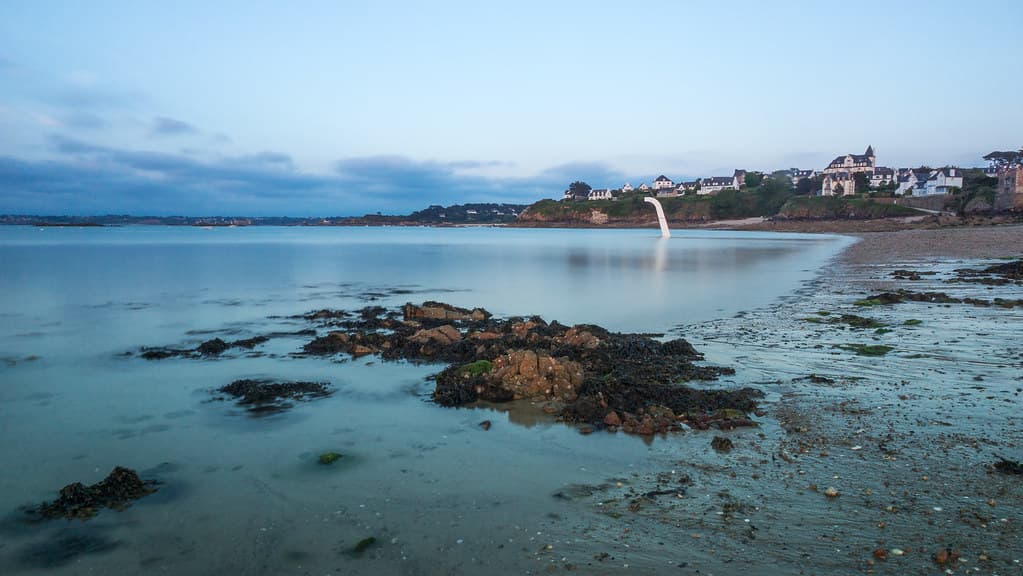
Plage de la Grève Blanche unfolds just beyond Le Guilvinec's bustling fish auction—Europe's fourth-largest—where the scent of sardines and the clatter of morning sales give way to a quiet strand named for its pale sand. You'll walk past moored trawlers still dripping brine, then step onto a beach that feels less like a resort postcard and more like a neighborhood front yard: local families spread blankets near the seawall, children dig moats around sandcastles, and retirees in wool cardigans stroll the tide line with terriers in tow.
“A working-harbor beach where fishing trawlers and sandcastle moats occupy the same skyline, anchoring authentic Bigouden coastal life.”
 Credit: Flickr
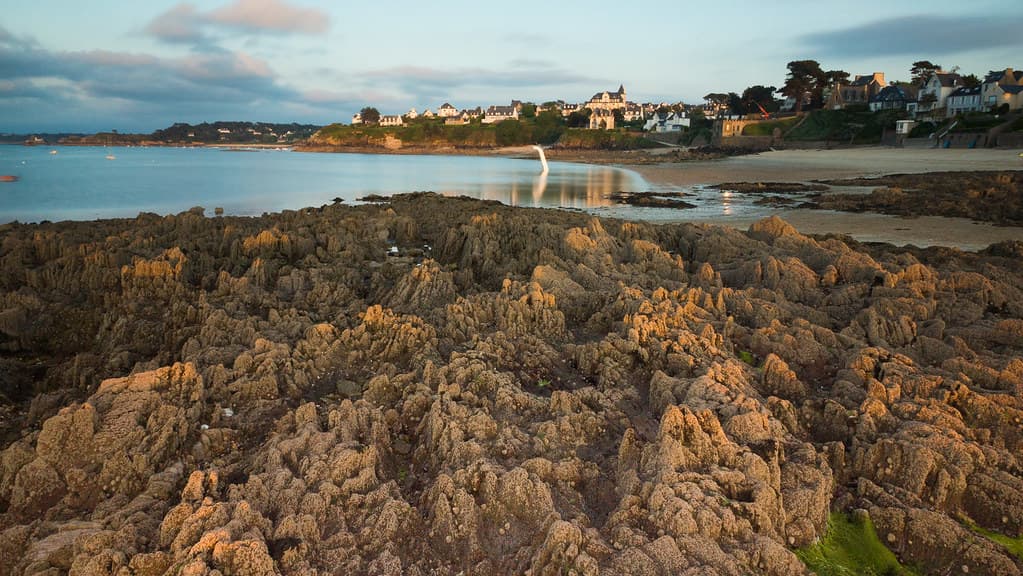
Dernier rayon de soleil sur la plage
The beach bends gently westward, framed by low grassy dunes and scattered granite boulders worn smooth by centuries of storms. At low tide, shallow pools collect among the rocks, revealing hermit crabs and periwinkles; at high tide, the water nudges the base of the concrete promenade where you can sit on weathered benches and watch fishing boats chug toward open water. The sand itself carries a faint shell grit that crunches underfoot, and the wind—ever-present in Finistère—carries the tang of kelp and diesel.
Come evening, the sun drops behind the Pointe de Penmarc'h lighthouse to the south, flooding the shallows with copper and rose. Families linger long past dinner hour, barefoot in the cooling sand, while gulls wheel overhead and the tide erases the day's footprints. It's Brittany without pretense: honest, elemental, and utterly itself.


