
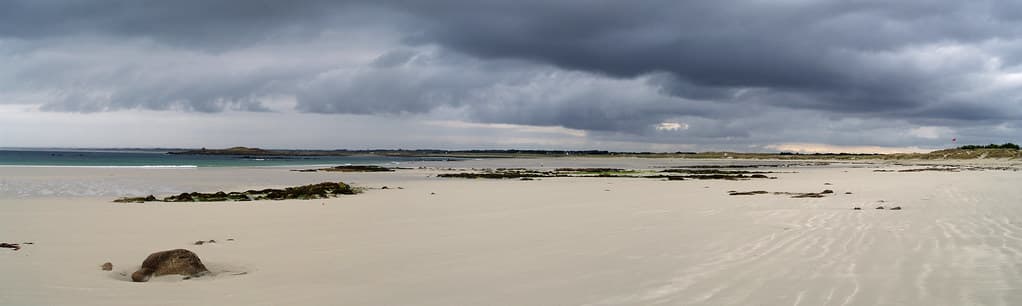
The beach unfurls in a low, sweeping arc between lichen-studded granite outcrops, its pale sand freckled with fragments of cockle and razor clam. Seaweed—black wrack and bladderwrack—marks the high-tide line in dark, tangled ribbons. Behind you, the heath smells of gorse and damp earth; ahead, breakers roll in from the Pointe de la Torche swell window but peel with less shoulder-to-shoulder jockeying. Locals from Penmarc'h villages favor this strand when the flagship break turns into a parking-lot circus.
“Pors Carn delivers the same Atlantic swell as La Torche but with a fraction of the line-up and none of the spectator gallery.”
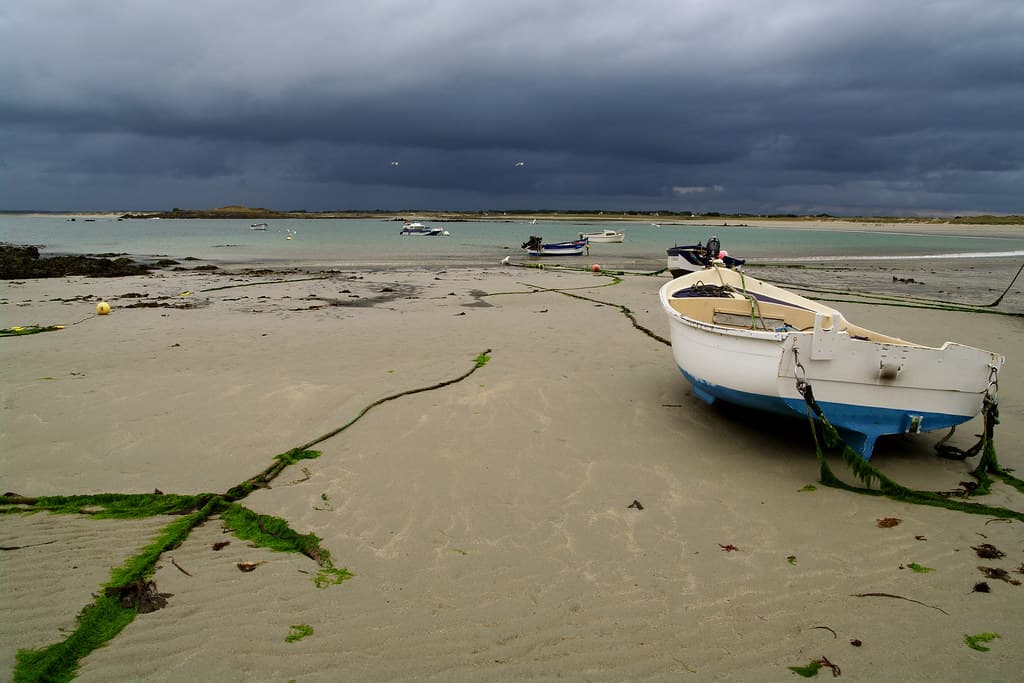 Credit: Flickr
Plage de Pors Carn
Low tide exposes tide pools where spider crabs scuttle beneath bearded tufts of kelp, and the receding water leaves the sand firm enough for barefoot jogs toward the Eckmühl lighthouse silhouette to the south. When the wind swings west, the beach takes on a scoured, almost Scandinavian severity—whitecaps stack to the horizon and spindrift stings your cheeks. Come evening, the sun slips behind Pointe du Raz, painting the wet sand copper and violet.
You'll share the strand with dog-walkers from the hamlets, van-lifers running through their post-session routines, and the occasional Breton grandparent collecting mussels in a blue plastic bucket. There's no boardwalk, no fry stand—just dune grass, granite, and the unfiltered Atlantic doing what it has done for centuries.


