
The drive into Plouhinec winds through hedgerow-lined lanes thick with hydrangeas, then deposits you at a generous car park overlooking a strand that stretches nearly a kilometer when the tide cooperates. Gwendrez lacks the postcard coves of neighboring beaches—instead, it offers something rarer: elbow room. Gulls wheel above beached kelp, and the sand underfoot shifts from butter-yellow near the dunes to slate-gray where the waves break, a reminder that this is granite country, where the bones of Brittany push through.
“One of the few south-facing Atlantic beaches in Finistère where you watch the sun sink into Audierne Bay rather than the open ocean.”
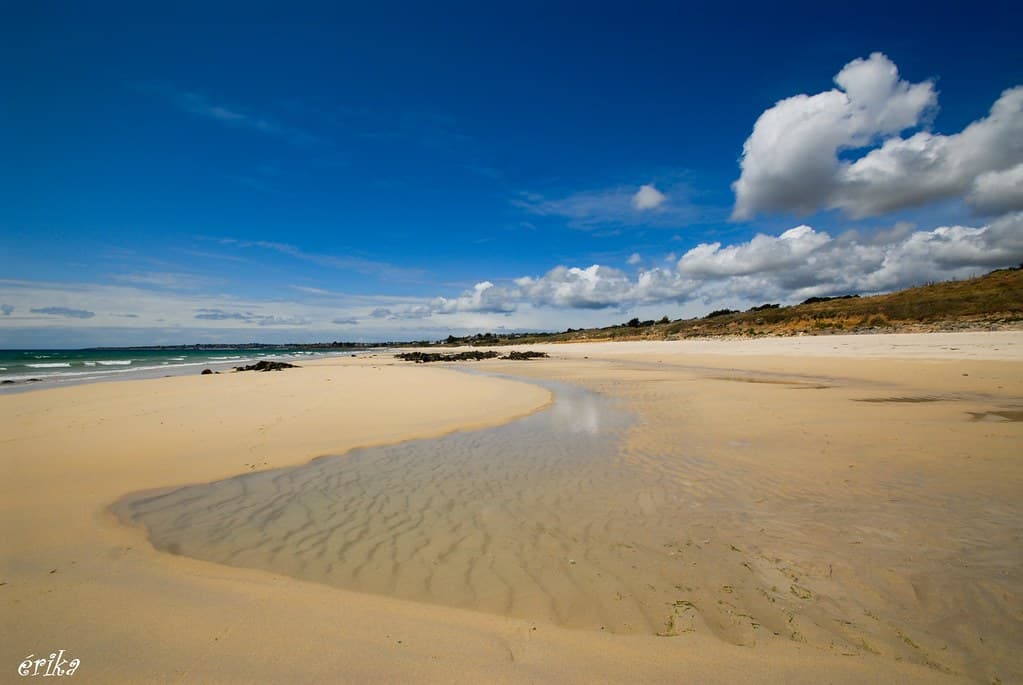 Credit: Flickr
plage de gwendrez à Plouhinec.
Surfers dot the line-up on west-swell days, riding shoulders that peel left toward the Pointe de Lervily. Families stake claim near the lifeguard post in July and August, children sprinting after receding waves with buckets in hand. By late afternoon the light goes molten, gilding the bay and silhouetting the Île de Sein on the horizon—a thin scratch of land that seems to float between sea and sky.
Stay past the last beachgoer and you'll hear what the locals know: Gwendrez at dusk belongs to oystercatchers and the rhythmic exhale of the Atlantic. The wind never quite stops, even on calm evenings, carrying the smell of iodine and wild thyme from the coastal path that traces the cliffs northward. This is Finistère—land's end—and Gwendrez wears that identity without fuss.


