
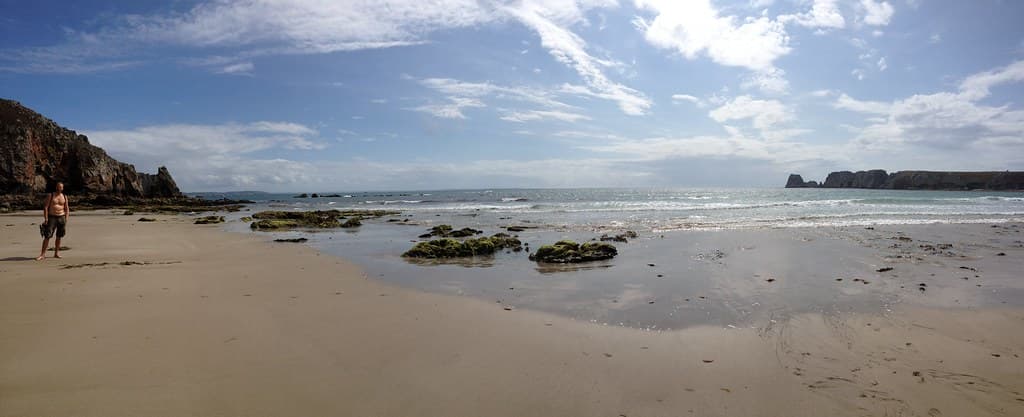
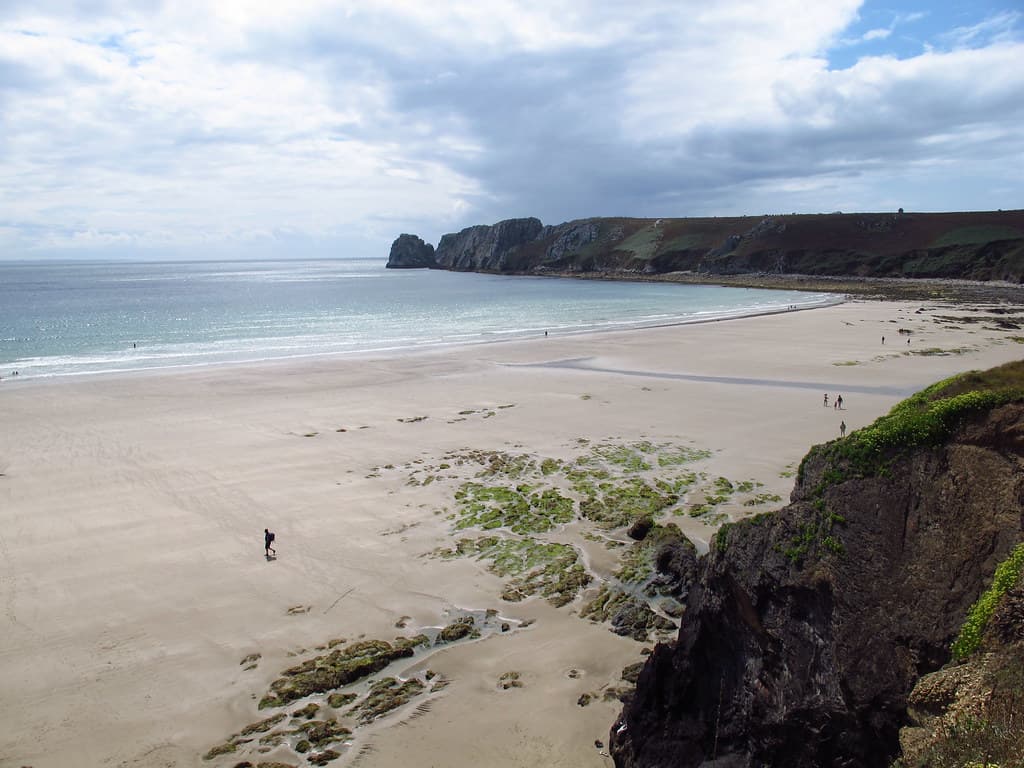
Plage du Veryac'h sits in the kind of coastal fold that guidebooks miss—a small arc of coarse sand and smooth pebbles cupped between dark granite outcrops, facing the sheltered waters where the Crozon Peninsula meets the Brest roadstead. The beach reveals itself slowly: first the scent of salt and iodine, then the sight of fishing boats anchored in the bay, their hulls swaying in the tidal current. At low tide, bands of ochre seaweed drape the rocks, and shallow pools trap starfish and periwinkles.
“This tucked-away cove on the roadstead side offers the Crozon Peninsula's drama without the Atlantic's crowds or chill.”
 Credit: Flickr
Plage du Veryac'h
The light here behaves differently than on Brittany's ocean-facing beaches. Because you're looking east across the roadstead toward the Presqu'île de Plougastel, afternoon sun warms the granite to amber, and evening brings a softer, horizontal glow that turns the water pewter and rose. Wooden footpaths thread along the shore toward neighboring coves, passing patches of gorse and blackthorn. In any season, wind braids the surface of the bay, and the air carries the faint diesel tang of working harbors mixed with wild thyme.
There's no beach bar, no striped umbrellas. A small gravel parking area serves a handful of cars. The few visitors you encounter are Roscanvel residents walking dogs or checking crab pots, and the quiet feels intentional, protected by the village's geographic remoteness at the peninsula's tip. You leave with sand in your shoes and the sense of having slipped through a crack in the tourism machine.


