
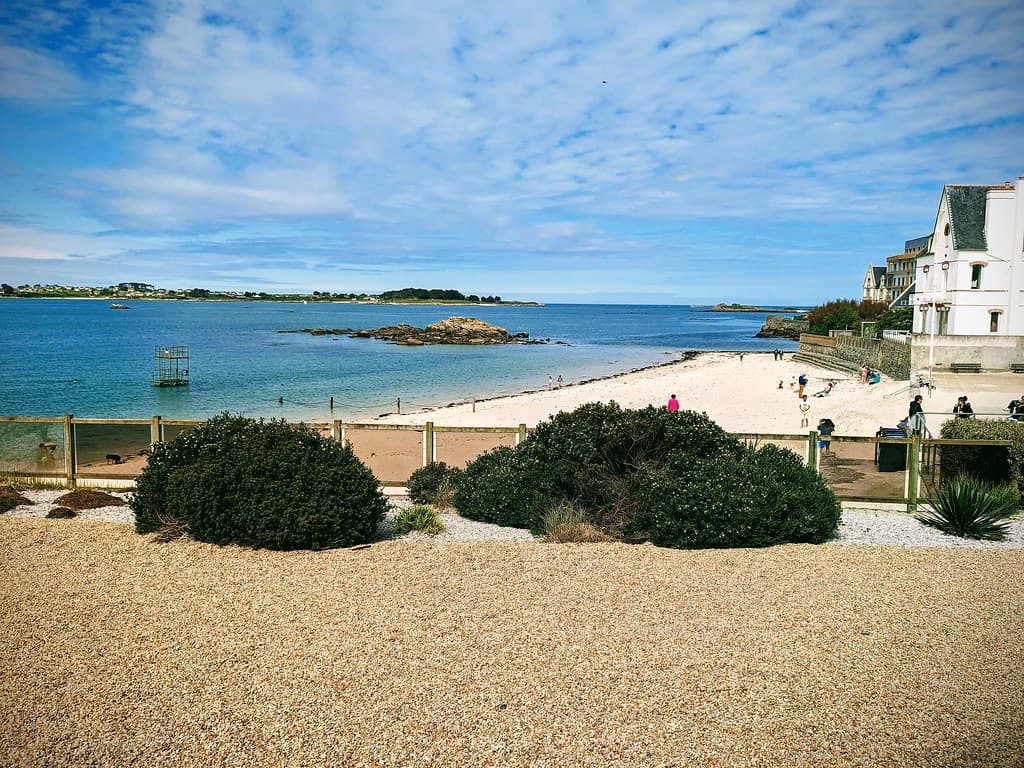
Roc'h Kroum unfolds at the northern edge of Roscoff, where the town's honey-stone houses give way to a compact crescent of rust-toned sand and dark gneiss outcrops. You arrive to find families wading thigh-deep into water so shallow it feels stolen from a lagoon, children netting shrimp in pools scalloped by centuries of Atlantic weather. The beach sits a five-minute walk from the ferry terminal, yet feels insulated—gulls wheel overhead, and the scent of iodine mingles with crêpes browning in a nearby café.
“A working ferry town's beach that doubles as the locals' living room, where tide schedules trump tourist hours.”
 Credit: Flickr
UNE PETITE PLAGE
Low tide rewrites the geography twice daily: channels appear between rock shelves, exposing ribbons of kelp and anemones the size of thumbnails. You can walk a hundred meters out, boots squelching in wet sand, and still see the striped awnings of Roscoff's old quarter. Locals arrive in late afternoon with baguettes and thermoses, claiming boulders warmed by the day's sun. By evening the granite glows rust-orange, and the Isle of Batz lighthouse blinks awake across the strait.
The beach anchors a town that lives on two rhythms—tourist bustle and tidal patience. You leave with salt crusting your calves and the faint hum of Breton spoken by fishermen coiling rope on the jetty, a reminder that some shorelines resist polish and keep their working-class soul intact.


