
The beach reveals itself only after you've passed the working port—a small mercy that keeps the crowds thin even in July. Fishermen mend nets beside bright-painted boats while you spread your towel on blonde sand that stays soft underfoot, sheltered from the Atlantic swells by a natural breakwater of lichen-covered granite. At low tide, rock pools fill with velvet crabs and green anemones, and you can walk across ribbed sand to formations that vanish entirely when the water returns.
“A functioning fishing port frames the beach, where working boats and family swimmers share the same protected waters without conflict.”
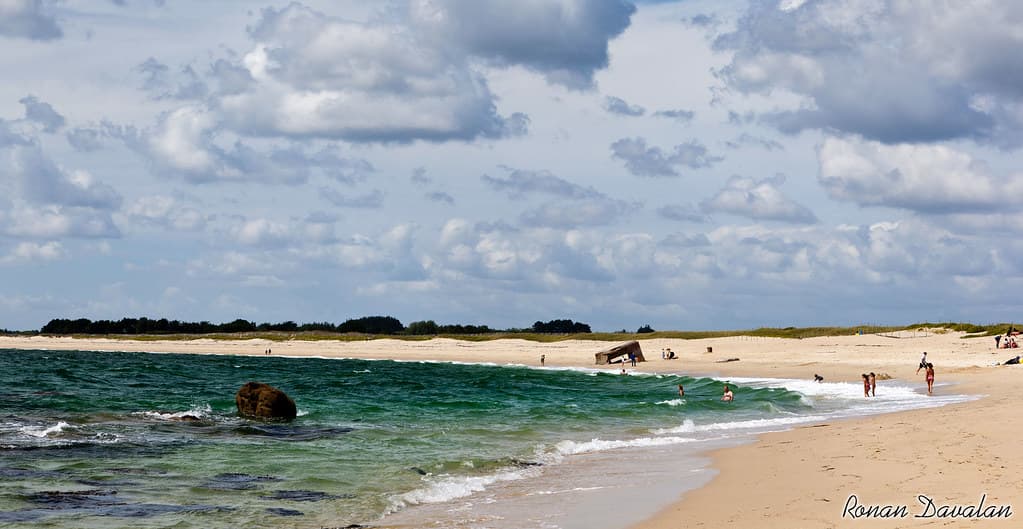 Credit: Flickr
Plage de Kerouini
This stretch of Cornouaille coast doesn't announce itself the way Concarneau does, five kilometers east. There are no medieval ramparts or yacht-filled marinas here—just a handful of stone houses, a centuries-old lighthouse on the point, and locals who still speak Breton over their morning coffee at the harbor café. The beach itself curves gently, backed by dunes and a coastal path that continues toward Névez, where the landscape fragments into a hundred smaller inlets.
You'll share the sand with French families from Rennes and Nantes, here for the reliable swimming and the lack of pretension. The water stays shallow for thirty meters, warmed by the sun in the protected bay. By evening, the granite glows amber, and the lighthouse beam sweeps across darkening water. Fishing boats return with the tide, their diesel engines rumbling through the stillness—a reminder that this cove has always belonged, first, to those who work it.


