
You arrive to find a beach that refuses to be modest. The sand arcs in a generous curve, its surface crossed by the shadows of two dozen palms that lean at improbable angles, their fronds chattering overhead. The color sits somewhere between butterscotch and raw honey, deepening to rust where the surf has dampened it. Families stake out territory beneath the trees, their setups elaborate: popup tents, portable speakers playing zouk, Tupperware towers of colombo and rice.
“Guadeloupe's most photographed Caribbean beach, where the combination of length, sand quality, and mountain backdrop creates an iconic visual signature.”
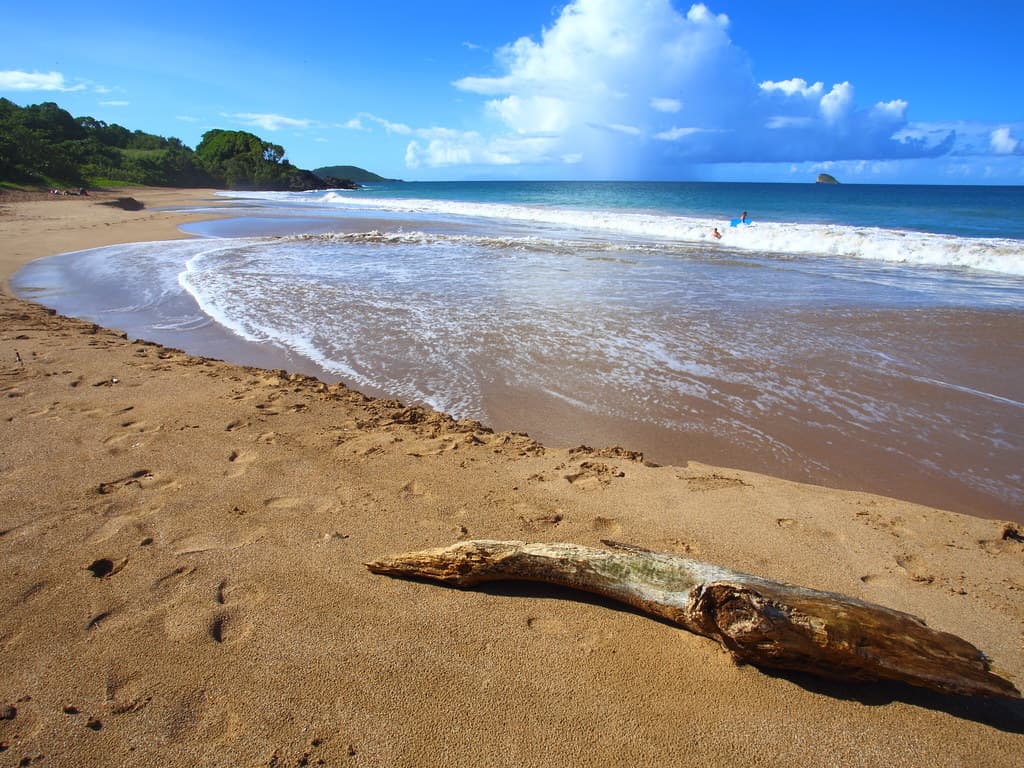 Credit: Flickr
Plage de Grande Anse — photo by dbrothier
The water entry is democratic and gradual. You walk in and the seafloor slopes away with patience, giving you fifty feet of thigh-deep warmth before you need to swim. Small waves fold over in soft curls, nothing aggressive, their sound a steady exhale. Across the bay, the hillside village of Deshaies climbs in tiers of painted houses—salmon, cerulean, moss green—tucked between mango trees and breadfruit. The snorkeling is modest but present: swim north toward the rocky point and you'll find sergeant majors, parrotfish gnawing coral, the occasional hawksbill turtle passing through with ancient indifference.
By late afternoon the beach has found its rhythm. Vendors appear with coconuts and sorbets coco. The light goes golden, then amber, then ignites into those improbable Caribbean sunsets that look algorithmically enhanced but aren't. You watch the sky cycle through peach, magenta, violet, the sun descending behind the headland while the first stars punch through the deepening blue overhead.


