
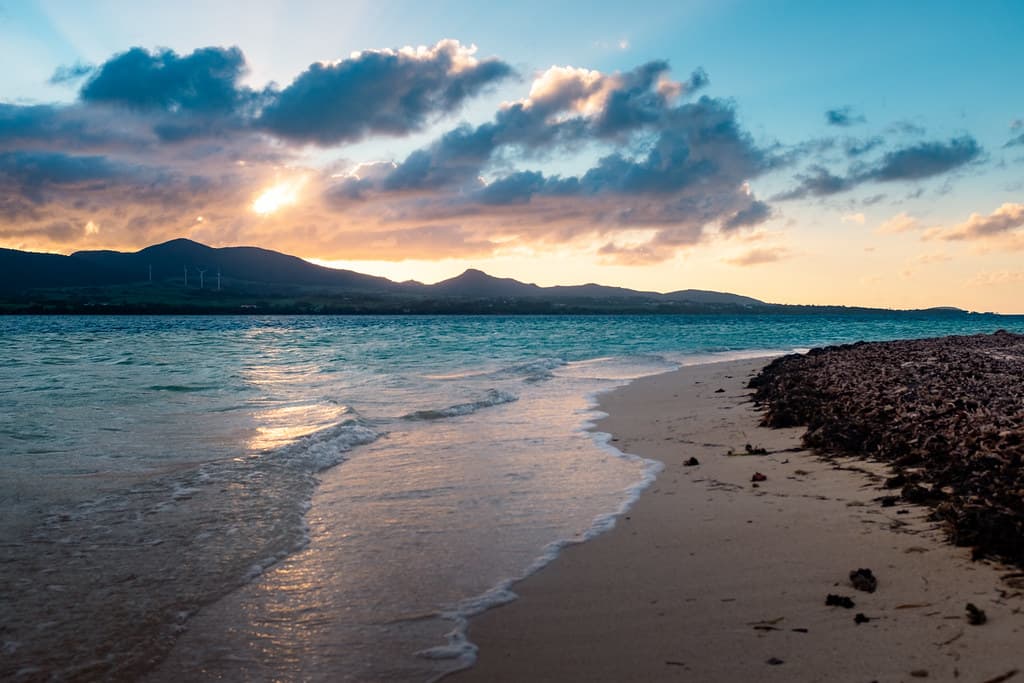
The road through Lamentin narrows to a single lane before delivering you to Plage de Blachon, where seagrape branches arch over picnic tables weathered silver by salt air. You'll notice the stillness first—this corner of the Grand Cul-de-Sac Marin sits protected by mangrove channels that turn the Atlantic swell into whispers. Local families spread blankets in the shade while children wade knee-deep, stirring clouds of fine sediment that hang suspended in the warm water.
“The mangrove-filtered lagoon creates bathwater shallows where fishing tradition outweighs tourism along Guadeloupe's least-developed coast.”
 Credit: Flickr
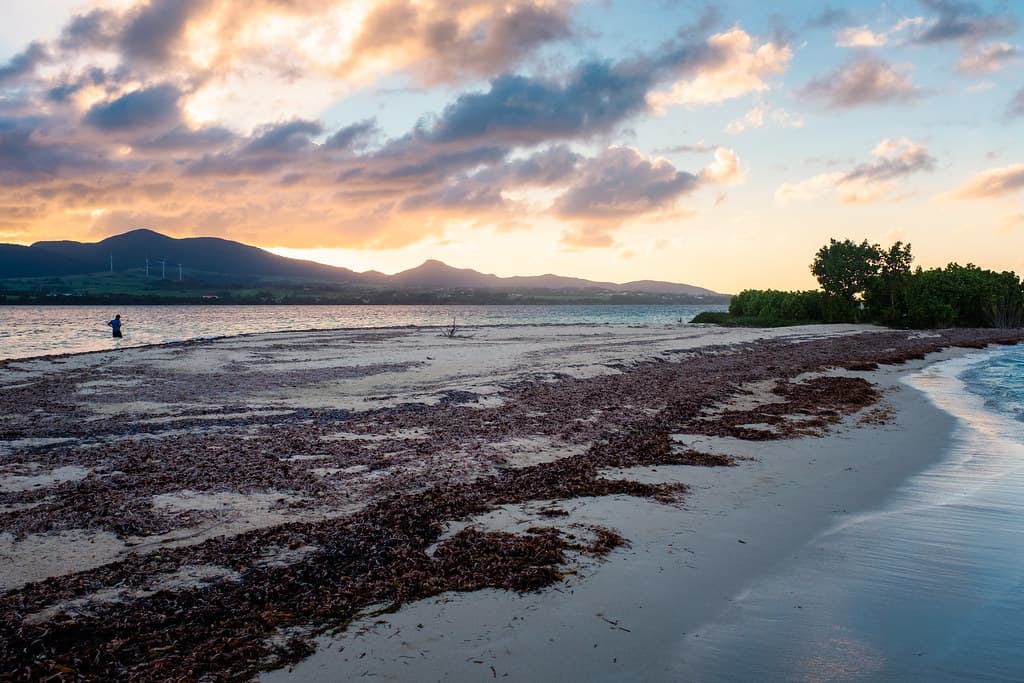
Plage de Blachon — photo by syldeles
The beach curves gently, its sand the colour of brown sugar, dotted with fragments of conch and whelk that crunch softly underfoot. Fishermen launch from here in the early morning, their painted wooden boats leaving wakes that flatten before reaching shore. By midday, the heat settles heavy, broken only by breezes threading through the mangroves, carrying the faint mineral scent of mud flats and the sharper note of grilling fish from someone's cooler.
You won't find jet skis or beach bars here—just the rhythmic scrape of a rake smoothing sand, the occasional heron stalking the shallows, and the unhurried conversations of people who've claimed the same spot every Sunday for decades. The water stays shallow for twenty metres, warm as bathwater, ideal for wading with a cold Corsaire in hand while the afternoon light turns the lagoon to hammered bronze.


