
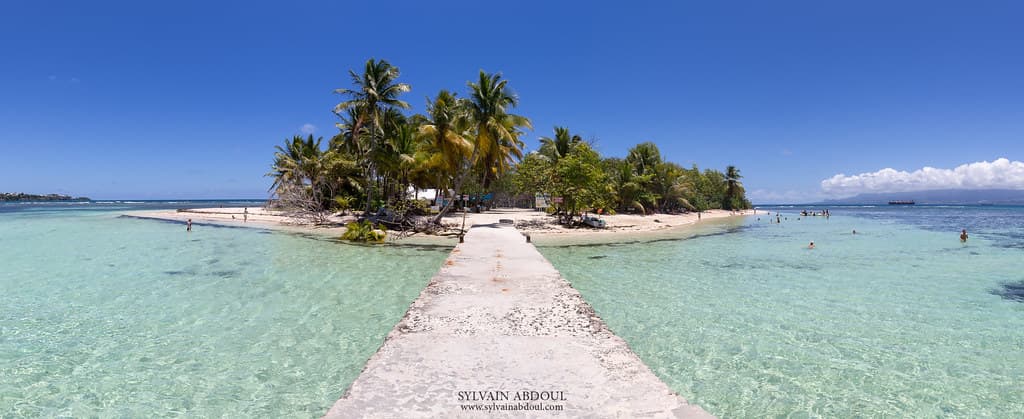
The approach crosses a small bridge over a seasonal creek, its banks thick with mangroves where herons stalk at low tide. The sand appears in sections: a main strand backed by palms, then smaller pockets separated by volcanic rock outcrops that create natural privacy zones. You'll notice immediately this is a locals' beach—cars arrive with fishing rods already rigged, coolers that suggest all-day stays, children who navigate the rocks with the confidence of long familiarity.
“The location between major beaches means it absorbs overflow crowds while maintaining a distinctly local atmosphere most visitors bypass.”
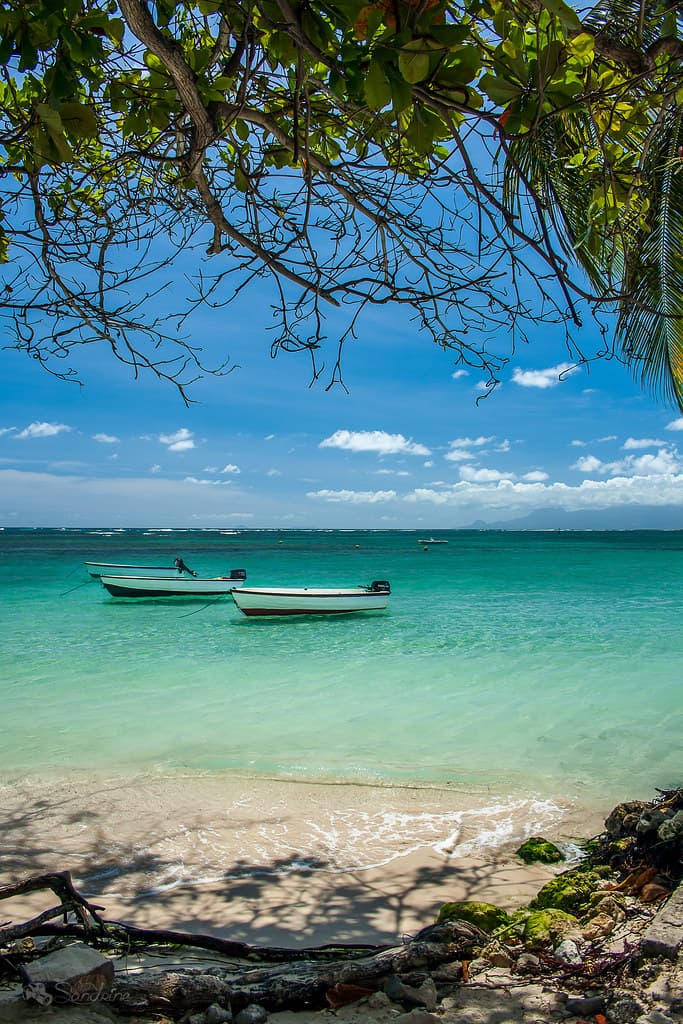 Credit: Flickr
Plage de Salines — photo by @ S@ndrine
Water conditions vary with the reef geometry. In some sections you'll wade across pure sand; in others, coral rubble requires water shoes for comfortable entry. The swimming stays shallow and protected, though less uniformly so than at the famous beaches. Snorkelers work the rocky areas where the bottom transitions from sand to reef, finding sergeant majors, parrotfish, and the occasional ray gliding over turtle grass beds.
The beach's in-between status shapes its character. You won't find the picture-postcard perfection of Raisins Clairs or the cove intimacy of Petit-Havre, but you also won't battle for parking or wade through vendor gauntlets. What you get is functional beauty: a legitimate stretch of Caribbean coastline where the ratio of locals to tourists stays heavily weighted toward the former. Saturday afternoons bring extended families and their elaborate picnic setups. Weekday mornings you might share the sand with a handful of others, all engaged in the serious business of doing nothing productive.


