
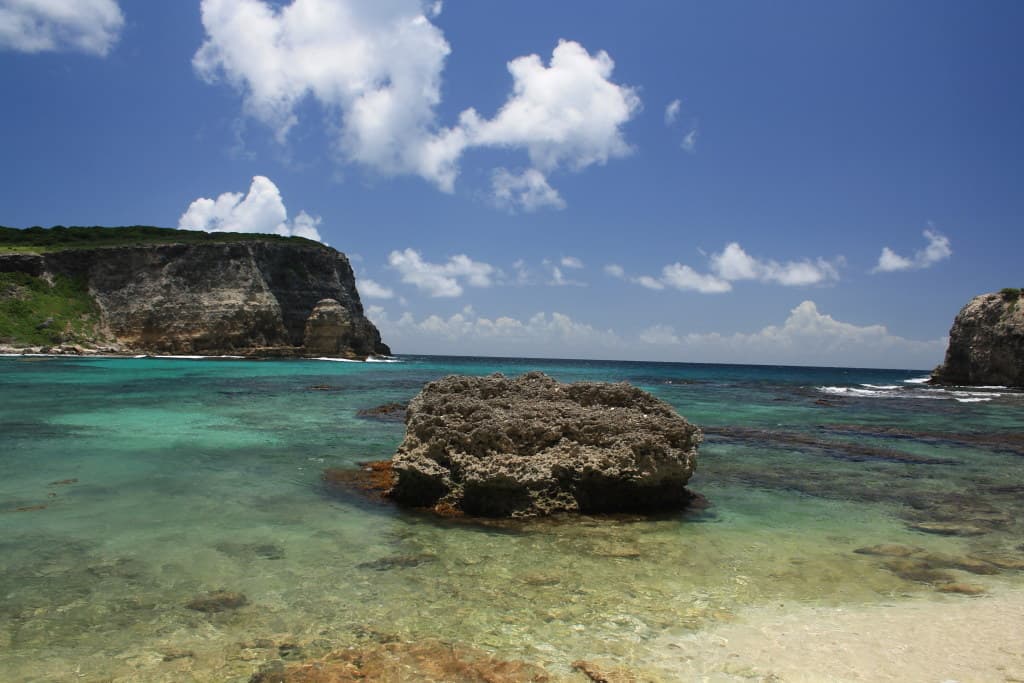
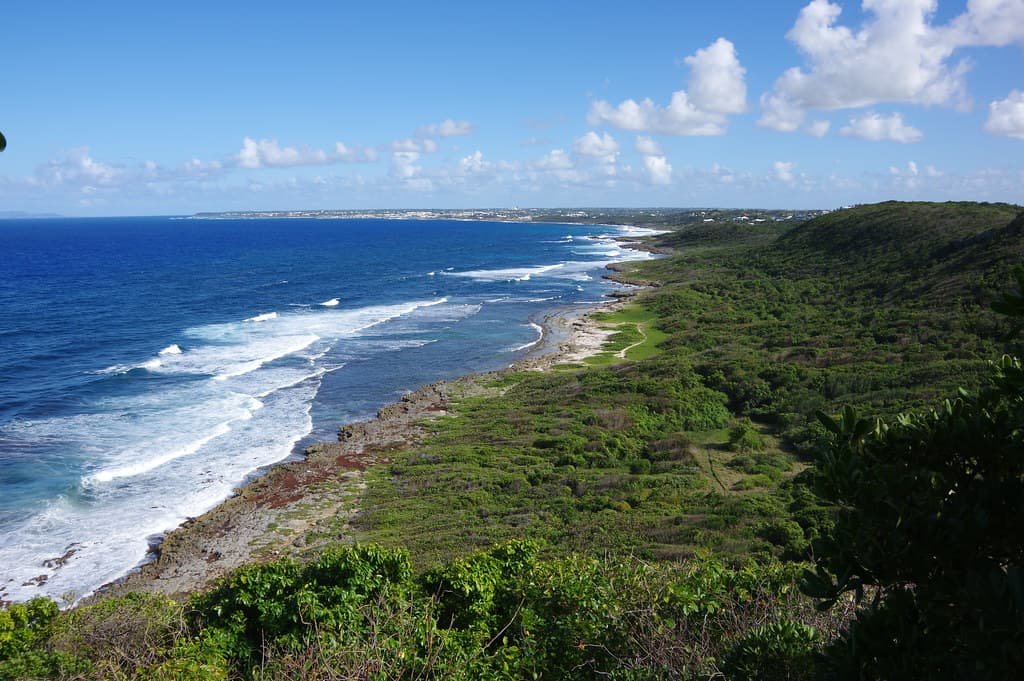
The sand here runs long and relatively untamed, backed by low coastal vegetation rather than hotels or restaurants. You'll feel the Atlantic immediately—wind that never fully stops, waves that arrive in consistent sets, the sense of facing an ocean that means business. The beach takes its character from this exposure: fewer umbrellas, more serious wave-riders, sand that shifts and rebuilds itself with each tide cycle.
“Unfiltered Atlantic energy meets undeveloped coastline where Le Moule's shore faces three thousand miles of ocean with nothing but waves in between.”
 Credit: Flickr
Plage des Dauphins — photo by martinwain1
Morning light catches the wave faces as they build and break, illuminating the water's interior—green-blue, opaque with suspended sand, powerful. Surfers paddle out at the main break, their boards briefly visible before dropping into troughs. You'll see bodyboarders too, taking the shore-break pounding that would snap a stand-up rider. The beach slopes steeply in sections, creating that particular challenge of waves that break directly on sand rather than over reef—harder to read, quicker to close out, honest in their chaos.
The coastal scenery extends north and south, uninterrupted by development: just beach, vegetation, and the Atlantic doing what it does. You'll walk farther than intended, hypnotized by the rhythm of waves and the perpetual rearrangement of shells along the strand line. By the time you return to your starting point, the tide will have erased your footprints, the beach reset for whoever comes next.


