

You park in the dirt lot under the grape trees and walk twenty paces to the sand. The beach is narrow and curved, backed by low vegetation and fronted by water so translucent you can count pebbles on the bottom three meters out. A reef stitches the horizon, and the lagoon it encloses is a study in gradients: pale jade near shore, deepening to turquoise, then sapphire where the reef begins. The sand is mixed—patches of fine powder alternating with coarser coral fragments—and the tideline is dotted with conch shells and sea fans.
“The Sainte-Anne lagoon beach where you're more likely to see a heron than a tour group, and the water stays shallow for a football field.”
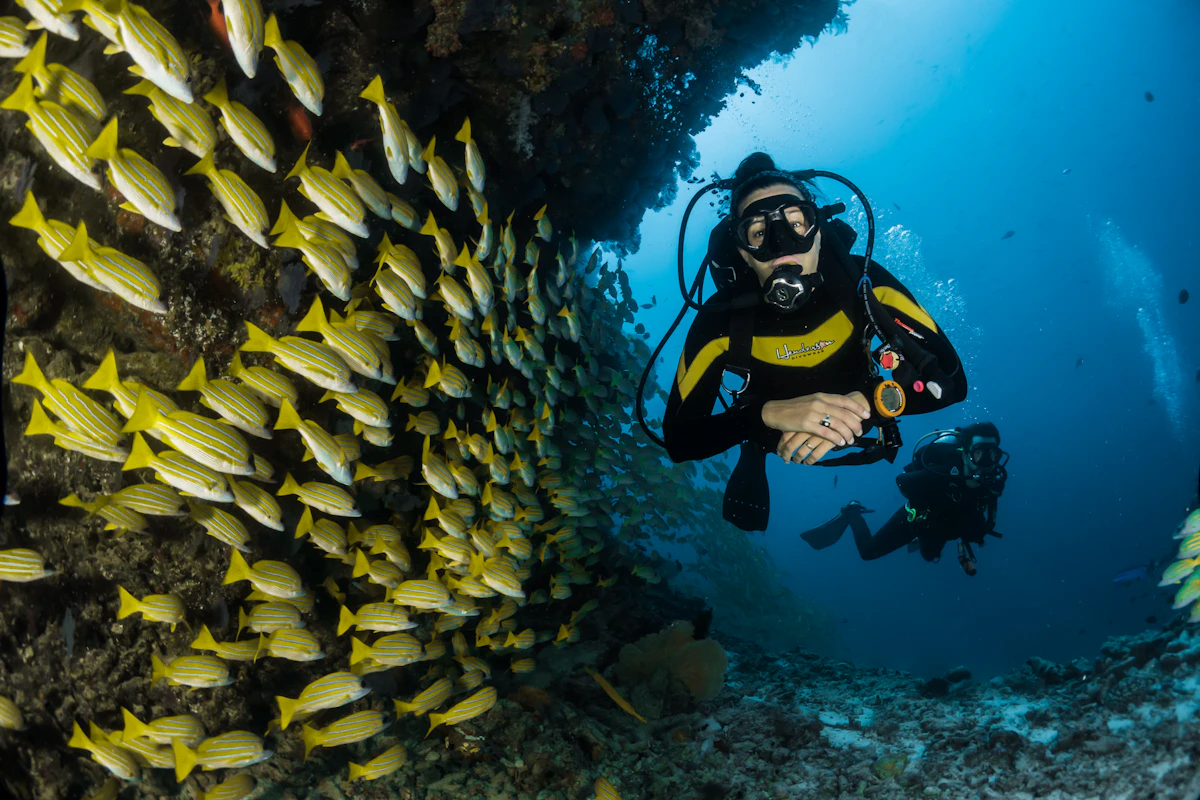 Credit: Unsplash
Palm trees framing a sunset shore
A few families claim the shade, their children constructing elaborate waterworks in the shallows. A fisherman wades chest-deep, casting a net in a wide, practiced arc. There's no commerce here, no loungers for rent, no bar pumping zouk. You bring what you need or go without. The silence is broken only by the breeze in the mangrove roots and the occasional splash of a pelican.
Afternoons stretch long and drowsy. The water temperature climbs, and you alternate between floating and retreating to the shade to read. By four the light softens, and the lagoon takes on a glassy sheen. Locals arrive after work, slipping into the water still wearing their dusty clothes, and the beach hums quietly with conversation. Sunset is understated—a slow fade rather than a spectacle—and the first stars appear while the horizon still holds a trace of violet.


