

You park in a lot shaded by umbrella pines, their needles crunching underfoot as you walk toward the sound of small waves. The beach stretches in both directions, its length making crowds disperse naturally even in August. Beach clubs occupy the central section—rows of blue umbrellas, a bar serving panini and Pietra beer, children queuing for gelato at the stand near the showers.
“It serves as the main coastal access point for Cervione and anchors the Costa Verde's resort infrastructure.”
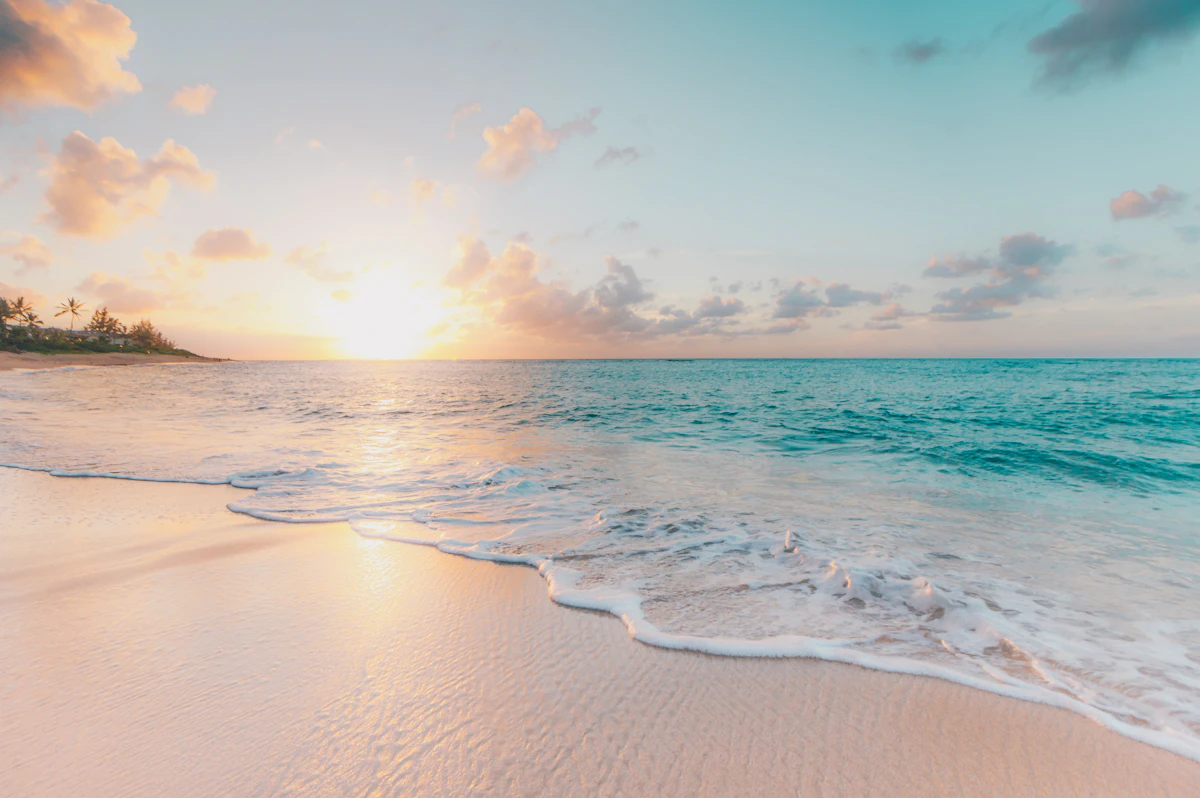 Credit: Unsplash
Aerial view of turquoise tropical bay
The water is warm and shallow, the bottom dropping gradually enough that you can walk fifty meters from shore and still touch sand. Families spread out in clusters, towels marking territories, coolers half-buried in sand to keep contents cold. The swimming is unremarkable—no dramatic clarity or marine life, just reliable temperature and gentle waves that lap rather than crash. A lifeguard watches from a wooden tower, occasionally blowing a whistle when someone swims beyond the buoyed zone.
Behind the beach, low-rise apartments and vacation rentals face the water, their shutters thrown open to catch the breeze. The mountains rise inland, Cervione's bell tower visible on its ridge when haze clears. By evening the beach empties except for walkers and a few teenagers playing paddleball near the waterline. The last light turns the wet sand copper, and you can walk the entire length without dodging blankets or umbrellas.


