

You arrive in Meria not through signposted tourist trails but by following the narrow road that drops between stone houses, their shutters painted the faded blue of old boats. The beach unfolds below, a crescent of rounded stones flanked by low rock shelves where cormorants perch and dry their wings. Unlike the poster-perfect coves that draw the tour buses, this shore belongs first to the village—lines strung between poles hold drying octopus, and the small bar across the road opens when it opens.
“This is one of the rare Cap Corse beaches where local fishing culture still defines the shoreline rather than tourism.”
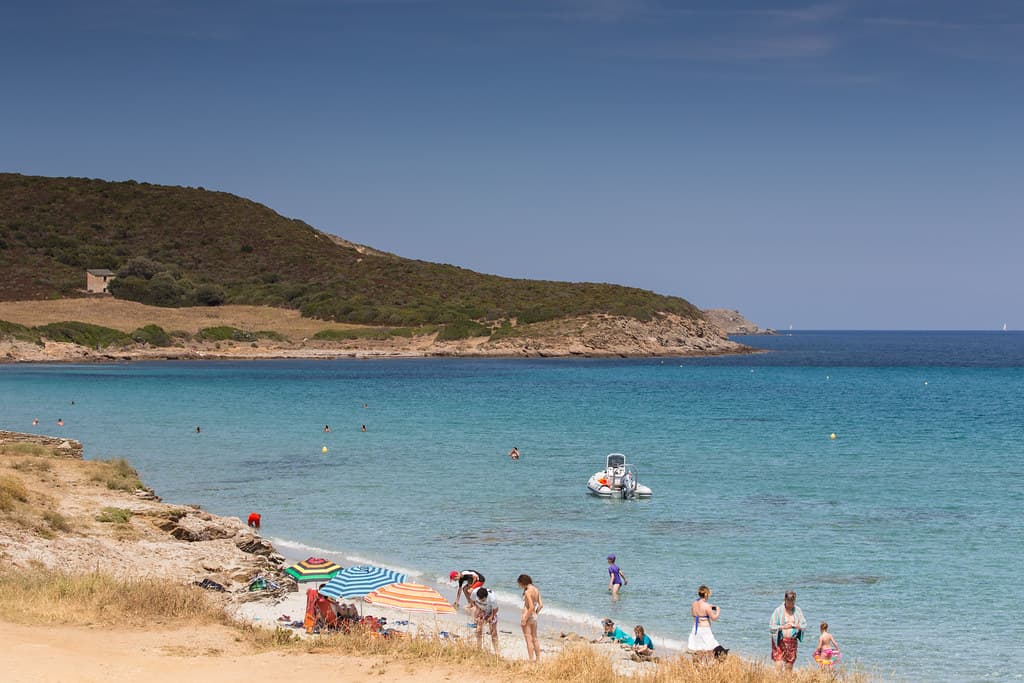 Credit: Flickr
Plage de Meria — photo by CarolienC
The pebbles clatter softly as wavelets arrive, sorted by tide into bands of grey, rust, and black. You'll want water shoes; the stones are smooth but unyielding. Wade in and the seabed shelves gradually, the water cool even in July, filtered clean by the rocky bottom. Families spread towels on flattened sections, children building cairns instead of sandcastles. The backdrop is green scrub climbing toward the spine of Cap Corse, punctuated by the square silhouette of a Genoese tower.
Come in the late afternoon when the light slants gold across the surface and the few visitors have packed up. You'll hear the slap of cards from the café terrace, the buzz of cicadas in the brush, and nothing else. This is Corsica without the performance, a place where the beach serves the village rather than the other way around.


