
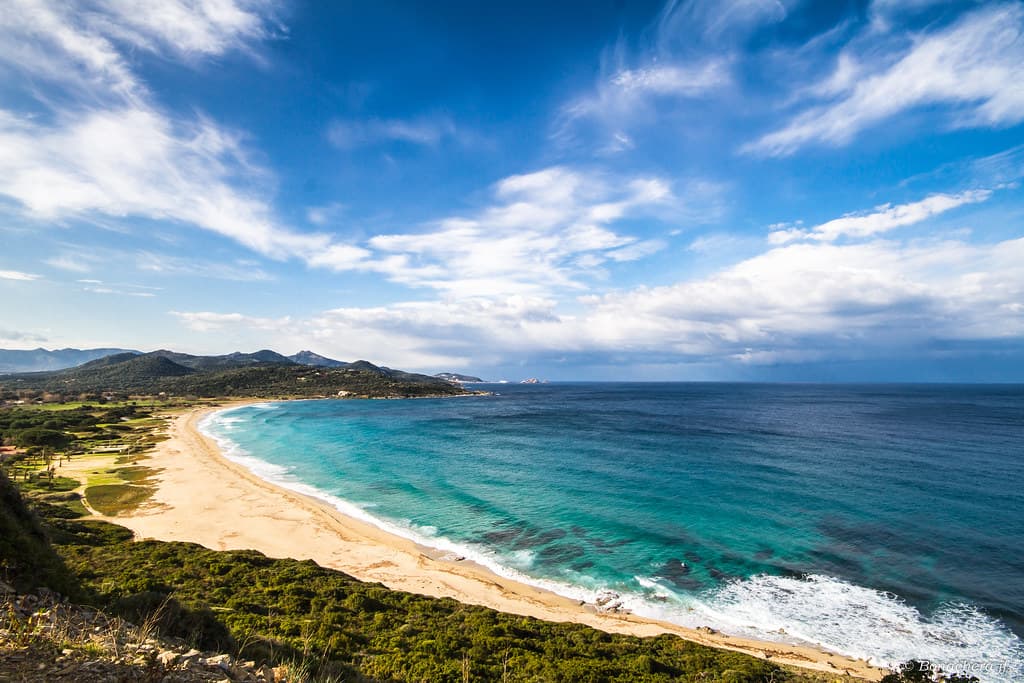
The descent from the parking area takes you through shoulder-high maquis—juniper, myrtle, and rockrose releasing their oils under the Corsican sun. The boardwalk crosses the Ostriconi's sluggish mouth, where herons stand motionless in the shallows. Then the sand opens up: a kilometer-long crescent backed by dunes and the occasional wind-sculpted pine.
“This is the last wild threshold before the Balagne's coast turns manicured, a place where the Agriates still dictates the terms.”
 Credit: Flickr
Plage de l'Ostriconi — photo by bonacherajf
The northern end collects driftwood against dark volcanic rocks; families cluster near the river where the water runs shallow and tepid. Farther south, the beach empties out. The sand here is coarse, golden-grey, tracked by gulls and the occasional fox. Waves arrive in sets, their rhythm unbroken by jetties or seawalls. Behind you, the mountains of the Agriates rise in hazy tiers.
You won't find umbrellas for rent or a beach bar. What you will find: space, the smell of salt and wild fennel, and the sense that this corner of the Balagne hasn't been tidied up for tourists. By late afternoon, the light turns amber, and the few remaining visitors pack up their towels, leaving the beach to the wind.


