
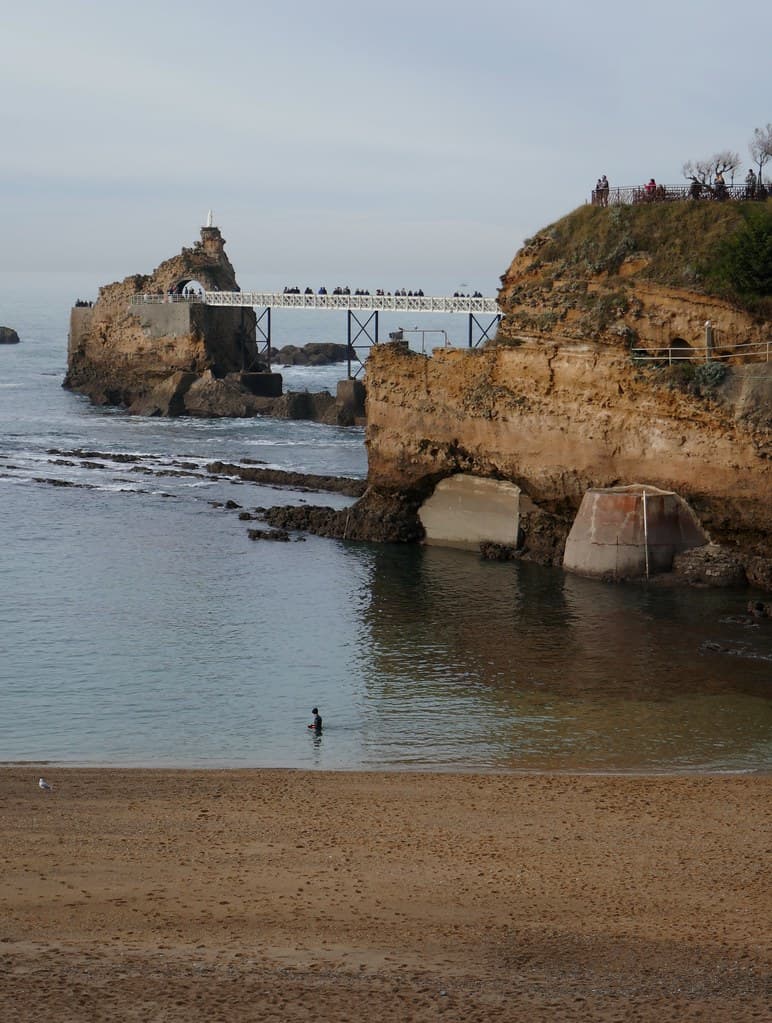
You find Plage du Rocher at the quieter western edge of Lancieux, where the Côte d'Émeraude begins to soften into tidal flats and the crowds thin to a handful of families and solitary walkers. The beach unfolds in a gentle arc between two granite promontories—dark, lichen-spotted rock that glows amber in late afternoon light. The sand here runs coarse underfoot, studded with shell fragments and the occasional disc of sea glass worn smooth by centuries of tide.
“One of the last named beaches in Ille-et-Vilaine where fishing boats still outnumber sunbathers and the tide reveals an entire second landscape twice a day.”
 Credit: Pixabay
rocher du verdelet, coast, sea, coastline, seashore, rock formation, rocks, nature, scenery, tourism, pléneuf-val-andré, côtes-d'armor, brittany, france
The rhythms of this coast dictate everything. When the tide recedes—and it recedes far, exposing acres of rippled sand and seaweed gardens—you can walk out to the Rocher itself, the offshore rock that gives the beach its name. Gulls wheel overhead. Small boats rest on their keels, waiting. The air smells of iodine and wet rope. When the water returns, it fills the cove with surprising speed, turning it into a protected swimming basin the color of slate.
Lancieux remains defiantly local, a working fishing village that tolerates tourism rather than courting it. The few cafés along the waterfront serve galettes and cidre in bowls, not cocktails. Sunset here isn't a performance; it's simply what happens when the day ends, the sky bleeding rose and violet over the Île des Hébihens while you stand ankle-deep in cool water, alone except for a dog chasing waves.


