
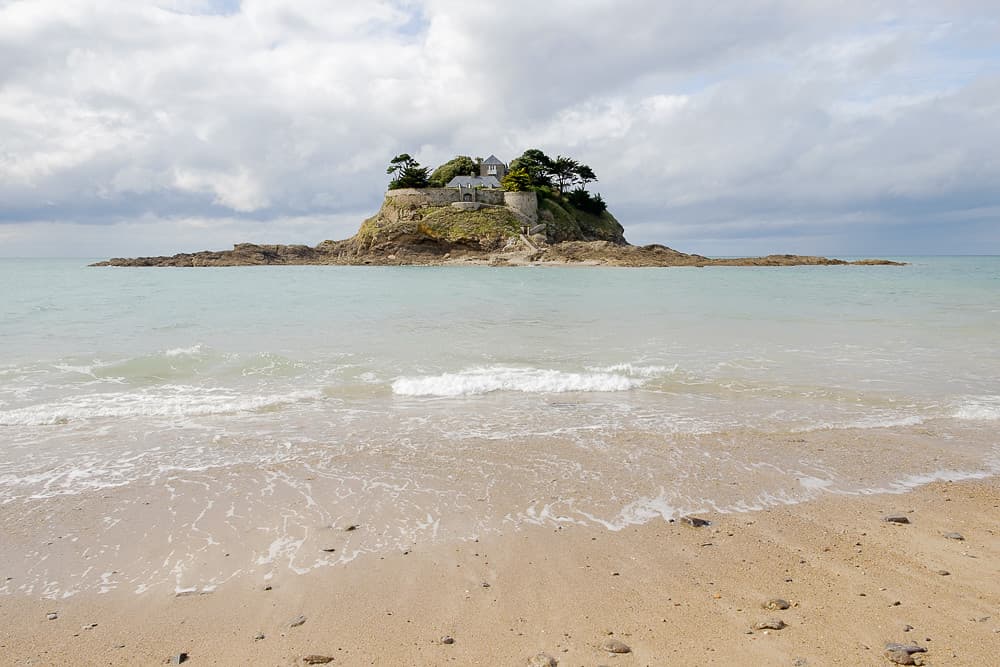
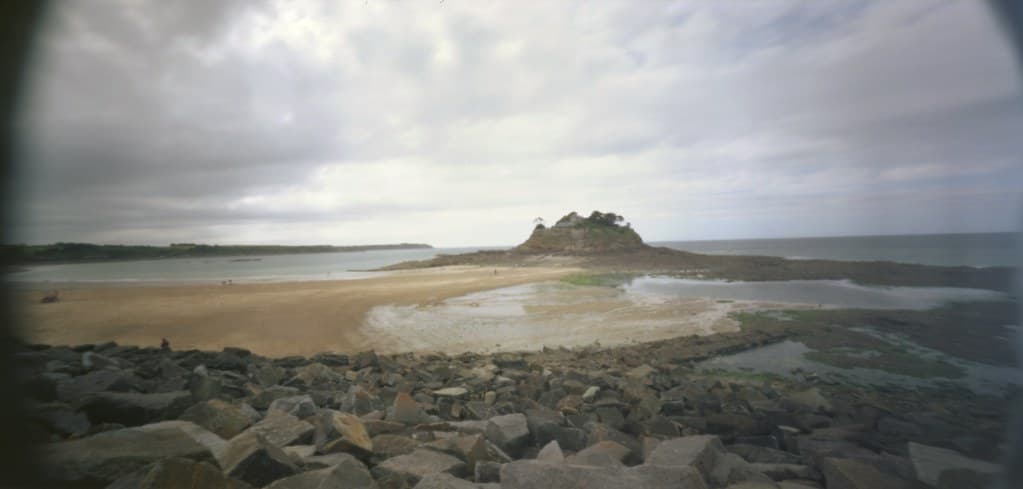
The causeway is your clock here. Twice daily, the Atlantic reclaims the stone path connecting mainland Saint-Coulomb to the beach, stranding the unwary or the careless. You learn to consult the tide tables posted at the car park, to note the waterline creeping up the rocks. When the sea retreats, it leaves behind a wide crescent of firm sand flanked by dark granite outcrops worn smooth by centuries of waves.
“A château-guarded beach that appears and disappears with the tides, accessible only to those who respect the Atlantic's timetable.”
 Credit: Flickr
Plage du Guesclin, Saint-Coulomb
Families spread picnic blankets near the dunes while children crouch over tide pools, nets in hand, hunting shrimp and hermit crabs. The water here is bracing even in July—this is the English Channel, after all, not the Mediterranean—but that doesn't stop the swimmers who wade in with sharp intakes of breath. To your left, the Château du Guesclin rises from its rocky island, accessible at low tide, its crenellated walls a reminder that this coast has always been contested territory.
As afternoon softens into evening, the light turns the wet sand to copper and the receding tide exposes ribbons of kelp and mussel beds. Dog walkers appear, their animals racing across the hard-packed shore. The beach empties slowly, visitors checking watches and glancing toward the causeway, conscious that the sea keeps its own schedule and waits for no one.


