
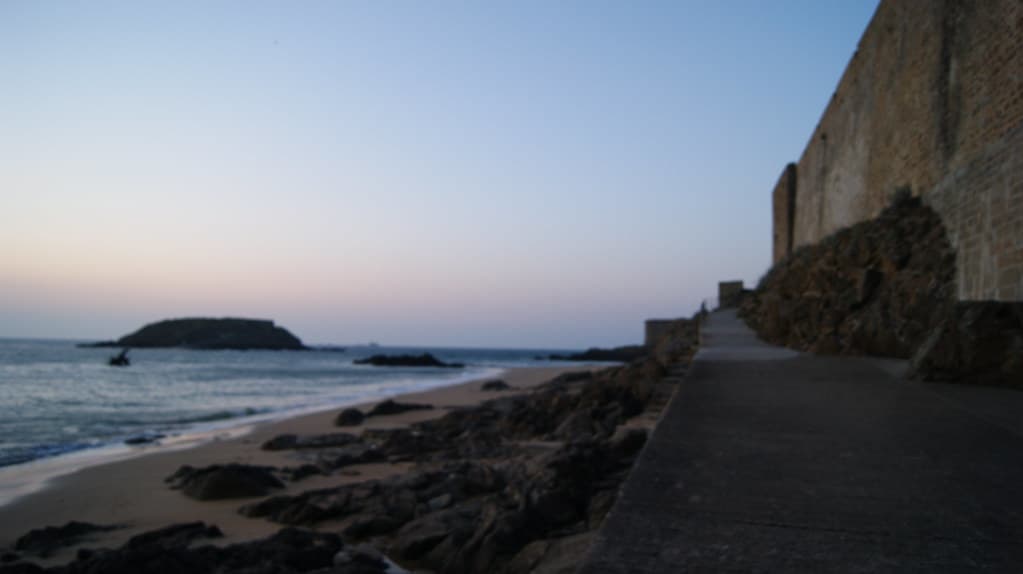
The sea doesn't so much lap at Plage de Bon-Secours as negotiate with it. Twice daily, the tide floods the 1930s saltwater pool, bringing fresh Atlantic water through sluice gates in the stone walls. When the water retreats, it leaves behind a protected basin where you can swim in eight feet of seawater while toddlers wade in the shallows beside the beach. The white diving platform stands like a monument to French municipal leisure, its three levels of boards drawing shrieking teenagers on summer afternoons.
“The only beach in Brittany where rampart walls double as pool edges, creating a seawater lido that transforms with every tide.”
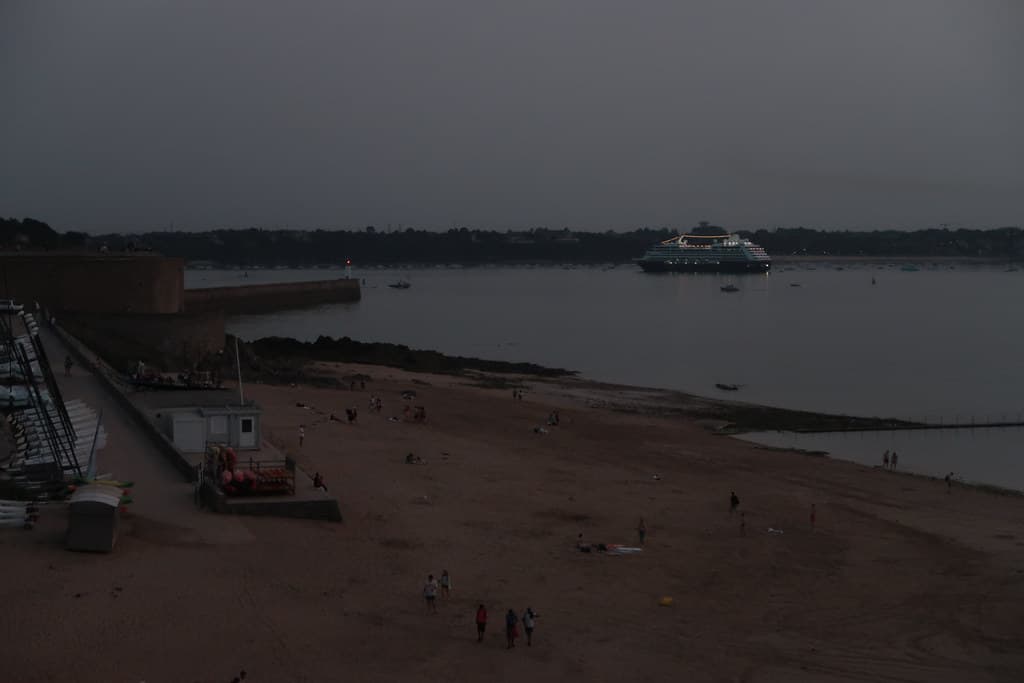 Credit: Flickr
Plage de Bon Secours, St Malo
The beach itself is a modest crescent of sand tucked against the ramparts, bounded by dark rocks slick with bladder wrack. You spread your towel on the concrete terraces that ring the pool, or claim a spot on the sand when the tide permits. The changing cabins are painted blue and white, their wooden doors swollen with decades of salt air. From your towel, you watch the Rance estuary shimmer in the distance, ferries cutting white lines toward the Channel Islands.
As the sun drops, the rampart walls glow golden-pink, and the water in the pool turns the color of weak tea. Families pack up their coolers and折りsand toys, leaving wet footprints on the worn stone steps. The beach empties slowly, reluctantly, as if everyone knows they're leaving something precious behind—a pocket of ocean tamed just enough for an afternoon's joy.


