
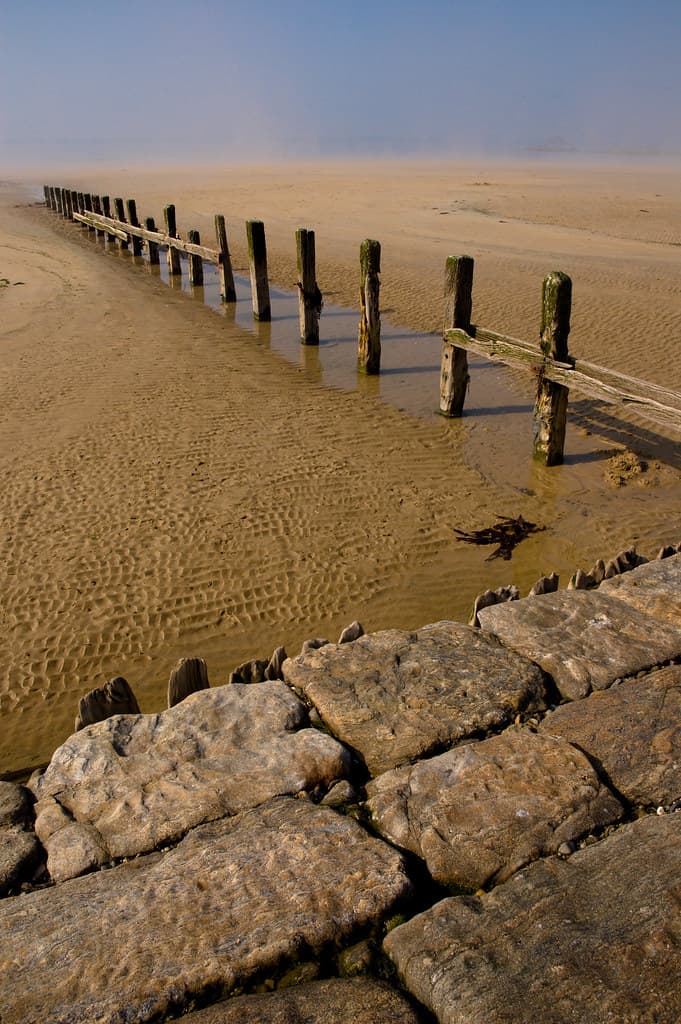
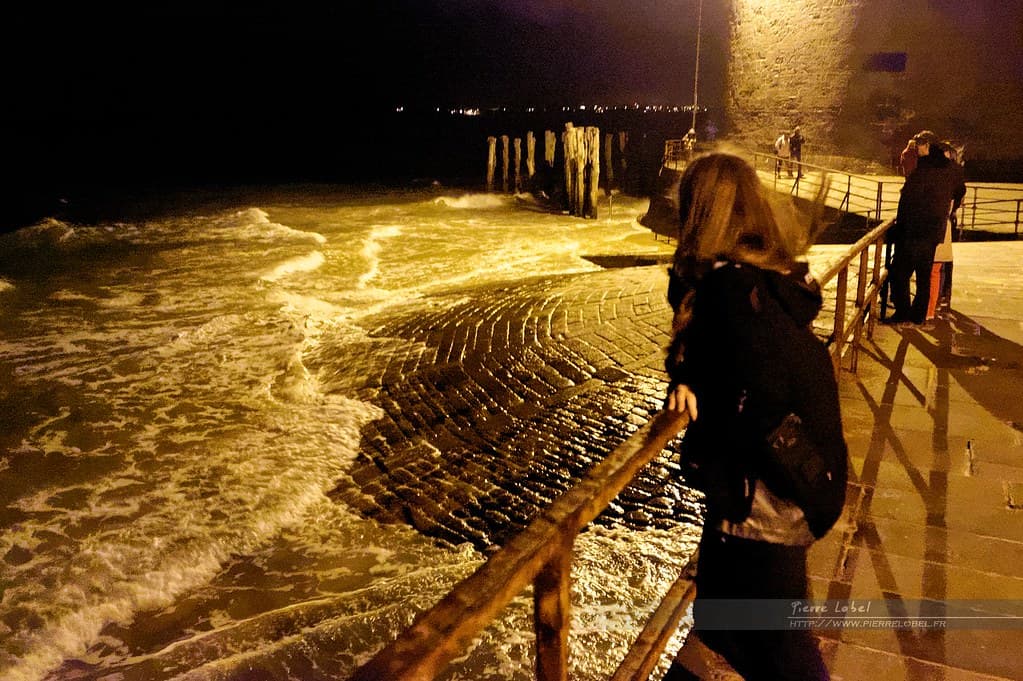
Plage du Sillon unfurls in a long crescent between Saint-Malo's medieval ramparts and the open Atlantic, a three-kilometer stretch of blonde sand that belongs as much to the city as to the sea. You reach it on foot from the intra-muros, passing through ancient gates onto a promenade lined with Belle Époque hotels and seafood brasseries. The beach changes personality with the tides—at low water, you walk hundreds of meters across ribbed sand toward distant breakers; at high tide, waves slap the seawall and spray catches the afternoon light.
“No other Breton beach pairs three kilometers of tidal sand with a fortified medieval city rising directly behind it.”
 Credit: Flickr
Plage du sillon
The setting is unmistakably Breton: granite fortifications rise to the south, while to the north you spot the towers of the Grand Bé island where Chateaubriand lies buried. Windsurfers and kite-sailers chase the wind that funnels through the bay, their sails bright against gray-green water. In summer, striped cabanas dot the upper beach and families claim territory near the lifeguard posts; in winter, the sand belongs to dog-walkers and locals who brave the forty-degree water.
Sunset here pulls the entire city outdoors. You join the evening parade along the Digue, watching the sun drop behind the offshore forts as the sky turns apricot and violet. The tide pools left behind reflect the changing light, and gulls wheel overhead calling their twilight chorus. By the time darkness settles, the rampart lights glow amber and the brasseries fill with diners cracking plateaux de fruits de mer.


