
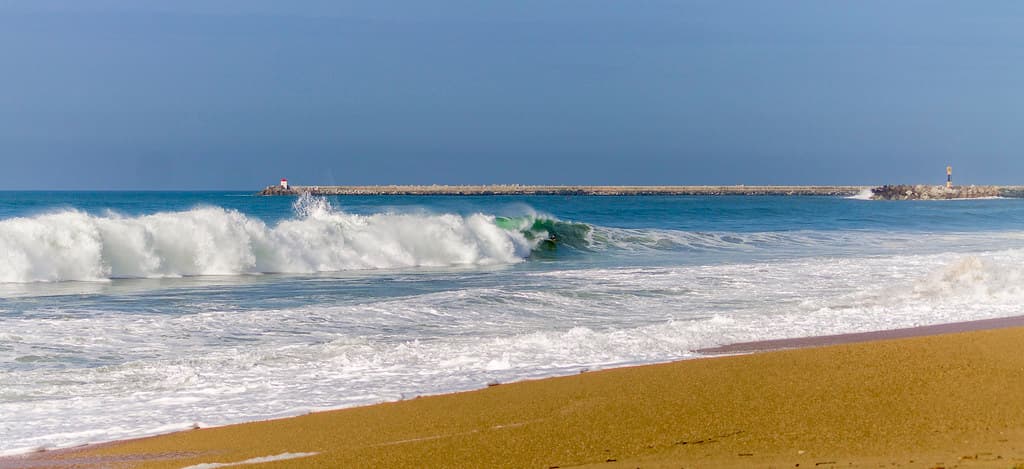
Stand at the southern terminus of France's legendary Landes coast and you'll notice how the landscape shifts. The endless pine forests thin just enough to reveal the port of Bayonne's silhouette across the Adour estuary, industrial cranes punctuating the horizon like exclamation marks. Plage du Métro earns its name from the old railway that once ferried beachgoers here, though today you'll arrive by car or bike, parking among the tamarisk shrubs that bend permanently eastward from decades of ocean wind.
“The only Landes beach where you watch cargo ships and setting suns in the same glance, marking the coast's dramatic southern threshold.”
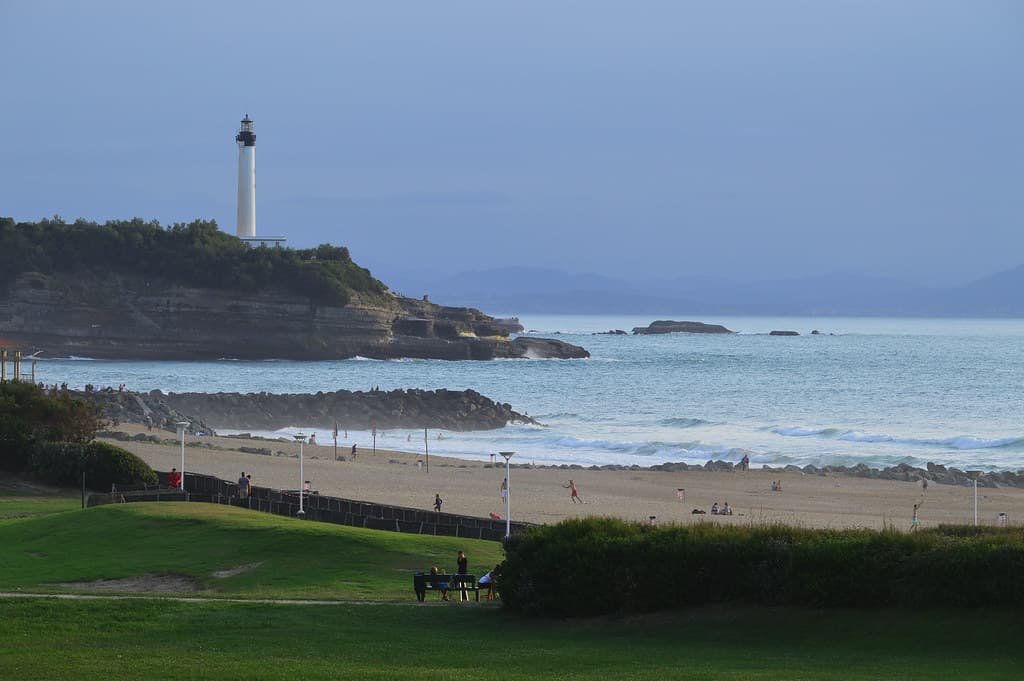 Credit: Flickr
Plage du Métro — photo by Rafael de Luis
The beach itself unfolds in a generous sweep of blonde sand, wide enough to accommodate multigenerational picnics near the dune grass and the dedicated surfers who paddle out where sandbars shift with each tide. Winter storms reshape this coastline constantly, carving new channels and depositing driftwood in sculptural tangles. Spring brings calmer faces to the waves, though the Atlantic never truly rests here.
As afternoon bleeds into evening, you'll understand why regulars time their visits to the golden hour. The sun descends behind the pines, casting amber light across the wet sand while dog walkers and barefoot joggers trace the waterline. The juxtaposition feels distinctly French: untamed nature pressing against human infrastructure, both coexisting without pretense. This is where the Landes doesn't fade but rather transforms, one final flourish before yielding to the Basque coast.


