

The nine-kilometer crescent of La Baule unfurls between Pornichet and Le Pouliguen like a painter's stroke of champagne-colored sand. You walk barefoot past art-deco mansions and turreted Belle Époque hotels that rise behind a seawall promenade thick with tamarisk trees. The beach slopes so gently into the Atlantic that toddlers wade fifty meters out while their parents watch from rented transats, and the sand itself—fine as cornstarch—squeaks beneath your weight.
“Europe's longest beach delivers endless sand without sacrificing Belle Époque glamour or urban conveniences.”
 Credit: Unsplash
Aerial view of turquoise tropical bay
The waterfront boulevard thrums with a peculiar mix of old-money elegance and seaside carnival energy. Crêperies send buckwheat smoke into the air, mixing with brine and sunscreen. Teenagers claim the southern stretch near the casino, while the northern end toward Benoit draws kite-surfers who launch neon canopies into the westerly wind. Low tide exposes a hundred meters of rippled sand, perfect for beach tennis and improvised football pitches that disappear when the sea returns.
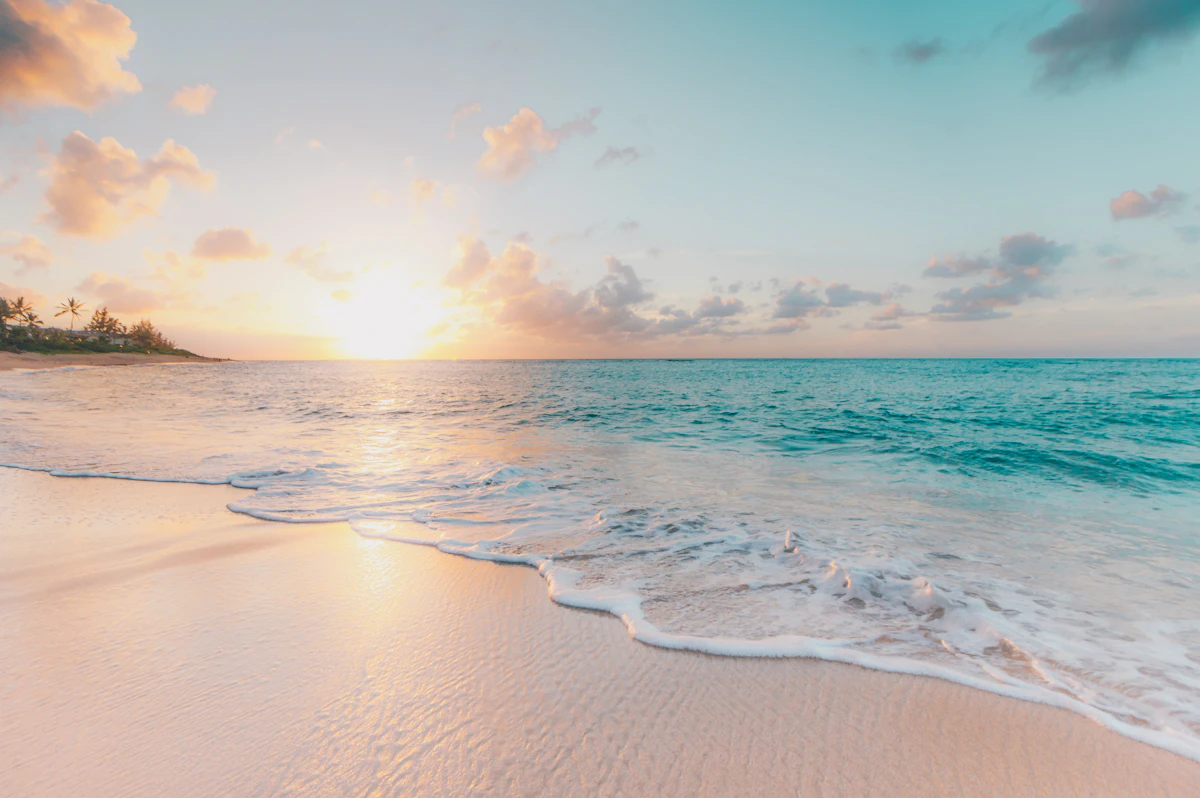
Sunset here is theater: the sky bleeds orange and violet behind the bay's gentle curve, silhouetting windsurfers and evening joggers. The light turns the wet sand into molten bronze, and couples linger on the seawall benches long after the beach bars have shuttered. Even in winter, locals brave the chill for bracing walks, bundled against Atlantic gales that strip the sky clean and leave the air tasting of iodine and possibility.


