
Plage de Gohaud stretches for nearly a kilometer, backed by marram-grass dunes that shift and reform with every Atlantic gale. The sand here is the color of brown sugar, fine-grained and firm enough at low tide to support bicycles and beach buggies that leave tracks erased by the next high water. The beach faces west into the open Atlantic, which means waves—not the towering breaks of Hossegor, but consistent waist-high sets that draw weekend surfers from the cities and bodyboarders who ride the shore break until their wetsuits wear thin.
“The low-tide flats stretch so far you can walk toward the horizon for minutes before the water reaches your knees.”
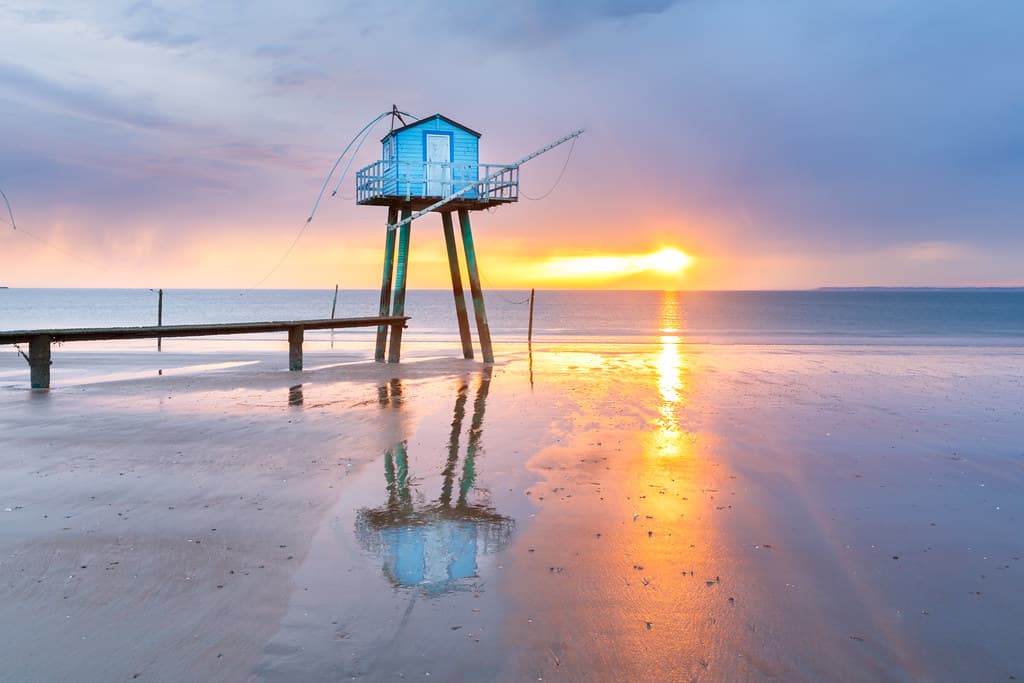 Credit: Flickr
Plage de Gohaud — photo by Loïc Lagarde
At low tide, the sea retreats dramatically, exposing a vast intertidal zone stippled with tide pools where crabs scuttle and children hunt for shells. The horizon becomes a smudge where water and sky blend into a single pewter sheet, and the beach feels enormous, borderless. By evening, the light shifts to amber and rose, and the sun descends into the ocean in a slow burn that draws couples and photographers to the waterline. The temperature drops quickly once the sun goes down—this is the Atlantic, not the Mediterranean—and you'll want a jacket for the walk back to the parking area.
The beach holds its appeal across seasons. Summer brings families who plant windbreaks in the dunes and spread elaborate picnics on checkered blankets. Autumn storms whip the sand into stinging clouds and churn the water gray-green, but the beach empties and the waves improve. Winter is for walkers bundled in wool, tracking gulls along the tideline, watching the light change by the minute.


