

Port-Marie is not a destination; it is a portal. The beach arcs along the eastern shore of Grande Île, sheltered by the stone ramparts of an 18th-century fort and flanked by fishermen's cottages whose blue shutters fade under salt wind. When the ferry from Granville cuts its engine and nudges the slipway, you disembark directly onto sand that shifts from ash-blond to pewter depending on cloud cover. Families spread checked blankets near the tide line while day-trippers shoulder daypacks and head inland, but the wise linger here—because Port-Marie reveals the essential character of Chausey before the archipelago splinters into a hundred unnamed islets.
“Port-Marie is the sole arrival point for an archipelago that scatters into 52 islands at low tide—making it the obligatory first impression of Chausey.”
 Credit: Pexels
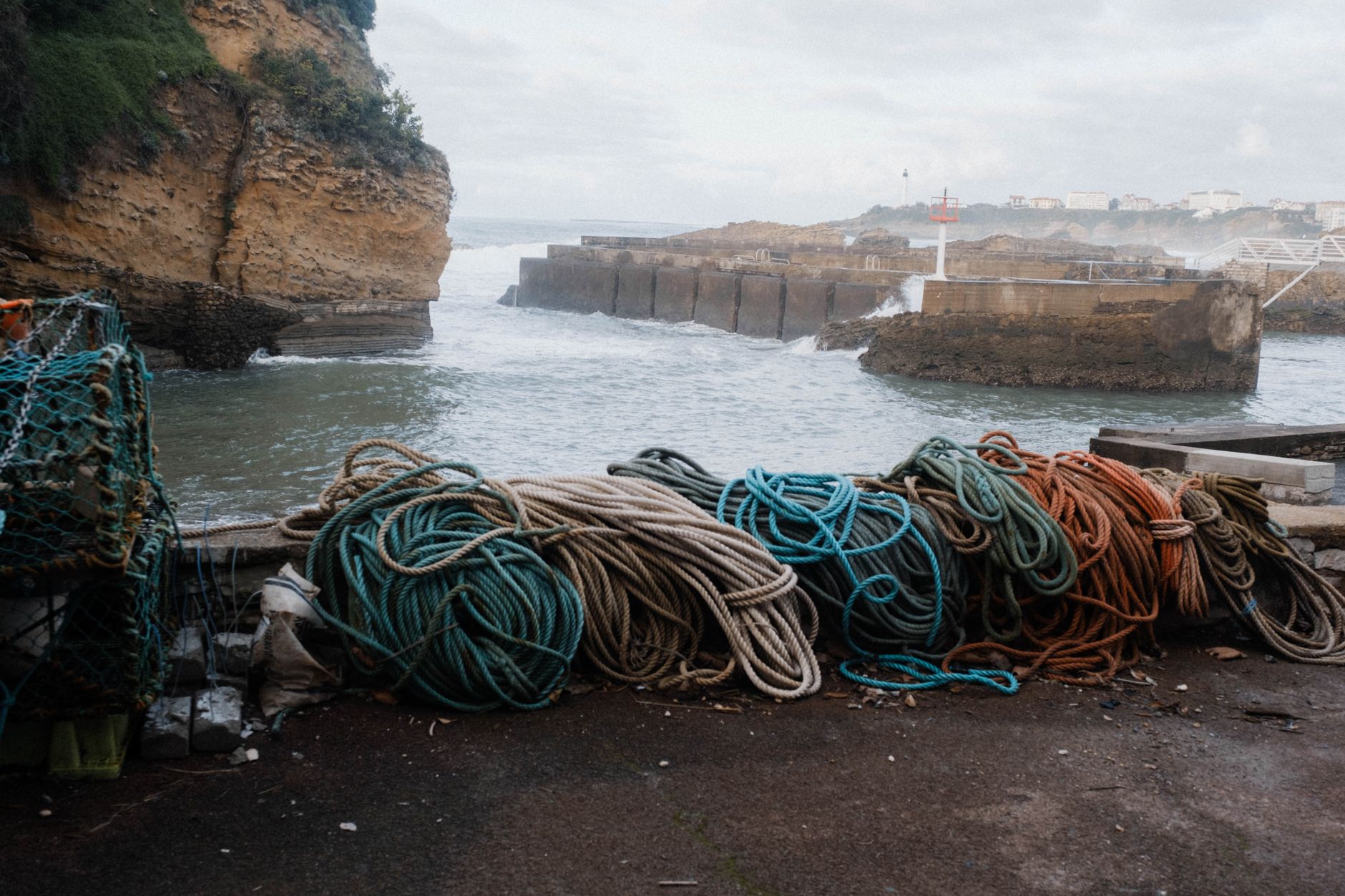
Scenic view of Biarritz marina with coiled ropes and rocky cliffs in France.
The water is cold year-round, bracing even in July, and the beach itself is workmanlike: no palms, no beach clubs, no illusions. Granite boulders jut from the northern end, slick with bladderwrack. At low tide the strand doubles in width, exposing ribbed sand and tidal pools where crabs scuttle. Gulls argue over mussel shells. The smell is iodine and diesel and drying nets.
What makes Port-Marie essential is its honesty. It does not pretend to be anything other than what Norman island beaches have always been—a place where the sea delivers you, and where you pause to decide whether to stay or keep moving. Most visitors choose the latter. You should choose the former, at least long enough to watch the ferry chug back toward the mainland and feel the archipelago close around you like a fist.


