
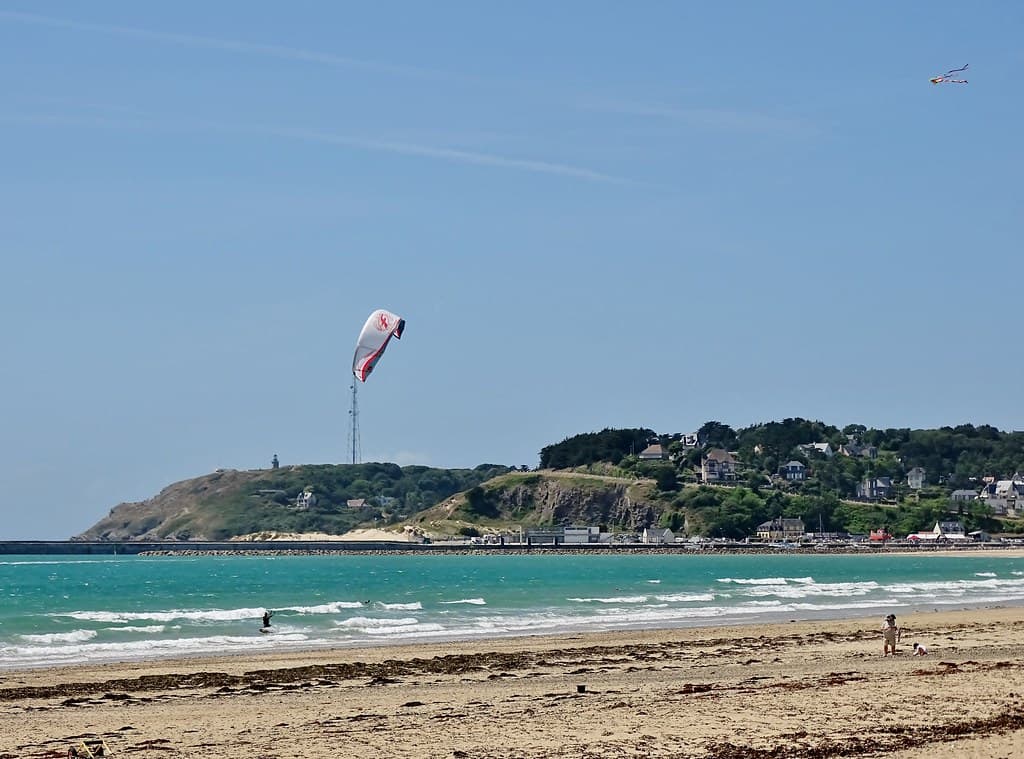
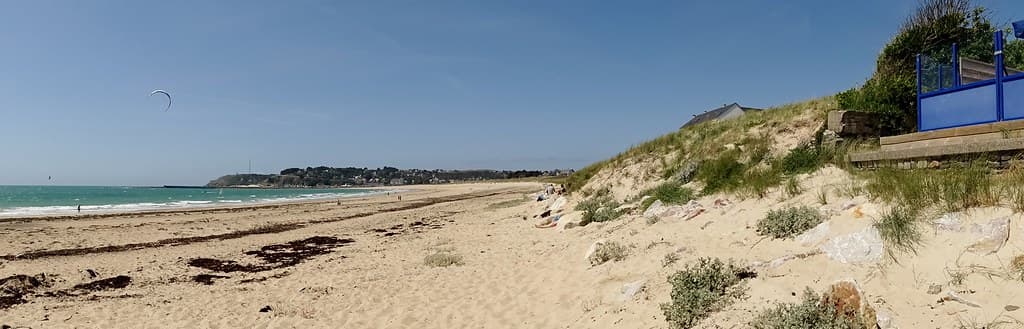
The beach unfurls south of Carteret like a ribbon of blonde sand pinned between low dunes and the grey-green Channel. At low tide the strand doubles its width, revealing glossy expanses of compacted sand ridged by retreating water and studded with pebbles worn smooth by centuries of swell. Oystercatchers probe the tideline; dog-walkers vanish into the haze. The air smells of iodine and wet grass.
“A local-secret strand where the Normandy coastline reveals its unpolished, tide-sculpted self without the resort infrastructure of neighbouring Carteret.”
 Credit: Flickr
Plage de Saint-Jean-de-la-Rivière — photo by @bodil
There is no boardwalk, no beach club—just a narrow access road that ends at a gravel car park and a wooden ramp over the dunes. The village itself, a handful of grey-stone farms and a Romanesque church spire, sits a kilometre inland. You bring your own blanket, your own thermos. On clear evenings the sun sinks behind the offshore reefs in bands of apricot and violet, and the wet sand turns to copper.
The best hours are either side of high tide, when the water laps close to the dune line and you can wade in without a quarter-mile trek. In summer a few French families claim the southern end; by September you might have the entire crescent to yourself. The undertow can be brisk—locals respect it—but the rhythm of the waves, the crunch of shells underfoot, and the unbroken horizon make this stretch of the Cotentin coast worth the detour from busier resorts.


