
The beach stretches five kilometers between Pouppeville and La Madeleine, a wide expanse of firm sand that shifts from beige to graphite depending on the light. At low tide, you can walk far enough out that the shoreline becomes a memory, the receding Atlantic leaving behind tidal pools and the occasional razor clam shell. Families dig in the shallows while cyclists trace the promenade behind the seawall, and the Norman sky delivers its trademark palette of pewter and pearl.
“The beach where the Western front pivoted, now a family strand where children build sandcastles beside the artifacts of invasion.”
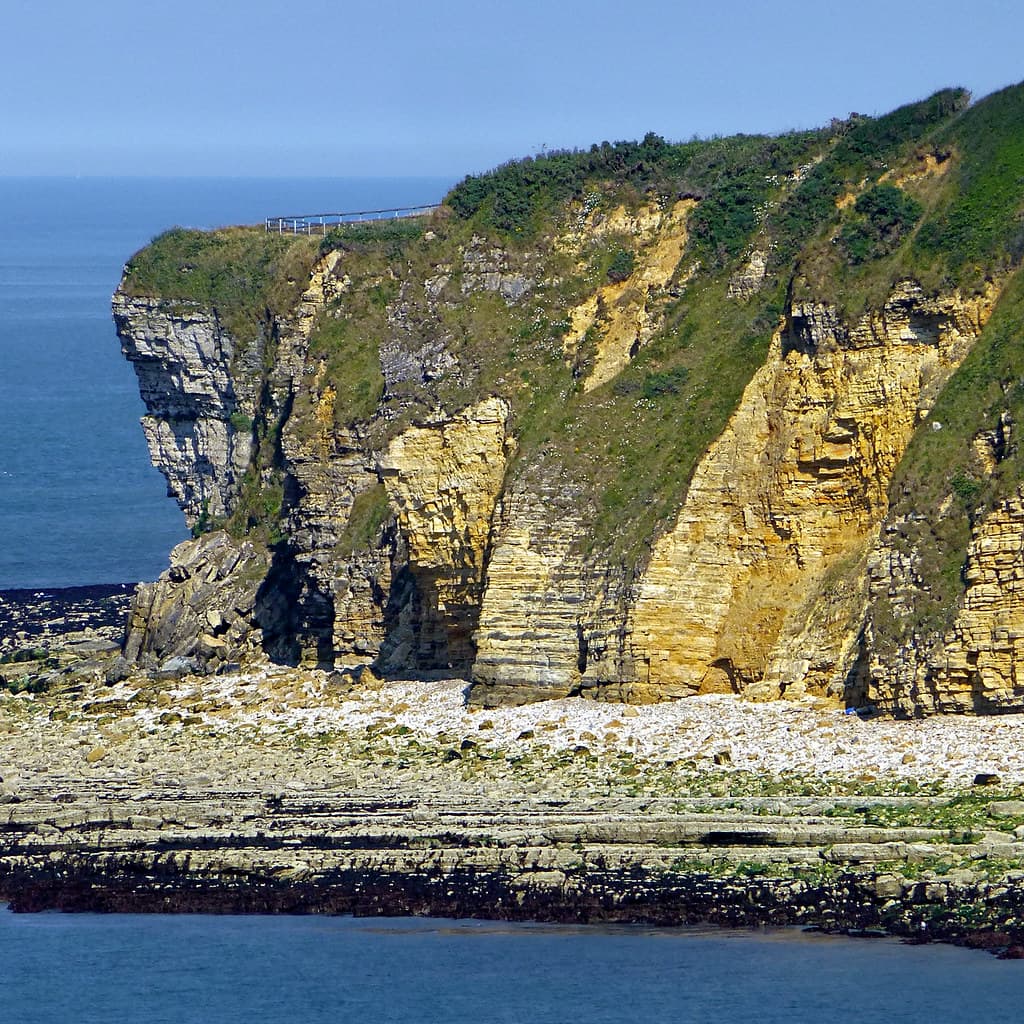 Credit: Flickr
D-Day Cliffs, Normandy, France
The Musée du Débarquement sits directly on the sand at La Madeleine, its galleries housed in a former German bunker. You'll find original landing craft preserved on the beach itself, hull numbers still legible after eight decades of weather. The monument to the 4th Infantry Division rises from the dunes, and on June 6 each year, veterans' families scatter rose petals into the surf.
Come for the late afternoon when day-trippers thin out and the westward sun turns the wet sand to bronze. Local fishermen set nets near the Vire estuary, and the smell of mussels steaming in white wine drifts from the brasseries in Sainte-Marie-du-Mont, a ten-minute walk inland. The tide returns quietly here, a slow reclamation that never announces itself until the water reaches your shoes.


