
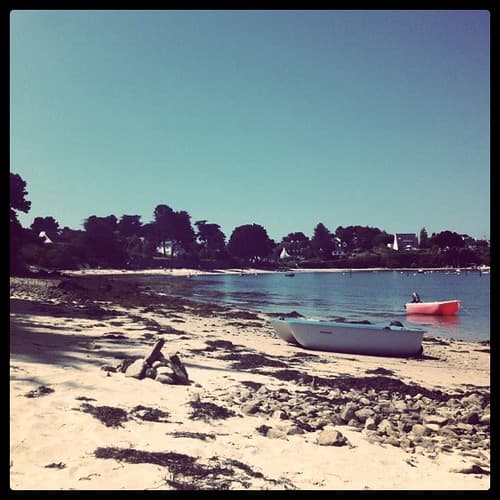
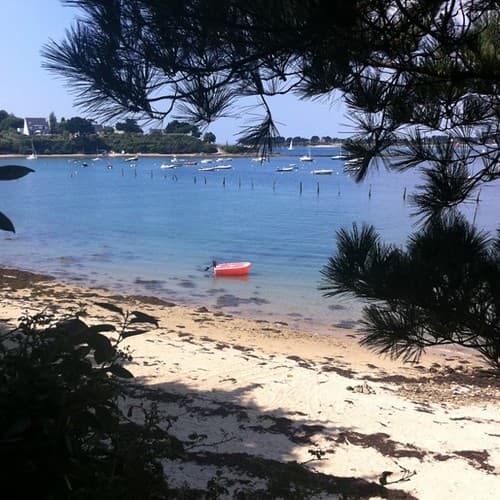
Plage du Tréno curves along the southwestern edge of the Rhuys Peninsula, its sand finer and paler than the rockier coves scattered east toward Port-Navalo. At low tide the beach stretches wide, revealing tide pools dimpled with limpets and periwinkles, and you can wade fifty meters out before the water reaches your waist. Families claim spots beneath the maritime pines that fringe the promenade; the shallow gradient and absence of strong currents make this a favorite for toddlers clutching plastic spades and parents who prefer sight lines unbroken by surging waves.
“Tréno offers Arzon's gentlest waters and widest intertidal zone, perfect for families seeking Gulf shelter without sacrificing sunset drama.”
 Credit: Flickr
Plage du Treno - Port Navalo
The view west pulls your gaze past the narrow channel toward the Quiberon Peninsula, and on clear afternoons the offshore islands of Houat and Hoëdic etch themselves in charcoal against the sky. By evening, the beach empties and the sun sinks behind those distant humps of granite, gilding the wet sand and turning the receding tide pools into mirrors of copper and rose. A low stone jetty extends from the southern end, popular with evening anglers casting into the Gulf's tidal currents.
Arzon itself is small—a handful of bakeries, a Saturday market, seafood restaurants serving line-caught bar and local oysters—but Plage du Tréno holds its own identity, quieter than the marina bustle yet more accessible than the peninsula's wilder Atlantic-facing strands. You park along the coast road, slip off your shoes, and walk straight onto sand still warm from the afternoon sun.


