
Plage des Barges sits tucked into the eastern flank of the Gulf of Morbihan, where the Vilaine River spills into sheltered waters. At low tide, the beach stretches wide, revealing ribbed sand and pools that mirror the sky. Children crouch with nets among the rocks; their parents unfold canvas chairs near the dune grass. The air smells of iodine and wild thyme. Across the water, the silhouette of Pénestin rises above pine-covered bluffs.
“One of the few estuary beaches where Brittany's salt-marsh ecology meets swimmable sand, framed by working oyster beds and tidal flats.”
 Credit: Flickr
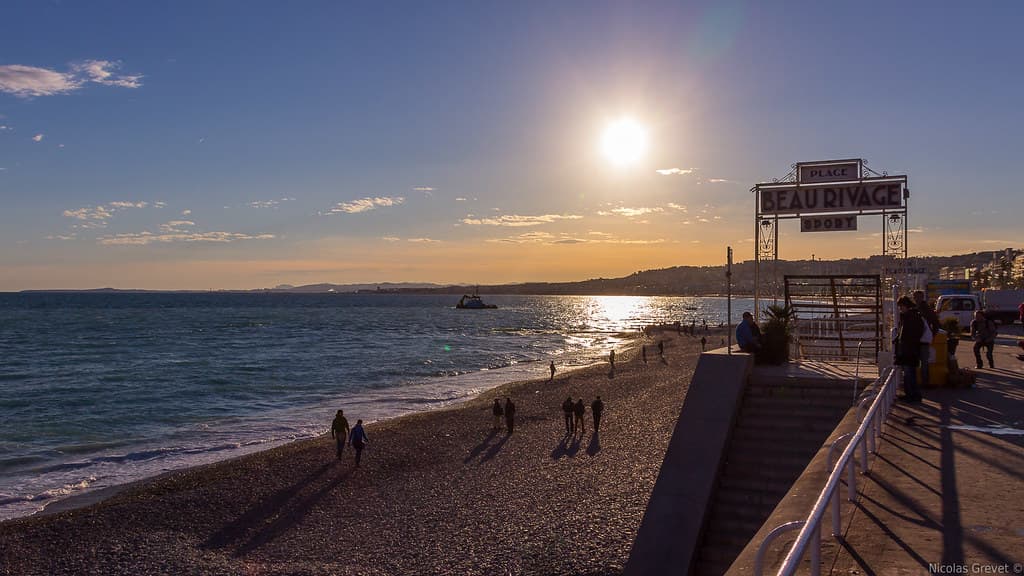
Plage Beau Rivage
Unlike the crowded strands farther west, Les Barges retains the unhurried rhythm of a working coast. Fishing boats rest on trailers near the slipway. A wooden cabin sells bread and rillettes on summer mornings. The beach faces south-southwest, so late-afternoon light glazes the water amber and lengthens shadows across the sand. When the sun drops behind the estuary mouth, the sky flares tangerine and rose.
The swimming is gentle here—protected by headlands, the surf rarely builds beyond ankle-high ripples. Families wade out over sand that stays shallow for fifty meters. At high tide, the beach narrows to a ribbon, waves lapping the base of the seawall where locals park their bicycles and unpack picnics from wicker baskets. Gulls settle on the breakwater; the tide turns; the cycle begins again.


