
Plage de la Falaise sits at the throat of the Gulf of Morbihan, where sheltered waters meet the Atlantic's moods. The beach stretches beneath a low bluff thick with gorse and sea pinks, its sand pale as bone meal. At low tide, the strand extends far enough that children chase retreating wavelets, their laughter echoing off the cliffs. Breton families arrive mid-morning with coolers of kouign-amann and thermoses of cider, staking out patches near the dunes.
“The only western-facing beach on the Gulf where you can watch sunset over open Atlantic while standing in lagoon-calm water.”
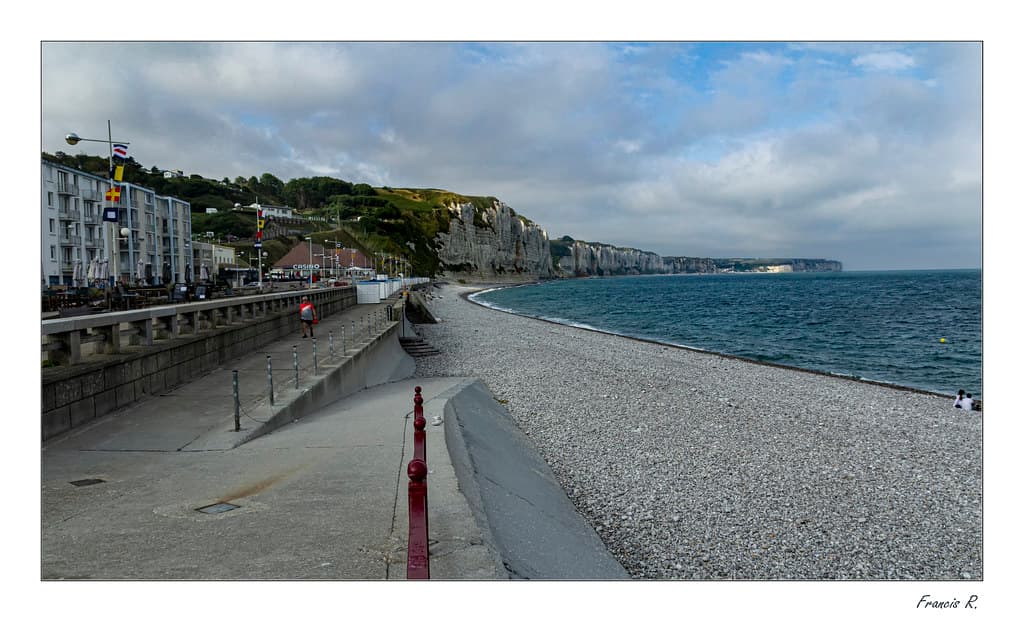 Credit: Flickr
Sur la plage de Fécamp
The western exposure transforms late afternoons into theater. Sun sinks behind the Quiberon peninsula, painting the sky in shades of apricot and plum, silhouetting the fishing boats heading home to Port-Navalo. You'll notice locals timing their arrival for this hourly performance, perched on the sea wall with baguettes from the Locmariaquer bakery. The water here stays shallow for thirty meters, warmed by summer sun, gentle enough that grandmothers wade in skirts rolled to their knees.
Beyond the beach, Locmariaquer's megalithic stones—older than Stonehenge—brood in nearby fields, their granite faces flecked with lichen. But most visitors return to the Falaise at dusk, when the lighthouse on Île de Houat blinks to life and the smell of grilling sardines drifts from the village restaurants. This is Brittany at its most unguarded: salt, stone, and the Gulf breathing in rhythm with the tide.


