

The beach announces itself not with sand but with smooth galets—oval stones polished by centuries of tides—that clack and whisper as you walk toward the water. Above, trains bound for Barcelona cross a rust-colored viaduct; below, your mask reveals posidonia meadows sheltering gilt-head bream and octopus. The eastern breakwater marks where France ends, and on still mornings you can swim the few strokes to Spanish waters without customs ever knowing.
“France's last Mediterranean beach before Spain, where cross-border trains overhead frame your swim in geopolitical poetry.”
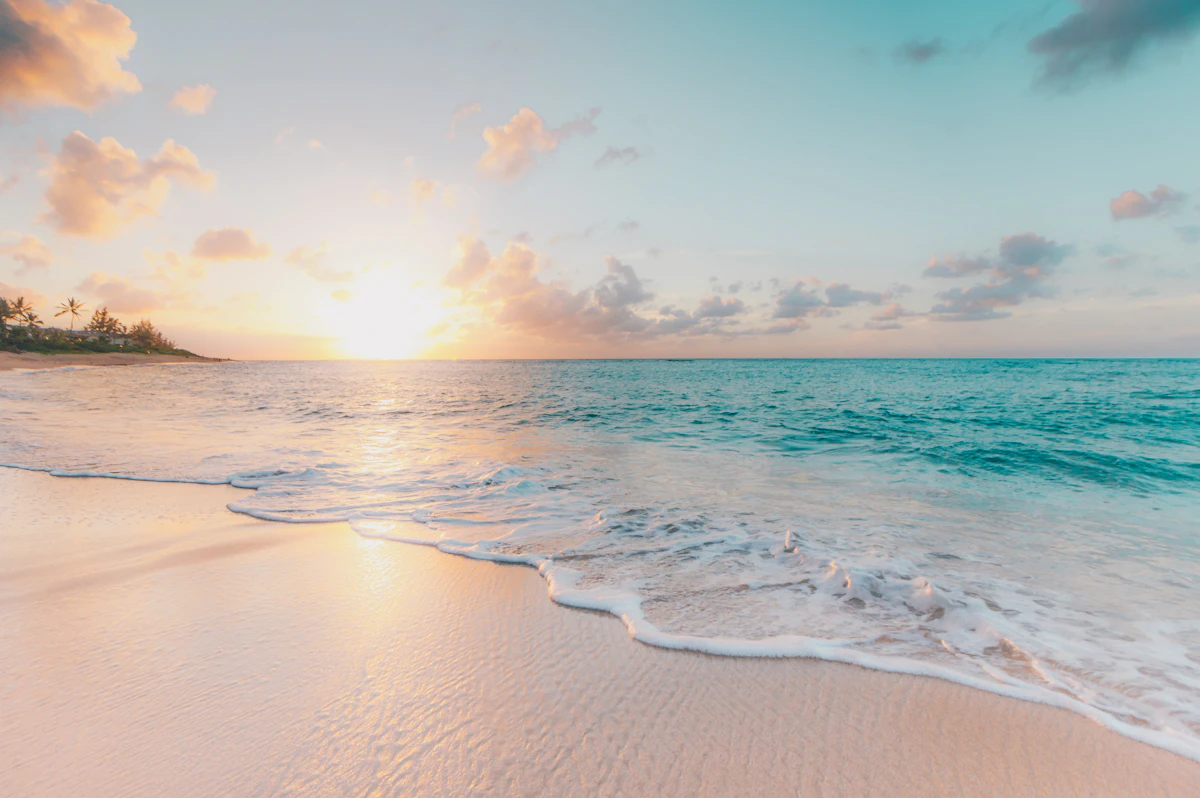 Credit: Unsplash
Aerial view of turquoise tropical bay
Cerbère village clings to the hillside behind you, its shuttered houses painted in faded ochres and blues, balconies strung with fishing nets drying in the tramontane wind. A handful of families spread towels between the rocks, their coolers stocked with rosé from Collioure and pan bagnat from the village boulangerie. By afternoon the shadow of Cap Cerbère stretches across half the cove, offering natural respite from the summer blaze.
The water stays cooler here than the lagoon beaches to the north—spring-fed streams trickle from the Albères massif, dropping the temperature a degree or two—but visibility can reach fifteen meters when winds die. You'll exit with pebbles lodged in your sandals and salt crusted on your shoulders, the borderland quiet settling over you like the marine layer that rolls in each evening.


