

You'll find Plage des Ayguades tucked along Gruissan's southern edge, where low-rise villas and sailboat moorings frame a gently curving shoreline. The sand is fine and pale, the water shallow enough that toddlers wade twenty meters out while their parents sit in folding chairs hauled from nearby apartments. Morning brings dog-walkers and lap swimmers; by noon, striped parasols dot the beach in loose clusters. There's no boardwalk hustle, no loudspeaker announcements—just the rhythmic slap of halyards against masts and the occasional clatter of pétanque balls from the shade of umbrella pines.
“Wedged between Mediterranean surf and a saltwater lagoon, it offers two water moods in one barefoot commute.”
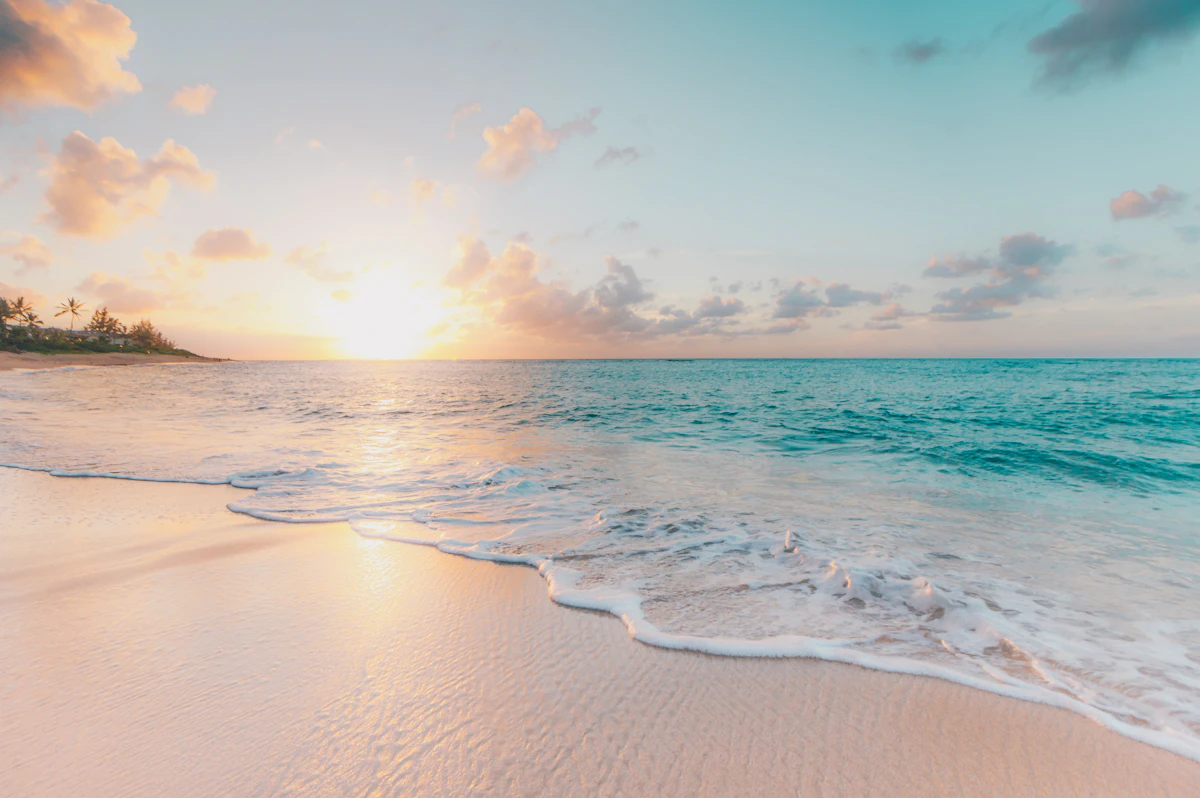 Credit: Unsplash
Aerial view of turquoise tropical bay
The étang de Gruissan—a saltwater lagoon—lies just behind the beach, separated by a narrow spit. This double-water geography means calm conditions most days: when the Tramontane wind blows inland, the lagoon stays glassy; when it reverses, the Mediterranean remains smooth. Families return year after year to the same modest rentals, establishing a quiet continuity. You'll see the same faces at the morning boulangerie run, the same groups claiming their patch of sand by ten o'clock.
Come late afternoon, the light softens to amber, and the beach empties except for a few figures walking the tideline. The backdrop is pure Languedoc: scrubby garrigue, terracotta roofs, and the distant silhouette of the Corbières hills. It's a beach that rewards routine over spectacle, where the luxury is time itself—unhurried, unscheduled, and deeply restful.


