
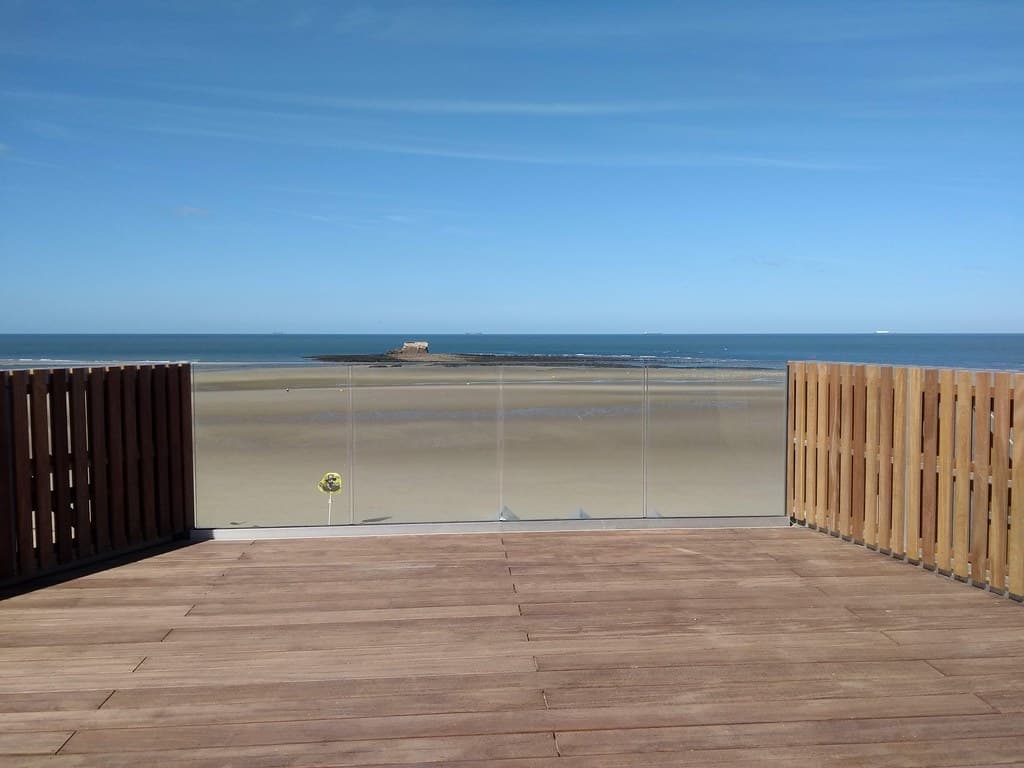
Plage de Boulogne-sur-Mer unfolds along a broad esplanade where the working rhythms of France's premier fishing port collide with the leisure rituals of an Atlantic resort. The beach itself is a long, flat ribbon of beige sand that reveals itself fully at low tide, when the waterline recedes hundreds of meters and tide pools glimmer in the afternoon light. Behind you, Belle Époque villas shoulder against 1950s apartment blocks, and the Nausicaá aquarium looms at the northern end like a modernist ship.
“France's largest fishing port delivers a beach where industrial trawlers and Belle Époque bathing culture share the same tidal horizon.”
 Credit: Flickr
ZEN SUR LA PLAGE
The promenade—lined with plane trees and benches that face the sea—draws dog walkers at dawn and families pushing strollers at dusk. You'll find kitesurfers rigging their gear near the lifeguard station on breezy weekends, and children running across the hard-packed sand chasing soccer balls. The water is brisk even in July, typical of the Opal Coast, and swimmers wade in with purpose rather than languid dives.
Sunsets here are theatrical: layered clouds catch pink and amber light as the sun drops toward the English cliffs, barely visible on clear evenings. The beach empties after dark except for couples walking the tide line and the occasional fisherman casting into the surf. It's a beach that refuses to separate work from play, industry from repose—a salt-scrubbed threshold between the medieval heart of Boulogne and the wide, indifferent Atlantic.


