
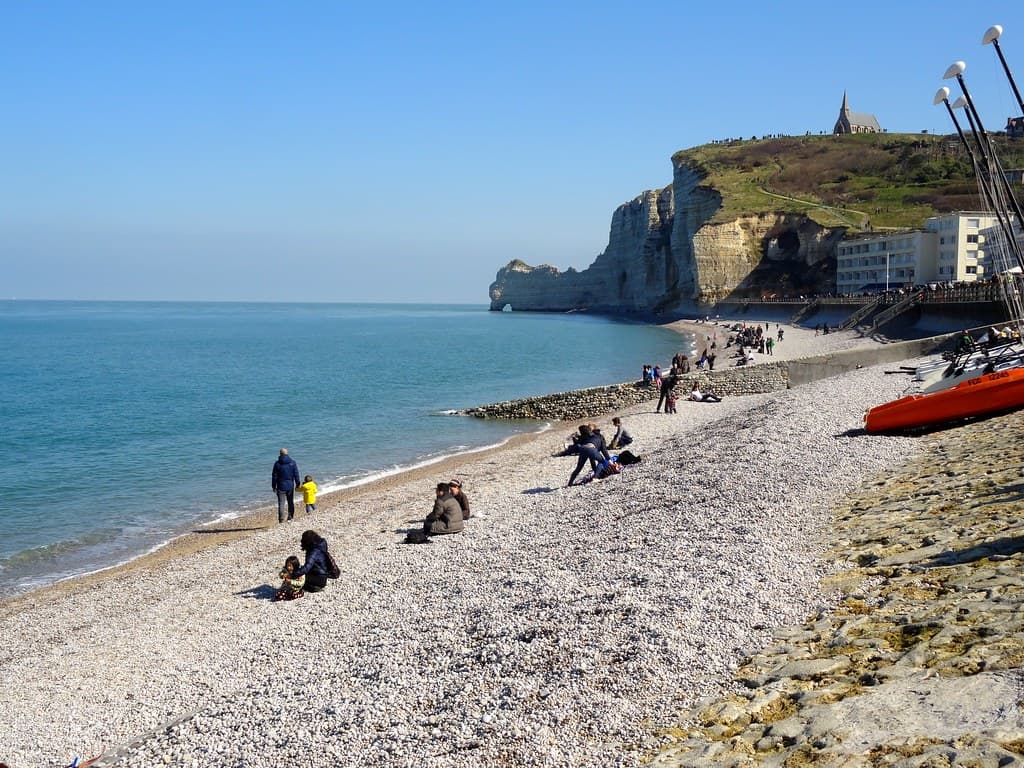
The Atlantic crashes against pale limestone formations so theatrical they border on implausible: three natural arches flanking a pebble shore, their surfaces pocked and sculpted by millennia of salt spray. You navigate the beach on smooth oval stones that massage your feet through thin-soled shoes, each step accompanied by a soft clatter. Seaweed tangles around driftwood at the high-tide line, releasing iodine into the cool coastal air.
“Nowhere else does the Alabaster Coast concentrate such monumental geology into a single, walkable strand where art history unfolds at your feet.”
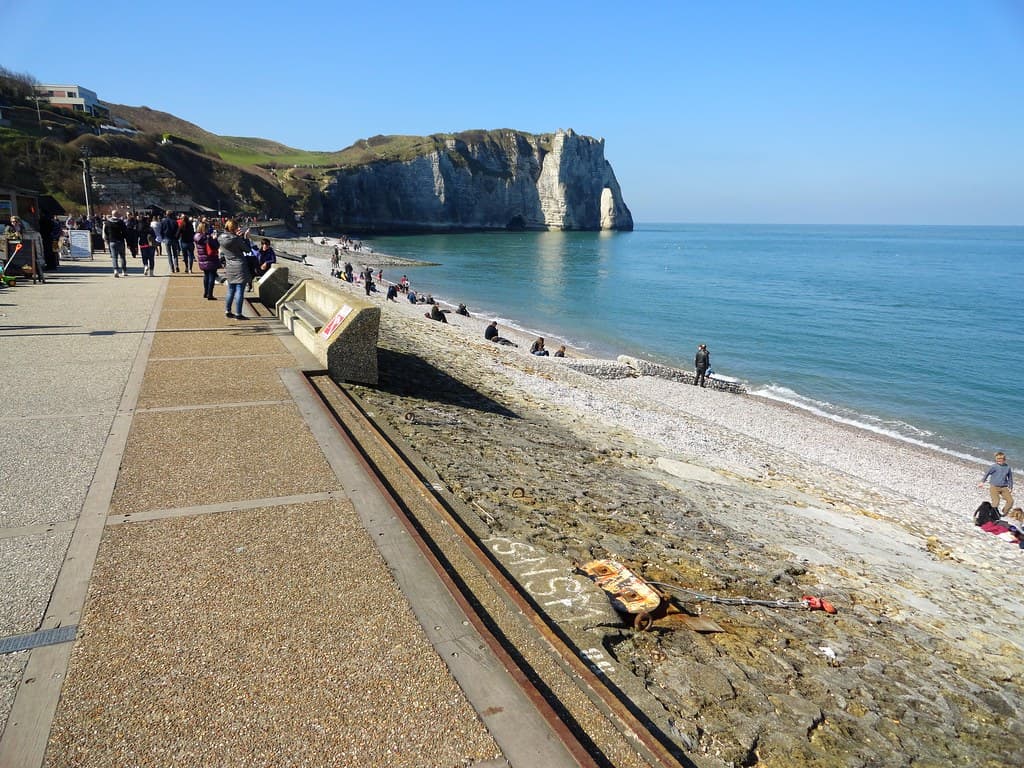 Credit: Flickr
Falaise d'Aval from la plage d'Etretat, Normandie
Moored fishing boats tilt on the incline between tides, their painted hulls bright against the white cliffs. The Falaise d'Aval arch to your right frames the Aiguille—a seventy-meter limestone needle standing offshore like a cathedral spire toppled seaward. Families spread blankets in the rare sand pockets; children build fragile castles that last only until the tide returns. Above, hikers thread along cliff-top paths toward panoramas that pull out phones and watercolorists alike.
Low tide exposes rock pools stippled with barnacles and hermit crabs. The water temperature rarely climbs above fifteen degrees Celsius even in August, but locals plunge in regardless, emerging pink-cheeked and exhilarated. Evening light turns the chalk faces amber, then rose, then violet—the exact progression that drew Monet here with his easel, chasing the same ephemeral colors you're watching now.


