
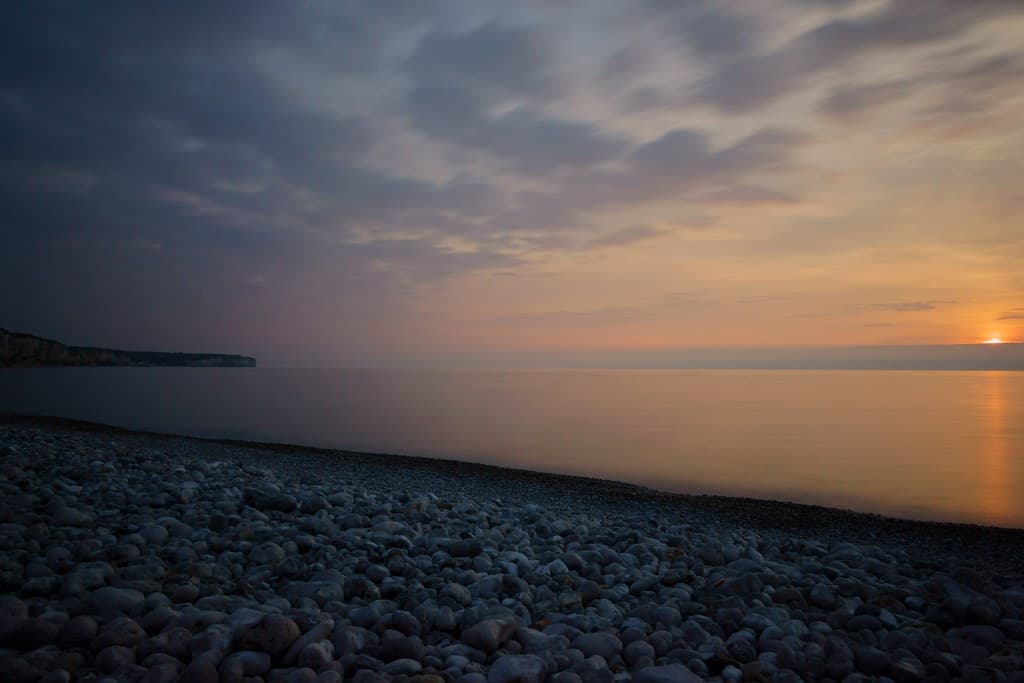
The pebbles shift and clack beneath your feet as you walk the long curve of Fécamp's shoreline, where the English Channel meets Normandy's Alabaster Coast in a study of contrasts. To your left, the working port hums with winches and netting; to your right, Belle Époque villas climb the hillside, their shuttered elegance watching over bathers and families who've staked out patches of beach with striped windbreaks. The water runs green-grey, serious and cold, lapping at stones worn smooth by centuries of tides.
“One of the few Alabaster Coast beaches where you can watch fishing boats land the catch that becomes your dinner an hour later.”
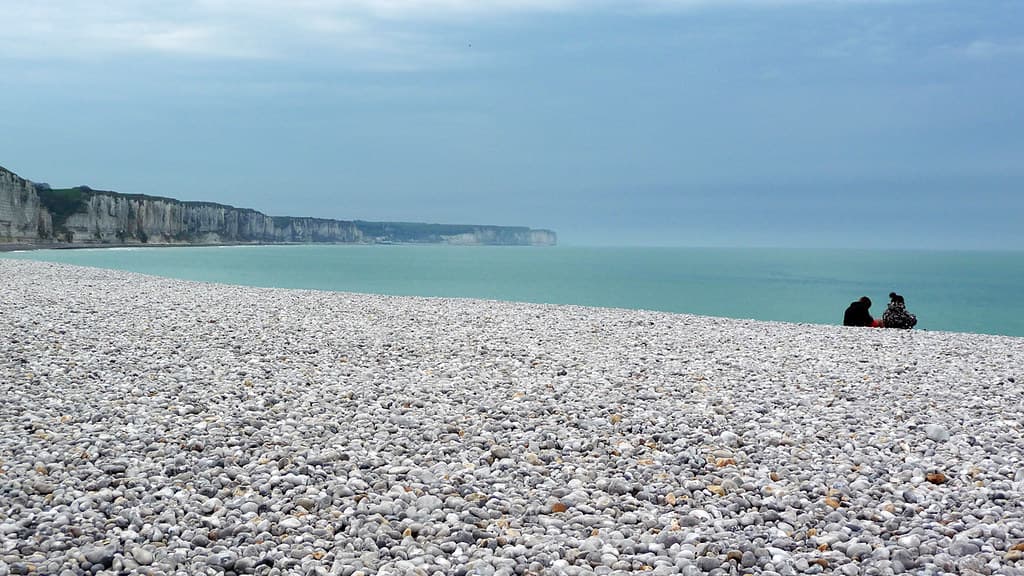 Credit: Flickr
Plage de galets
This is no manicured resort. Seaweed tangles at the tideline, fishing boats motor past the swimmers' buoys, and the air carries the competing scents of brine, fried fish from the boardwalk stands, and the faint anise of Bénédictine drifting down from the hilltop distillery. Children in neoprene vests shriek as they brave the surf; older couples sit shoulder-to-shoulder on the promenade benches, sharing thermos coffee and watching the light shift across the cliffs.
Come evening, the chalk faces of Cap Fagnet glow amber, then rose, then purple as the sun sinks toward Le Havre. The pebbles give back the day's warmth, the trawlers tie up for the night, and the beach empties to just you, the gulls, and the steady percussion of waves rearranging stones. Fécamp doesn't ask you to love it; it simply is, enduring and unpolished, a working coast that happens to be beautiful.


