
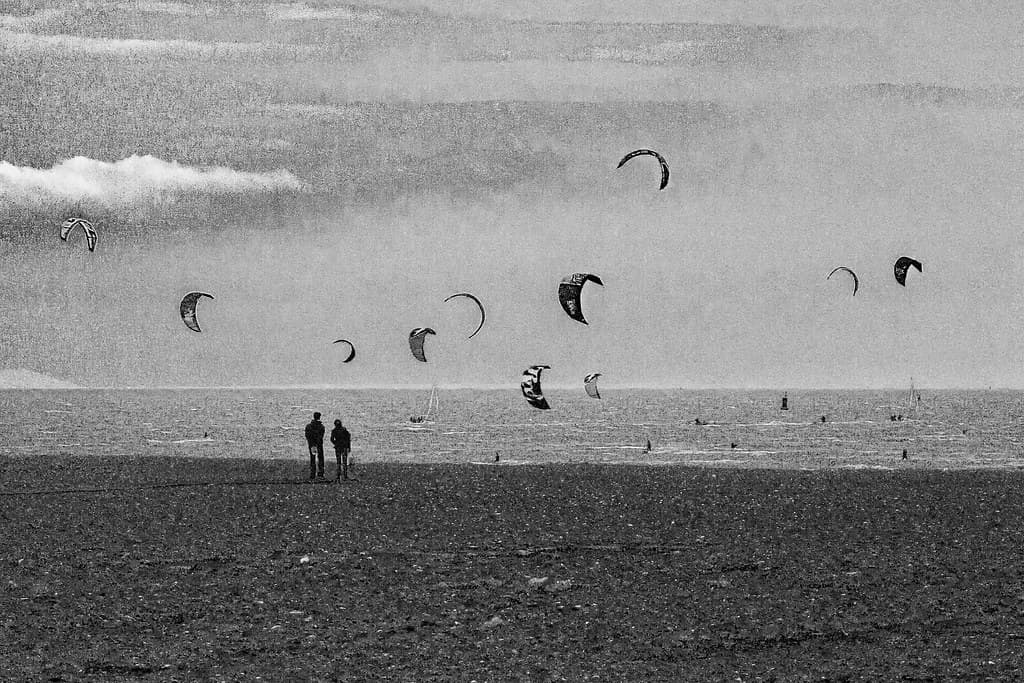
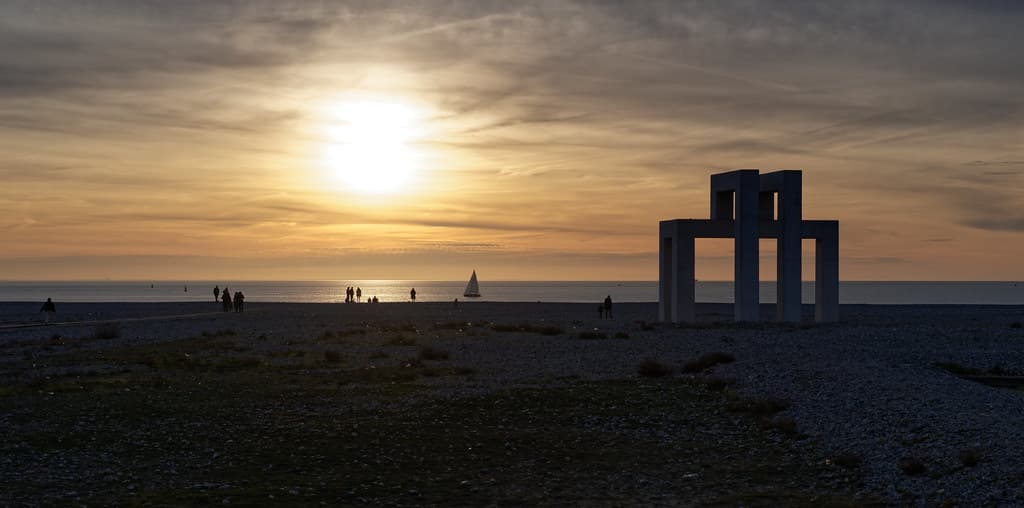
The pebbles shift beneath your feet, polished smooth by the Channel tides that swing six meters twice daily. Behind you, Perret's postwar apartment blocks rise in pale concrete rhythm, their clean lines softened by salt air and the cries of herring gulls wheeling overhead. This is Le Havre's working waterfront, rebuilt from rubble after 1944, where families spread blankets on stones still warm from afternoon sun and joggers trace the promenade as container ships slide past the harbor mouth.
“France's only UNESCO-listed modernist beachfront pairs Perret's postwar concrete architecture with a functional city beach at the Seine estuary.”
 Credit: Flickr
Plage du Havre
West of the beach, the MuMa museum holds the world's second-largest Impressionist collection—Monet and Boudin painted these very clouds, these shifting grays and silvers that never quite settle. You'll understand why when evening light turns the water to pewter and the sky goes violet behind the Seine estuary. Children in wetsuits splash where the river meets salt water, indifferent to the temperature that never tops 18 degrees Celsius even in August.
The promenade offers beach clubs with striped umbrellas, a skate park where wheels scrape concrete, and the smell of moules-frites drifting from brasseries facing the sea. At low tide, the waterline retreats two hundred meters, exposing dark sand and tidal pools where crabs scuttle between stones. This isn't a postcard beach—it's the honest edge of a working port city, where Havrais come to watch cargo ships and sunsets with equal appreciation.


