
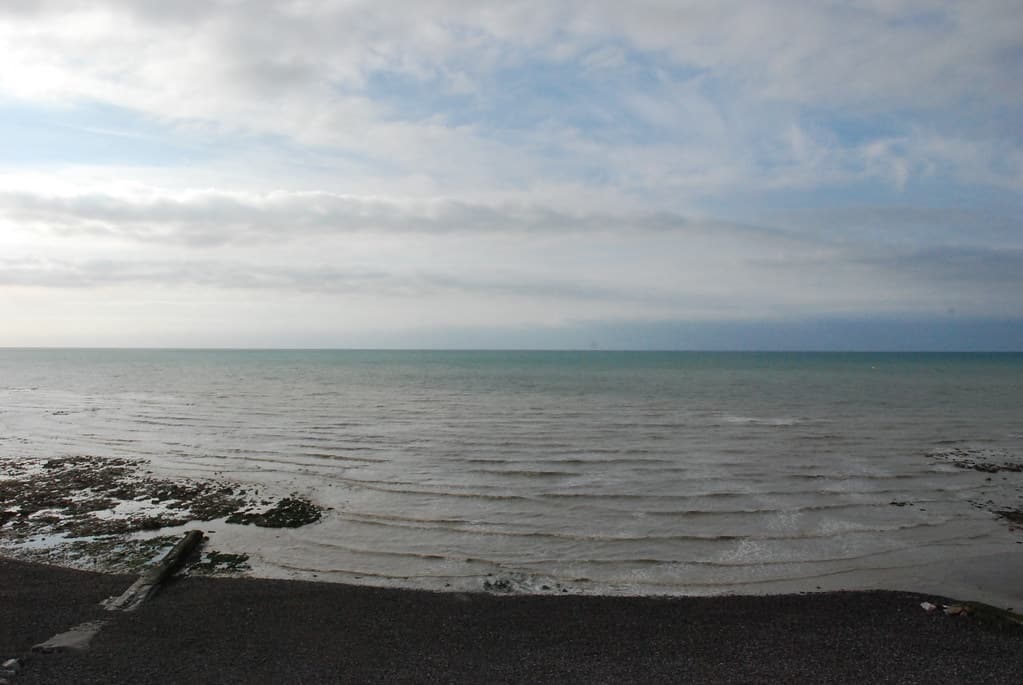
Ault clings to the cliff like a barnacle, its Belle Époque villas perched above a beach most guidebooks fold into vague references to the Somme estuary. But stand on these pebbles at six in the evening and you'll understand what the mapmakers miss: the sun sets due west over water here, igniting the chalk face of the cliffs in apricot and rose while waves roll stones with a sound like distant applause.
“One of the few accessible beaches beneath the white chalk cliffs of Picardy, offering unobstructed westward sunsets over the English Channel.”
 Credit: Flickr
Plage d'Ault
The beach itself is a working shore. Fishermen haul nets at dawn. Dog-walkers appear regardless of season, collars turned against the wind that never quite stops. The stones—smoothed flint, chalk nodules, the occasional brick worn round—shift underfoot with each wave, and after storms you'll find razor clams, whelk shells, and driftwood polished silver-grey. There's no sand, no beach clubs, no thatched umbrellas. Just pebbles, tide, and the chalk sentinels that flank the bay.
Come at low tide and the beach stretches toward Le Tréport, wide enough to walk for an hour. High tide presses you against the concrete promenade, where a single café serves moules-frites and Picon bière to locals who've seen a thousand of these sunsets and still come back for more. Ault doesn't sell itself. It simply exists, stark and beautiful, waiting for you to notice.


