Counting the waves…
Counting the waves…
A refined fusion of water purity, environmental stability, and communal vibrancy for Plage d'Onival.
View MethodologyAnalyzed via live sensors and environmental data.
Wave height, wind, and atmospheric stability.
Live footfall and crowd balance metrics.
Community reviews and curated sentiment.
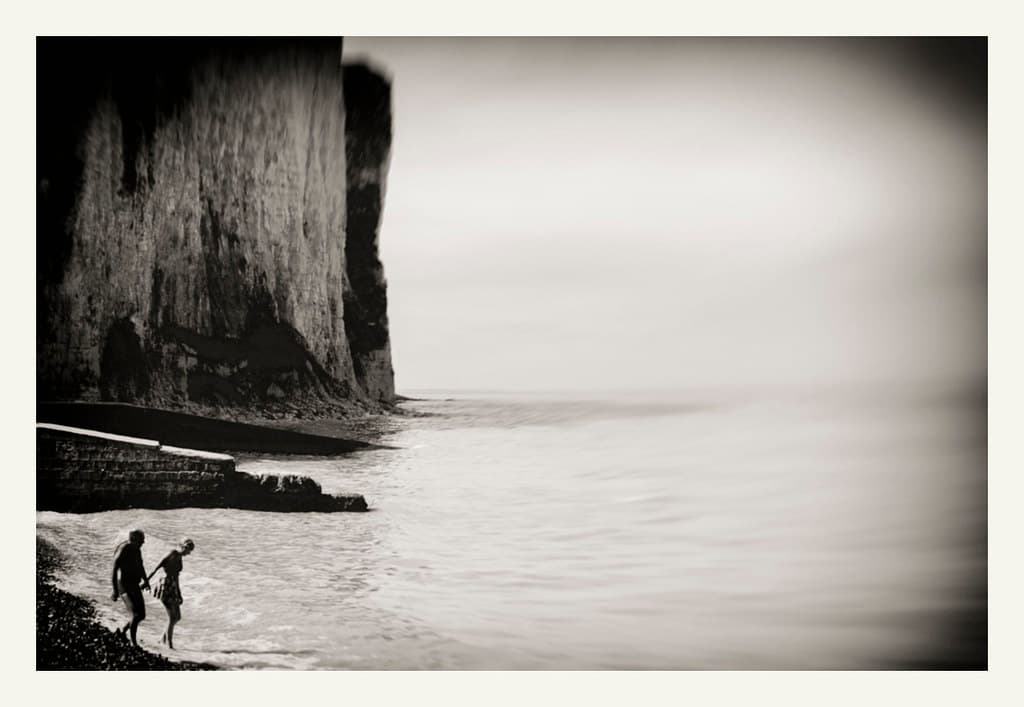
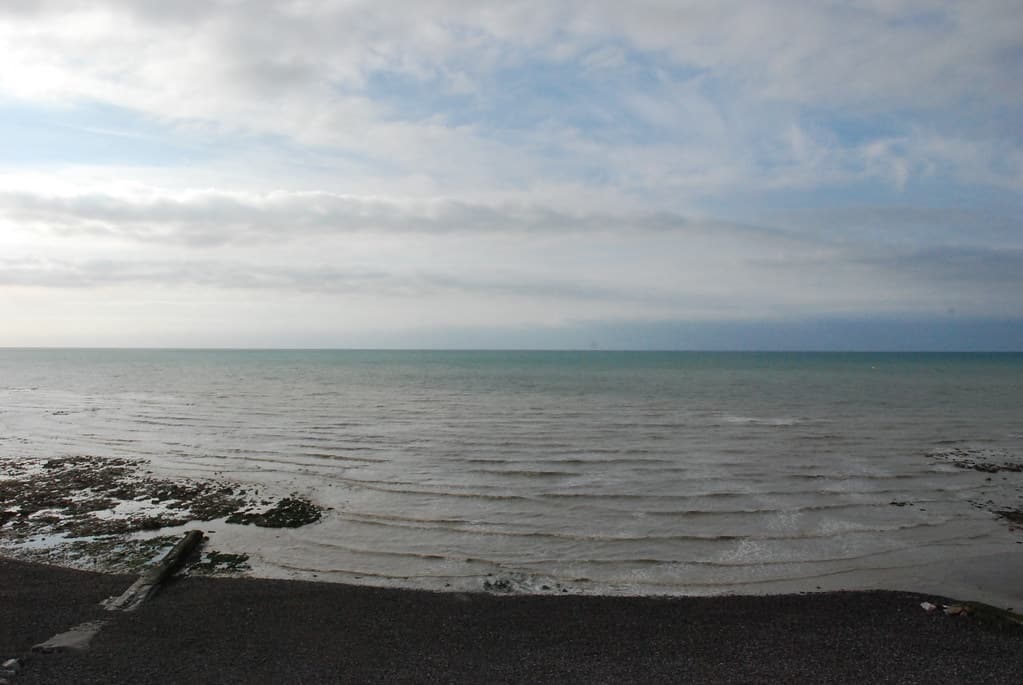
“You descend weathered wooden stairs to meet a sweep of pebbles and coarse sand backed by France's northernmost chalk cliffs. The tide retreats across ridged flats, leaving tidal pools that mirror the cloudscape. Couples…”
Limited recent visitor reports — live OBI telemetry is your best guide for current conditions.
The staircase groans under your weight as you follow it down from the clifftop village of Ault, each step revealing more of the scalloped white falaise that curves southwest toward Mers-les-Bains. Below, Plage d'Onival stretches in both directions—a tawny ribbon of sand and smooth galets that crunches beneath your shoes. The air tastes of brine and kelp, sharpened by the Channel wind that never quite stops.
At low tide, the beach doubles in width. You walk past families collecting mussels in plastic buckets, past a lone fisherman checking his lines strung between wooden posts. The cliffs loom behind you, their chalk face streaked with flint bands and tufts of sea campion clinging to impossibly narrow ledges. Gulls wheel overhead, their cries competing with the rhythmic hiss of waves dragging stones.
Person walking on a sand spit
Aerial view of turquoise tropical bay
Golden hour ignites white chalk
Walk flats toward Mers-les-Bains
Warm buckwheat overlooking the beach
Where it is
Plage d'Onival
Ault, Somme, France
50.104900°, 1.450300°
Weather
Loading…
Swell
—
Temp
Warm · Restorative
UV Index
Moderate
Wind
—
Tidal State
Last known
Max Sunlight
—
Ideal Shade
—
May - Sep (Peak)
Jan - Dec (Off-season)
Historical data suggests peak visibility and stable sea temperatures occur during the prime visitation window.
Select a category to load nearby places.
Unlock restaurants, luxury stays and curated maritime experiences within 2km
Swimming at Plage d'Onival requires caution due to strong currents and tides along this stretch of the Picardy coast. The beach is unpatrolled, so there are no lifeguards on duty. The dramatic white cliffs and pebble shoreline create unpredictable water conditions. Check tide times before visiting, as the beach can disappear entirely at high tide. Many visitors prefer to paddleboard, walk along the shore, or simply enjoy the scenery rather than swim. If you do enter the water, stay close to shore and never swim alone.
Plage d'Onival is stunning year-round, though each season offers different experiences. Summer (June-August) brings warmer weather and longer days, ideal for beach walks and picnics. Spring and autumn offer fewer crowds and dramatic skies perfect for photography. The beach is particularly famous for spectacular sunsets, best viewed during summer evenings when the sun sets over the chalk cliffs. Winter visits can be atmospheric but bring strong winds. Low tide reveals the most beach area, so check tide tables regardless of season for optimal timing.
Plage d'Onival is located just outside Ault in the Somme department. By car, take the D940 coastal road; the beach is well-signposted from Ault centre. Free parking is available in a small lot directly above the beach near the cliff edge, though spaces fill quickly in summer. The nearest train station is Ault, approximately 2 kilometres away, requiring a walk or taxi. From Paris, drive via A16 motorway (roughly 2.5 hours) or take a train to Ault with a connection in Abbeville.
The small village of Onival offers a few seasonal beachfront cafés and crêperies, though options are limited. For more dining choices, head to nearby Ault (2km) which has several restaurants, bakeries, and small shops. Accommodation near Plage d'Onival includes vacation rentals, chambres d'hôtes (B&Bs), and small hotels in Ault and surrounding villages. The larger town of Mers-les-Bains, about 5 kilometres north, offers more extensive dining and lodging options, including belle époque hotels and seafood restaurants along its Victorian beachfront.
The striking cliffs at Plage d'Onival display distinctive white chalk layers mixed with darker flint bands, creating dramatic striped patterns. These chalk formations are part of the same geological system as England's white cliffs across the Channel. The cliffs are actively eroding, so while they're spectacular to photograph, never stand directly beneath them or climb on them. The multi-coloured appearance becomes especially vivid during sunset when the chalk reflects golden and pink hues. This geological feature makes Plage d'Onival particularly popular with photographers and nature enthusiasts.
Photos