
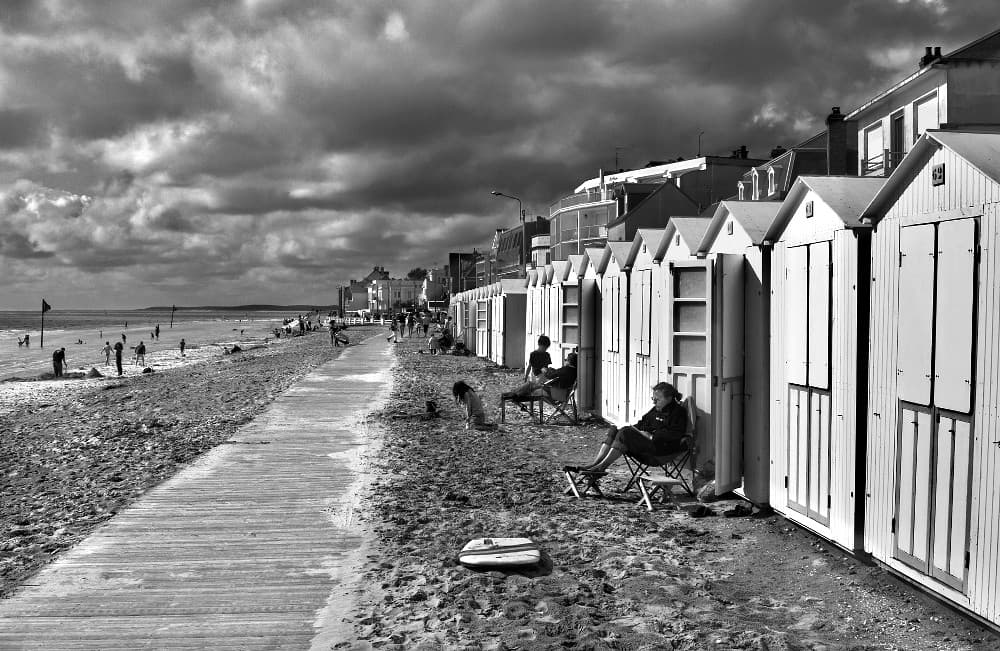
The beach at Le Crotoy unfurls in a shallow arc along the northern lip of the Baie de Somme, where twice a day the English Channel drains away, leaving behind a moonscape of wet sand ribbed like corduroy. You'll notice families clambering over mussel-crusted groynes and children chasing hermit crabs in tidal pools while grey seals occasionally surface offshore. The light here is mercurial—pewter one moment, honey-gold the next—shifting with the clouds that race in from the Atlantic.
“The extreme tidal range creates an ever-shifting beach that can stretch a kilometer wide, revealing an otherworldly landscape that has captivated painters for over a century.”
 Credit: Flickr
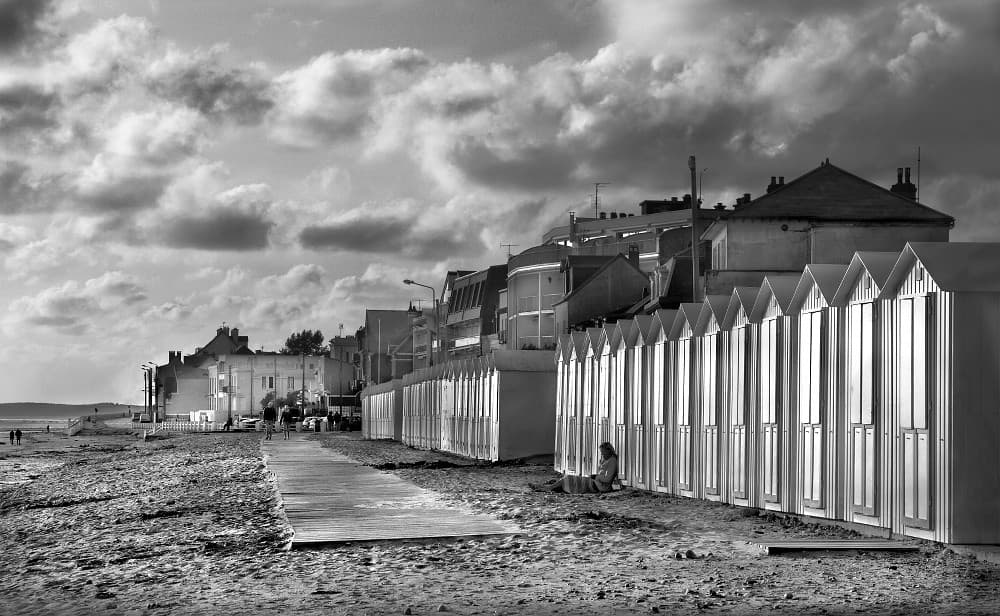
Baie de Somme - La plage du Crotoy
This isn't a beach for planting an umbrella. The tide governs everything: fishing boats tilt on their keels in the harbor when the water recedes, and locals time their errands around the published tide tables posted at every café. At low water, you can walk nearly to the horizon, your boots squelching in the firm sand, passing wooden fish traps and flocks of oystercatchers probing for lugworms. Kite-buggies zip across the flats on windy afternoons, their sails snapping like gunshots.
The promenade behind the beach holds a modest parade of shuttered beach cabins painted cream and slate blue, a handful of brasseries serving moules-frites, and a miniature steam railway that puffs south toward Saint-Valery. On summer evenings the terraces fill with families nursing carafes of cidre while the sun sinks behind the Marquenterre dunes, staining the bay copper and rose. The beach empties after dark, leaving only the whisper of wind and the distant bark of seals.


