
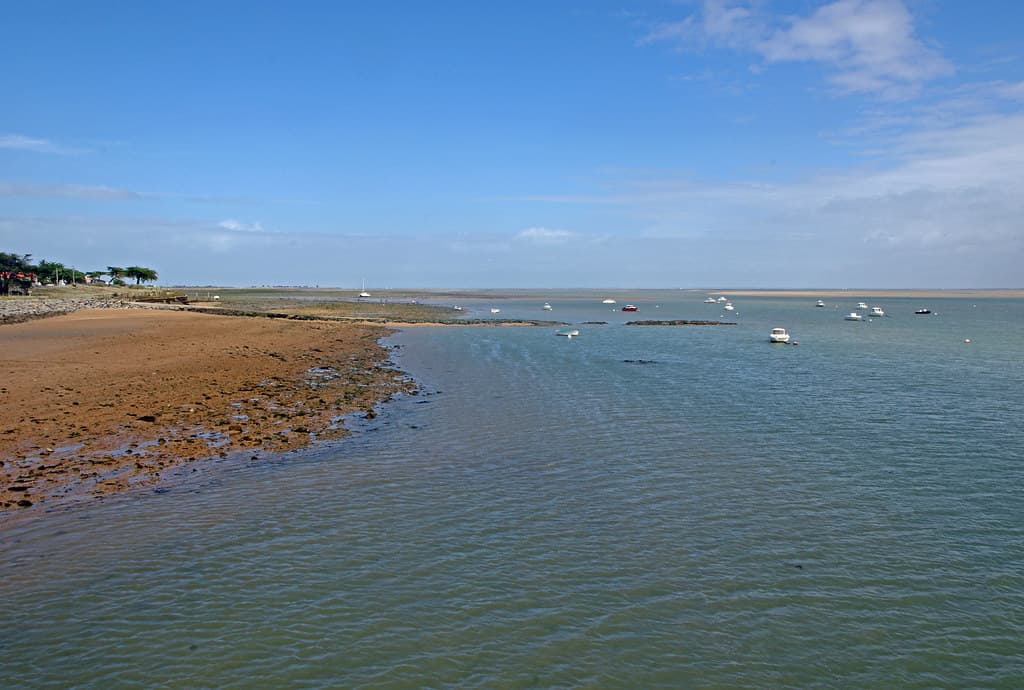
You'll know you've arrived when you spot the bouchots—those dark, orderly rows of stakes driven into the sand where mussels cling and gulls circle. The beach stretches in both directions, a ribbon of pale gold backed by low dunes and salt grass that shivers in the onshore breeze. At high tide, families spread towels near the waterline; at low tide, the Atlantic retreats so far that children become distant silhouettes chasing hermit crabs across the flats.
“The working oyster stakes and mussel beds remain active, making this a living landscape rather than a static postcard.”
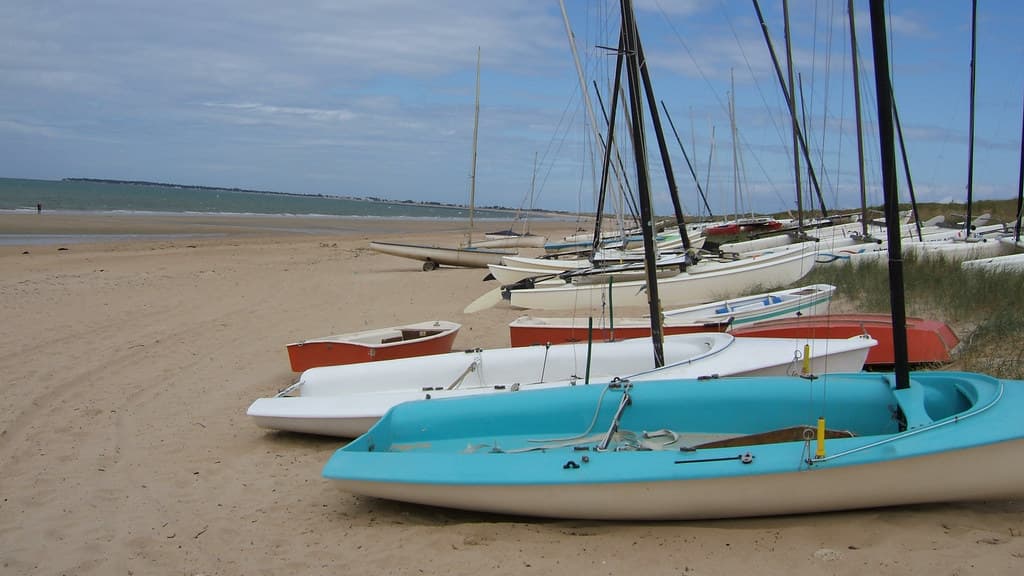 Credit: Flickr
Plage des Boucholeurs — photo by Andy Hay
This is not a beach that shouts. There are no beach clubs, no jet skis carving figure-eights offshore. Instead, you get the crunch of cockle shells underfoot, the smell of seaweed warming in the sun, and the sight of fishing nets drying on weathered posts. The water, when it returns, arrives gently—shallow enough for toddlers, warm enough by July that you'll stay in longer than planned.
Pack a kite if the wind's up, a bucket if you're traveling with small archaeologists, and something to read during the long, salt-scented afternoon. The boucholeurs themselves still work these waters at dawn, hauling in the day's catch before the first beach umbrellas open. By the time you arrive, the sand is yours.


